Bring cream cheese and butter to room temperature by either leaving out for an hour or by microwaving separately in 5–10 second intervals until at room temperature, without melting. (If either ingredient gets too soft or melty, you'll need to chill the dough for about an hour.) Preheat oven to 350°F and line a large sheet pan with parchment or a silicone baking mat.: Warm the butter and cream cheese until they are pliable and smooth, not glossy or slick looking which means they are melting. You should be able to press a finger into each and see a gentle impression. The aroma at this point is dairy sweet, with a subtle buttery scent, and your mixer will not clatter when combining these softened fats. This step matters because proper creaming traps tiny air bubbles that help the dough rise a touch and create a tender crumb, so do not bypass it. Common mistake to avoid, warming them in long bursts in the microwave until melted will create a greasy mixture and will cause the dough to spread excessively while baking. If you accidentally over soften, pop the mixture in the fridge for about 20 to 30 minutes until it firms back up slightly.
Using a stand or hand mixer, cream butter and cream cheese until smooth. Beat in egg and vanilla until creamy.: Listen for the mixer rhythm becoming steady and smooth, and watch the texture turn from lumpy to glossy and velvety. The sound is a low, even hum and the surface will look homogenous with no visible chunks of cream cheese . Once you add the egg the mixture will seem silkier and slightly glossy, with a richer scent as the proteins emulsify. This stage ensures even distribution of moisture and flavor in the dough, which prevents pockets of dryness or unblended fat. A frequent error is overbeating after adding the egg which can incorporate too much air and make cookies cakier; stop as soon as the mixture looks smooth and fully combined.
Add dry pudding mix, flour, and brownie mix, then mix until a thick dough forms. (This can take a while!) Cover dough tightly and chill in the fridge for 30 minutes.: At first the bowl will look powdery and crumbly, then slowly come together into a dense, slightly sticky dough that pulls away from the bowl. You will smell concentrated chocolate and a cocoa heavy aroma as the brownie mix hydrates. Chilling firms the dough so you can shape it without it flattening in the oven, and it helps meld flavors. If your dough seems greasy or too loose, it likely warmed up too much; chill longer. Overmixing here can make the texture tough, so stop once it forms a cohesive mass.
Form dough into 2-tablespoon (40 g) balls, then slightly flatten them to wide disc shapes. Place 6–8 discs on the lined sheet pan with space to spread.: As you roll and pat the dough, you should feel a pliable but substantial mass, cool from the fridge. The scent remains deeply chocolatey with a touch of butter. Flattening to a disc encourages even spread and helps create a slight crater for the frosting later. Arrange them with ample spacing so the sheets do not run into each other, since this batter will spread a little. A common slip is making the balls uneven in size; weigh or scoop carefully for uniform baking and presentation.
Bake for 9–13 minutes, slightly under-baking for a fudgy texture.: While baking you will notice a gentle chocolate aroma filling the kitchen and the edges beginning to set first, turning firm to the touch and showing a matte finish. The centers should still look slightly glossy and give a soft indent when pressed with a finger, indicating that fudgy, brownie like interior. Baking fully until the center is hard will create a drier cookie, so err on the shorter end if you prefer chew. Avoid opening the oven repeatedly in the first half of the bake, which can collapse the tops and change texture.
Once baked, press a teaspoon into the center of each hot cookie to create an indent. Cool for 5 minutes on the sheet, then transfer to a cooling rack.: Immediately after they come out of the oven the cookies are pliable and warm, and pressing a spoon gently creates a neat well without cracking the edge. You will feel a slight resistance as the center yields, and the aroma will be its most intense. Cooling on the tray lets the structure set slightly before transfer, preventing breakage. If you wait until totally cool the center will harden and resist forming a good well, so work while they are hot but not hand scalding.
In a large bowl, beat butter and shortening until smooth. Beat in extracts, salt, and powdered sugar until smooth, then beat in coconut flakes. Add milk, starting with less, for a thick, smooth consistency (not stiff or wet).: The butter and shortening will form a creamy, pale base that smells faintly sweet; add vanilla extract and optionally coconut extract for aromatic lift. Once the powdered sugar folds in the mixture will thicken, becoming dense and almost silky. Stirring in the coconut flakes gives the frosting chew and body. Add milk spoon by spoon until the frosting can be piped yet still hold shape. If you add too much milk the filling becomes runny, so resist the temptation to thin it out too far.
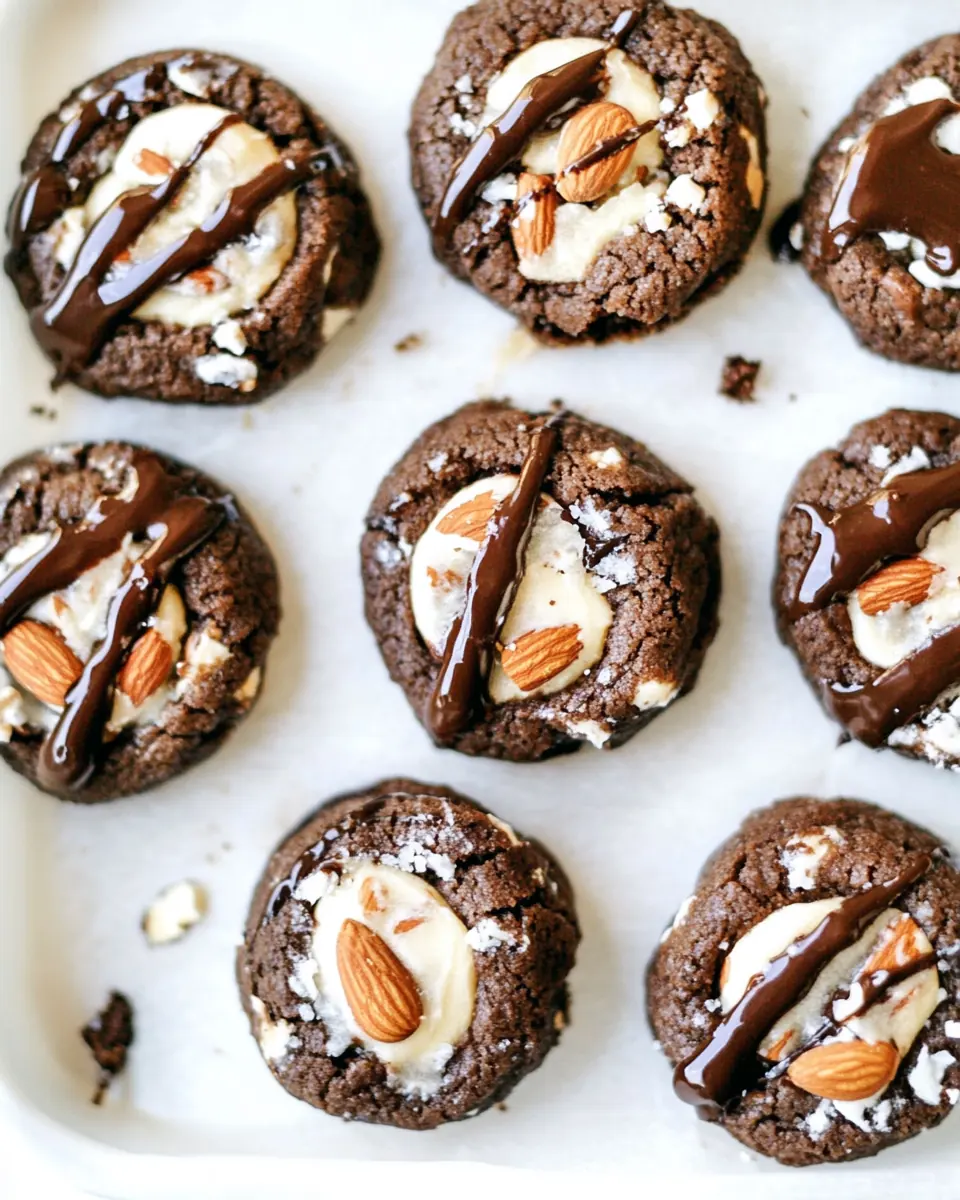
Transfer frosting into a resealable plastic bag and seal without air. Cut off one tip of the bag (to get a 1-inch diameter) and pipe frosting into cookie indents. All frosting should get used in these cookies. Press an almond into the frosting in the center of each cookie.: The sound of piping is quiet, and you will see neat domed coconut mounds nestle into the cookie wells. The frosting should be stiff enough to mound without collapsing, with visible flakes integrated for texture. Pressing a whole almond into each center gives a pleasing contrast and secures the nut into the frosting. Beware overfilling the wells which leads to overflow when you drizzle chocolate; keep an eye on portioning so each cookie looks balanced.
In a small microwave-safe bowl, combine chocolate and oil. Melt mixture in 15-second microwave bursts, stirring between each burst for 10 seconds until chocolate is smooth. Transfer melted chocolate into a resealable plastic bag and cut off the very tip. Pipe melted chocolate generously over cookies. Allow to set.: As you melt the chocolate it will become glossy and viscous, and adding the oil gives a smoother flow for piping. Stirring between short heats prevents scorching and ensures a silky finish. Piping the drizzle creates glossy ribbons that catch the light and seal the coconut topping. Let the chocolate set at room temperature until it firms; avoid refrigerating too quickly or you risk condensation dulling the shine. Overheating the chocolate will make it grainy, so always err on the side of gentle, short bursts.