Begin by preparing the dressing if you’re making homemade salad dressing. Combine the ingredients in a small bowl and refrigerate until ready to use.: Right away you will notice the sharp, tangy aroma of vinegar blending with the oil if you whisk them together, which signals a well emulsified vinaigrette that will cling to leaves. The reason this matters is that a properly combined dressing disperses flavor evenly, preventing pockets of oil or vinegar. A common mistake is adding oil too quickly so the mixture separates, so whisk steadily and taste before refrigerating. If you chill the dressing, the flavors meld and soften, producing a smoother mouthfeel when you dress the salad.
Chop the Spring mix on a cutting board to your desired size pieces. This extra step makes salad so much easier to scoop up and eat!: As you chop you will hear the crisp snaps of the leaves and see the pile shrink into manageable, uniform pieces, which makes each bite balanced. Smaller pieces allow dressing to coat more surface area and improve scoopability with a fork. Over chopping can bruise leaves and cause limpness, so aim for consistent bites rather than mincing fine. If your greens start to weep, blot them gently with a paper towel to restore texture before assembling.
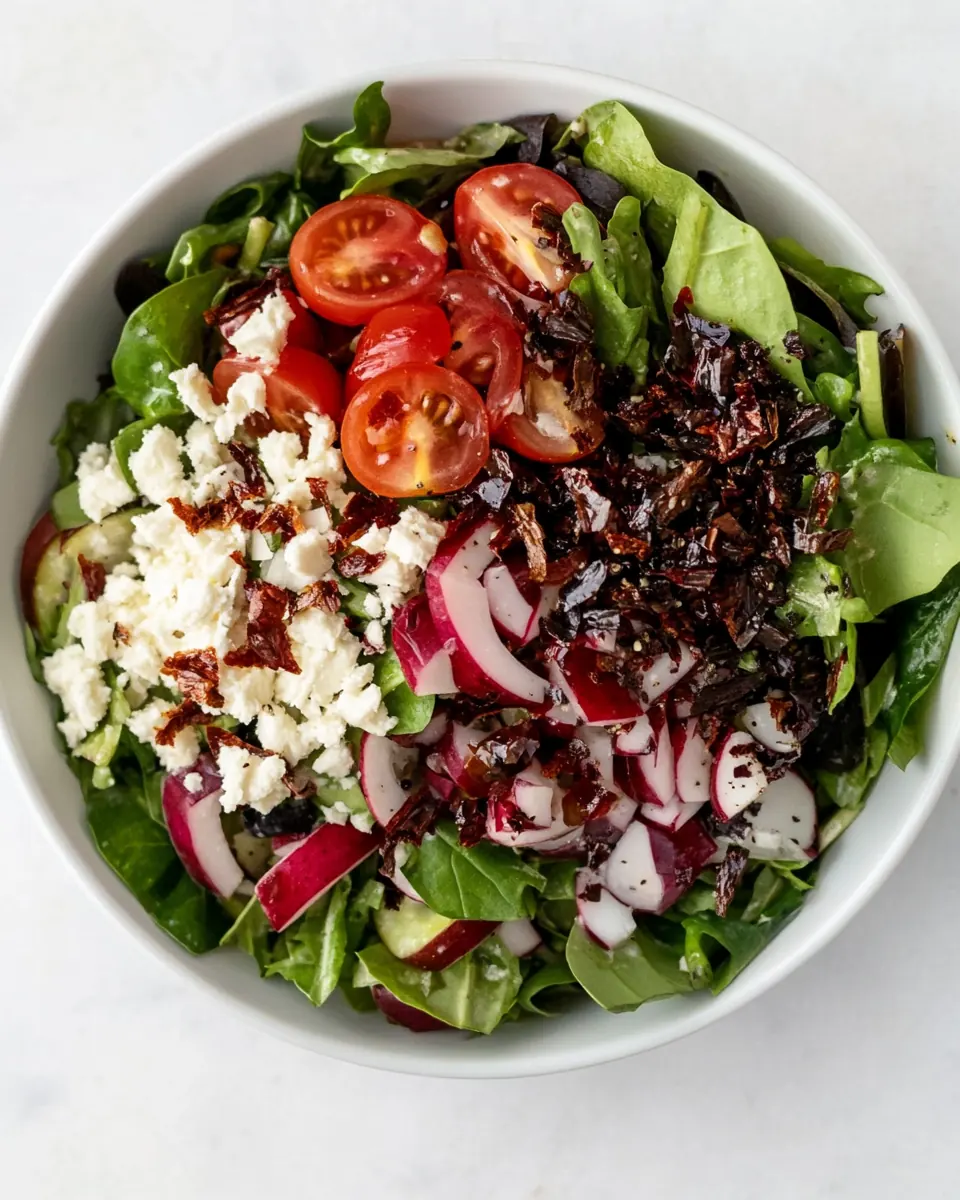
Transfer the greens to a large bowl, along with the chopped chicken, tomatoes, chopped pecans, red onion, feta cheese, and dried cranberries.: When you add each ingredient you’ll notice different colors and aromas layering in the bowl, the warm scent of nuts, the tang of feta, and the sweet perfume of dried cranberries. Combining everything in a large bowl gives you space to toss without bruising the leaves, and it ensures even distribution. A mistake here is adding too many heavy or wet ingredients directly on top of delicate greens, which can crush them; instead, add ingredients around and fold gently.
Drizzle in the balsamic vinaigrette and toss everything together until the salad ingredients are coated with your desired amount of dressing. Taste the salad for flavor and add anything else you’d like.: As you toss, listen for the light rustle of leaves and watch for a glossy sheen on the greens, which indicates proper coating. Tossing gently but thoroughly helps the dressing cling to all components so each forkful is flavorful. A frequent error is overdressing, which will make the salad soggy and mute textures, so start with a small amount, toss, then add more as needed. Taste after tossing and adjust seasoning accordingly to preserve balance between acidity and richness.
Serve salad in two large bowls and enjoy!: After tossing, sample a bite that includes a bit of everything to judge balance and harmony, noting if it needs salt, pepper, or a squeeze of lemon. This tasting step is crucial because personal preferences vary, and a quick adjustment can elevate the dish. Avoid adding more dressing as a first fix for flat flavor, instead consider a pinch of salt or an extra handful of herbs if you have them. If the salad tastes one note, think about textural contrast or acidity rather than adding more of the same ingredient.
Serve salad in two large bowls and enjoy: Presenting the salad in roomy bowls lets the ingredients breathe, and as guests dig in the aromas of pecans and feta cheese will rise, inviting appetites. Serving immediately preserves the crispness of the greens and the contrast of textures. A typical slip is preparing the salad too far in advance which causes the leaves to wilt; if you must wait, keep dressing separate and toss just before serving to maintain freshness.