Heat the butter in a medium saucepan over medium heat. Add the diced apple, honey, cinnamon, ginger, nutmeg, and salt. Sauté for about 3 minutes until the apples begin to soften.: The moment the butter melts and begins to shimmer, you should hear a faint sizzle as it warms the pan, and the aroma will smell nutty and inviting. This sizzling base promotes gentle caramelization when the apple is added, which develops a deeper flavor than simply steaming. Keep the heat steady, not too high, because overheated butter can burn and introduce a bitter note. A common mistake here is rushing with high heat, which causes the butter to brown too quickly, so maintain medium heat and watch for a glossy sheen on the pan.
Add the water and bring the mixture to a boil. Stir in the oats; then reduce the heat to a simmer. Cook for 5 to 7 minutes, stirring occasionally, until the oats are soft and the mixture thickens. Incorporate the vanilla extract.: As the diced apple hits the pan, you should hear a soft hiss and see the fruit pieces begin to glisten as they pick up the butter. The spices will bloom in the fat, releasing their aromatic oils, so the kitchen will fill with a warm, spiced scent that signals the flavor foundation is building. The honey will melt and mingle, creating a subtle caramel glaze on the apple surfaces. Stir often so the pieces cook evenly and do not stick. Avoid crowding the pan with very large or uneven pieces, as small chunks cook faster and uniformly.
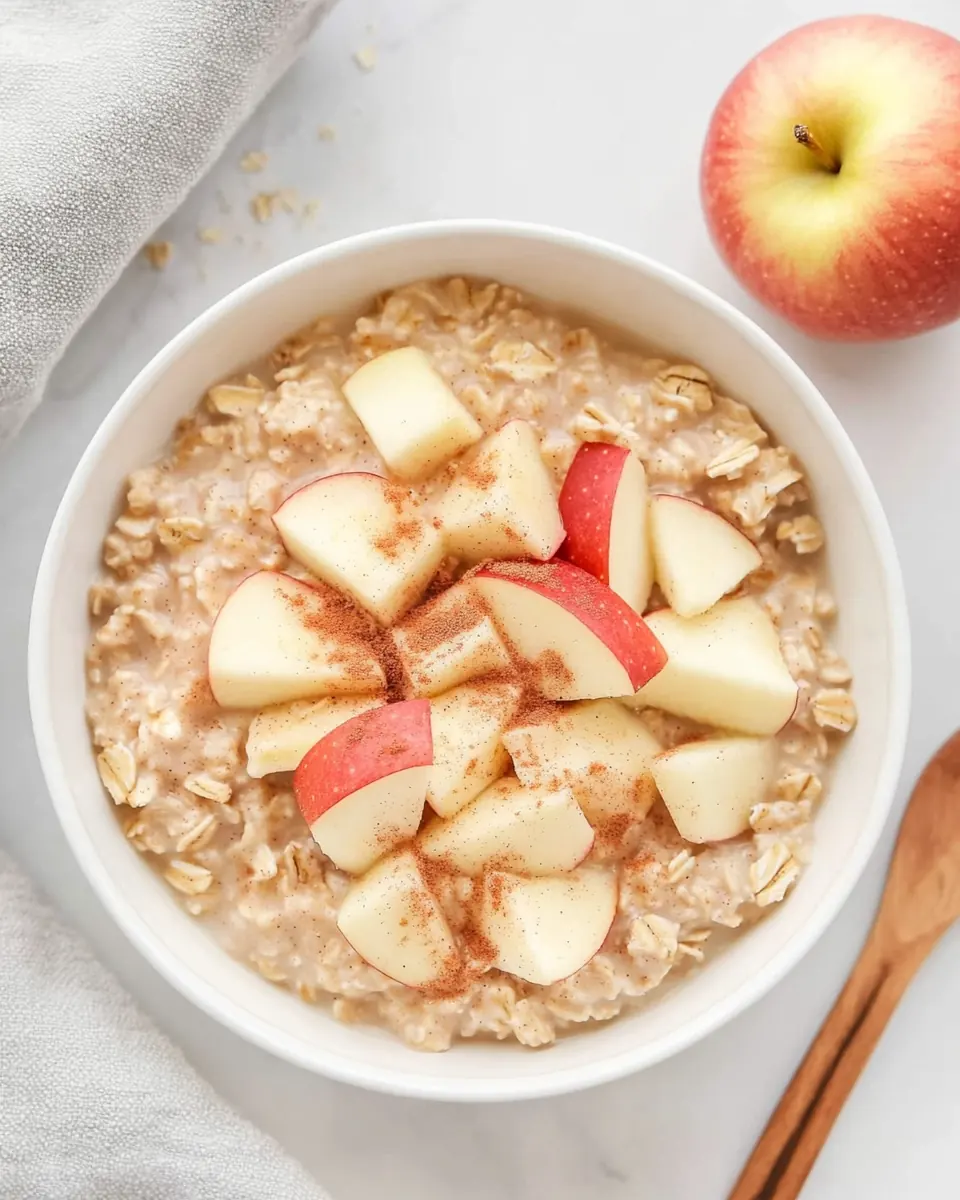
If using, stir in the chopped walnuts. Remove the pan from heat and serve immediately with a splash of milk if desired. Top with optional fresh apple slices or other fruit.: Around the third minute, you will notice the apples losing their rigid edges and developing a tender translucence, while the pan juices thicken slightly and darken. The softened texture is key because it allows the apples to integrate with the oats without turning to mush. This step enhances the natural sweetness and creates tasty browned bits. A frequent error is overcooking at this stage, which results in apples that disintegrate; remove them from heat as soon as they yield to a fork.
Add the water and bring the mixture to a boil: When you pour in the water , listen for a brighter, livelier bubbling as the pan returns to heat, and watch the steam rise in a steady plume. Bringing the mixture to a full boil helps to evenly distribute heat before you add the oats , which ensures consistent cooking. Keep a close eye so it does not foam over. If you let the pot boil too aggressively you risk rapid evaporation, which can leave the oats undercooked or the pot scorched, so watch for a controlled rolling boil.
Stir in the oats; then reduce the heat to a simmer: As you pour in the oats , stir to combine them with the liquid; you will see the mixture thicken within moments and the oats begin to plump. Lowering to a gentle simmer is crucial because high heat can make the oats stick and cook unevenly, while a gentle simmer allows them to soften slowly and absorb the flavors. Keep the spoon moving to prevent clumping. An easy mistake here is not reducing the heat, which can produce gummy oats or scorched residue on the pan bottom.
Cook for 5 to 7 minutes, stirring occasionally, until the oats are soft and the mixture thickens: During this span you will notice the pot’s contents transform visually as the liquid diminishes and the oats swell, creating a creamy consistency. The sound will be a quiet, gentle simmer rather than bubbling fury, and the smell will meld into a sweet, spiced porridge. Taste a small spoonful to check for tenderness; the oats should be soft but still retain slight structure. Overcooking will create an overly thick, glue like texture, so stop once the oats are tender and the mix is pleasantly creamy.
Incorporate the vanilla extract: Stirring in the vanilla at the end preserves its fragrant, floral quality, and you will notice an immediate lift in aroma. The vanilla ties the spices and fruit together, lending a rounded sweetness that feels complete. Because the extract is delicate, adding it earlier diminishes its scent, which is why you add it now. Do not skip tasting after adding it, as sometimes a touch more is needed depending on the apples used.
If using, stir in the chopped walnuts: Adding the chopped walnuts right after turning off the heat preserves their crunch and toasty flavor, creating a contrast to the soft oats. You will hear a subtle, pleasing textural difference when you bite in, and the walnuts introduce a warm, nutty aroma. If you prefer them toasted, do that beforehand to intensify the flavor. Avoid stirring them too early into high heat, or they will lose their crispness.
Remove the pan from heat and serve immediately with a splash of milk if desired: The final rest off the heat lets the bowl settle slightly while maintaining its warmth, and adding a splash of milk at serving time softens the bowl to a silky finish. Pouring the milk creates a gentle hiss and a visible ribbon as it blends in, enhancing mouthfeel. Serve while still warm for best texture, as standing too long will thicken the oats considerably. A common slip is letting the oats cool completely before serving, which makes them stiff and less enjoyable.
Top with optional fresh apple slices or other fruit: Placing fresh fruit on top adds brightness and a fresh contrast to the warm, spiced base. The visual pop of color makes the bowl more inviting, and the cold fruit yields a pleasing temperature contrast with the hot oats. If using apples, choose crisp slices for textural tension. Resist adding wet toppings that can water down the bowl if left too long.