To a medium saucepan, add the apples, butter, brown sugar, cinnamon, cornstarch, stir to combine, and heat over medium-high heat until the mixture reaches a boil. It will seem very dry and crumbly until the apples soften and release their juices, but just keep stirring and tossing.: The first notes you will notice are the butter melting and the brown sugar dissolving into a glossy syrup, releasing warm spice aromas as the apples begin to soften. Stirring constantly helps the cornstarch dissolve and prevents hot spots where sugar can scorch. You want to see active bubbling and the apples releasing juices, though it will look dry at first; keep tossing so the mixture warms evenly. The why here is that sustained heat encourages the fruit to break down and the sugars to caramelize, concentrating flavor. A common error is turning the heat too high too quickly which can burn the sugar and leave you with bitter notes. If you smell any toasted sugar, reduce the heat at once and scrape the pan to rescue the sauce.
After mixture reaches a boil, turn the heat to low and allow mixture to simmer for about 5 minutes.: As the pan eases into a gentle simmer the sound shifts to soft, steady bubbling, and the texture moves from granular to syrupy. This stage allows the juices to thicken and the apples to become tender without collapsing completely, preserving pleasant little apple pieces. It matters because overcooking will make the filling too loose, and undercooking will leave raw, chalky bites. Watch the viscosity and taste for balance, stirring occasionally. A frequent misstep is walking away; simmering requires a quick eye to prevent sticking and to judge the right moment to stop cooking.
Set aside to cool momentarily while you prepare the puff pastry.: You will feel the kitchen fragrance deepen as the filling cools and concentrates, and letting it rest prevents steam from turning the pastry soggy when assembled. Cool until just warm, this keeps the filling spreadable but not runny. The reason is thermal shock can melt the butter in the pastry layers causing collapsed puff. Avoid the common mistake of using piping hot filling which increases leakage risk during baking.
Preheat oven to 400 F.: The oven should be hot enough to encourage rapid steam expansion in the layers of the puff pastry , creating crisp, distinct flakes. You should hear a slight roar from the oven as it reaches temperature and smell a faint hint of warmth. Preheating is crucial because puff pastry needs immediate high heat to rise properly; a cold oven leads to dense, flat pastries. A typical oversight is placing turnovers into an oven that is not fully preheated, which ruins the desired lift.
Cut each large sheet of puff pastry into 4 squares so that you have a total of 8 small squares. If necessary, add flour to your work surface so puff pastry doesn’t stick.: As you cut, the pastry will feel cool and slightly tacky; use a lightly floured surface if it sticks. Clean, even cuts help the turnovers seal and bake uniformly, and handling should be gentle to preserve the laminated layers. The edges should be neat so you can crimp them well, preventing leaks. If the pastry becomes too warm and soft, chill briefly to firm it up. Many home bakers rush this and end up with jagged edges that do not seal properly.
Add about 1/4 cup filling to the center of each square, fold on the diagonal, crimp edges very well with a fork to prevent leakage, and transfer to a half-sheet pan lined with a Silpat, or sprayed well with cooking spray.: When you place the filling you will feel the weight of the jam like center, glossy and thick; avoid overfilling because excess syrup will try to escape during the heat. Folding on the diagonal creates a neat pocket, and pressing firmly along the seam with a fork ensures steam stays contained. This technique matters because it protects the pan from caramelized drips that can burn. A common mistake is using too much filling or not sealing the seams tightly, both of which invite leakage and burnt patches on the bottom.
Arrange the 8 turnovers on pan so edges aren’t touching. It’s okay if they don’t have much space in between them because they rise rather than spreading much; set aside.: Laying them with a little space allows each turnover to puff independently, and you will quickly notice the pastry gaining height in the oven. They rise rather than spread, so leaving tiny gaps is fine, but avoid stacking. Proper placement ensures even air circulation and consistent browning. The mistake to avoid is crowding the pan which leads to uneven or misshapen pastries.
To a small bowl, add the egg, water, beat with a fork, and lightly brush each turnover with eggwash; discard remainder.: Brushing each surface gives a glossy, golden finish and helps the granulated sugar adhere. The eggwash should spread smoothly and not pool in the seams. This step matters for presentation and color because the proteins in the egg encourage browning. Be careful not to apply too heavily, which can drip and brown unevenly on the pan below.
Generously sprinkle each turnover with granulated sugar. I use about 1 teaspoon per turnover.: The sugar creates a slight sparkle and a pleasant surface crunch that plays nicely against the tender interior. You will hear a faint scattering sound as you sprinkle, and after baking it will melt slightly into a crisp top. This finishing touch enhances texture and sweetness. Overdoing it can lead to a gritty top, so measure roughly to avoid a cloying crust.
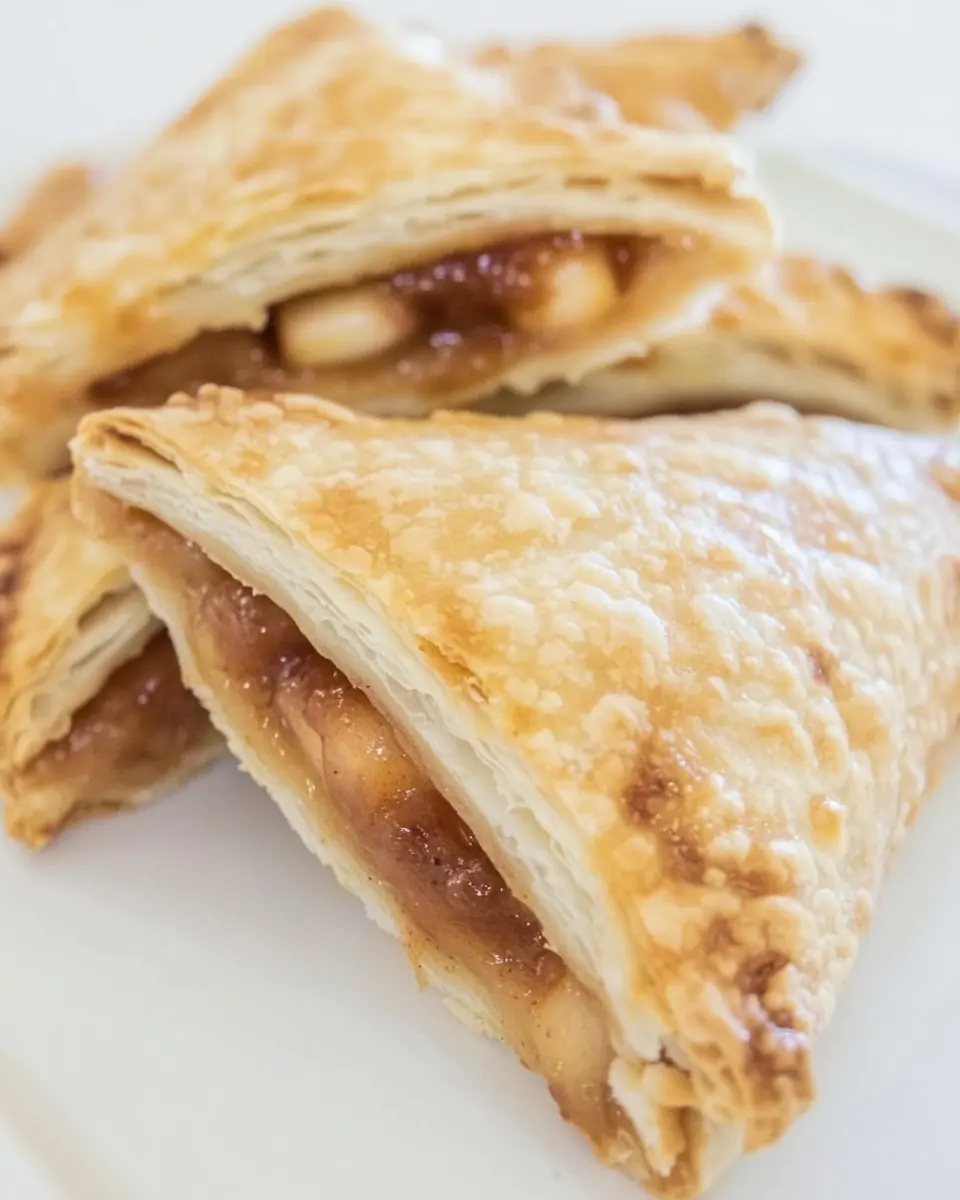
Bake for about 30 to 34 minutes, or until turnovers are lightly golden brown on top. Watch the undersides because they will brown much faster than the top and be more prone to burning and any filling that leaks will also be very prone to burning.: In the oven you will notice the pastries expanding, layers separating, and a fragrant caramel scent emerging. Check the undersides periodically because they brown faster and can burn if left too long; rotate the pan if your oven has hotspots. The reason for close attention is that even a small leak of filling can burn on the pan and give off a bitter aroma. Avoid the mistake of assuming top color equals doneness, instead peek under to ensure the bottoms are a matching golden tone.
Serve immediately with any reserved filling mixture if desired.: The ideal moment to eat these is while the crust is warm and the filling still shows a syrupy sheen; you will notice steam and an intense apple aroma. Serving right away preserves the crispness of the pastry and the contrast with the soft filling. If you let them sit too long, the crust will soften as moisture migrates inward. A frequent mistake is storing hot turnovers before they cool which makes them soggy in storage.