Go Back
Apricot Cream Cheese Babka

Apricot Cream Cheese Babka

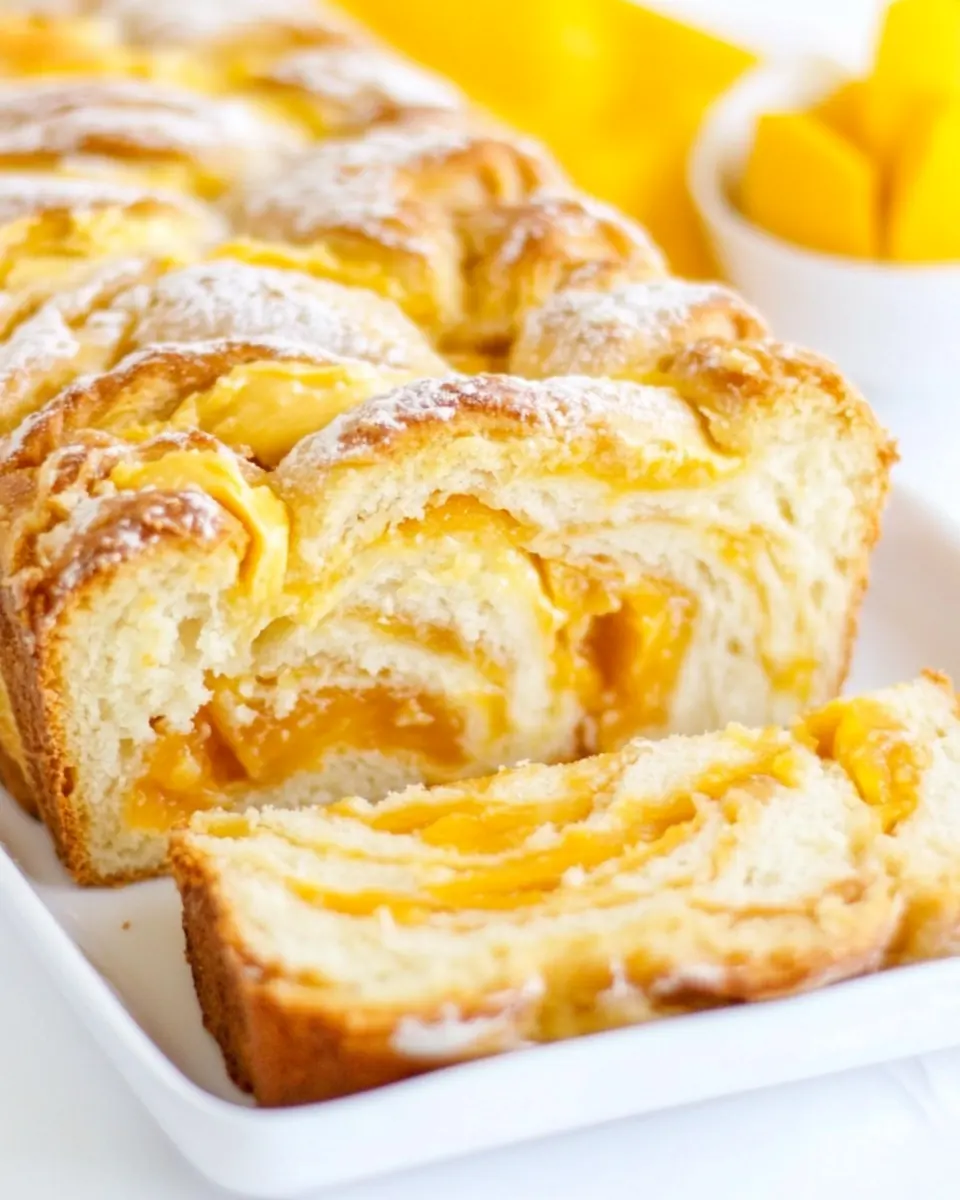
Apricot Cream Cheese Babka offers a creamy, fruity swirl of apricot puree and tangy cream cheese inside an enriched, tender loaf. This easy to share bake combines bright citrus notes and a crumbly streusel for a bakery style result at home, ideal for brunch or special mornings. Make it to impress without fuss because the flavors are balanced and irresistible.
Prep Time 30 minutes
Cook Time 50 minutes
Total Time 1 hour 20 minutes
Servings: 6 servings
Course: Desserts
Cuisine: American
Calories: 350

Ingredients
  

  • 1 3/4 cup (218.75 g) + 2 tablespoons all-purpose flour Measure precisely to provide structure and body to the dough; combine the stated amount plus the extra tablespoons for correct hydration and gluten development. Use all-purpose flour for a balanced texture that yields a tender, slightly chewy babka crumb. Sift or whisk to remove lumps and ensure even incorporation with dry ingredients.
  • 2 tablespoons + 1 teaspoon granulated sugar Add for mild sweetness and to feed the yeast slightly; split amounts are measured separately for dough and filling components. Dissolve with the liquid ingredients to help activate flavors and contribute to golden browning during baking. Adjust placement during mixing so sugar integrates evenly without overworking the dough.
  • 1 teaspoon instant yeast Sprinkle to leaven the dough and create airy lift; instant yeast should be mixed with the dry flour to ensure even distribution. Use the precise teaspoon to achieve the correct rise time and crumb structure without overproofing. Store unused yeast in a cool, dry place to preserve potency.
  • Pinch of salt Include a small pinch to enhance and balance flavors throughout the dough; salt strengthens gluten and improves the overall taste profile. Add with the dry ingredients to distribute evenly without inhibiting yeast activity when used sparingly. Taste balance depends on precise measurement in enriched doughs like babka.
  • 1 egg, at room temperature Bring to room temperature and beat into the dough to enrich texture and help bind ingredients; eggs add moisture, fat, and leavening support. Crack and whisk slightly before adding to ensure even incorporation and consistent crumb throughout the loaf. Use at stated temperature to promote proper dough development and emulsification.
  • 1/3 cup (81.33 ml) whole milk, lukewarm Warm gently to activate yeast and combine smoothly with other wet ingredients; lukewarm whole milk adds fat and tenderness to the dough. Measure carefully to avoid overheating, which can kill yeast, and use whole milk for richer flavor compared with lower-fat options. Mix into the liquid ingredients before combining with dry mixture.
  • 1/2 teaspoon (0.5 teaspoon) vanilla extract Add for aromatic sweetness and to deepen flavor in the dough or filling; vanilla extract complements the apricot and cream cheese notes. Use the half-teaspoon to avoid overpowering delicate flavors while enhancing overall taste complexity. Stir into wet components so the flavor disperses evenly.
  • 2 tablespoons unsalted butter, at room temperature Soften at room temperature to enrich the dough and add tenderness; unsalted butter allows precise control of overall salt level. Cream into other wet ingredients to incorporate air and yield a softer crumb, adding richness and flavor to the babka. Ensure butter is pliable but not melted for best texture.
  • 1 1/2 cups (195 g) dried apricots Soak or simmer to rehydrate and create a vibrant apricot filling; dried apricots provide concentrated fruit flavor and chewy texture. Chop after rehydrating to distribute fruit evenly throughout the filling, blending with citrus juices and sugar for a jam-like consistency. Use quality dried apricots for bright, natural sweetness.
  • 1/2 cup (124 ml) orange juice Heat slightly to rehydrate dried apricots and form a syrupy base for the filling; orange juice adds acidity and citrus brightness. Combine with apricots and simmer until soft, then blend or chop to desired texture for spreading into the rolled dough. Use fresh juice for cleaner flavor and balance with sugar as needed.
  • 1/3 cup (81.33 ml) lemon juice Combine with orange juice to balance sweetness and add bright acidity to the apricot filling; lemon juice enhances fruit flavor and preserves color. Measure precisely to achieve the intended tartness without overpowering the filling’s sweetness. Stir into softened apricots and cook to meld flavors.
  • 2 tablespoons granulated sugar Sprinkle into the apricot mixture to sweeten and help create a jammy texture when cooked; adjust level based on fruit tartness. Dissolve with the citrus juices during simmering so it integrates fully and caramelizes slightly for depth. Use granulated sugar for clean sweetness and better control during cooking.
  • 8 ounces (226.8 g) cream cheese, at room temperature Soften at room temperature to create a creamy, tangy filling component; cream cheese provides a rich contrast to fruity apricot layers. Beat until smooth with sugar and vanilla to form a spreadable mixture that layers well within the rolled dough. Ensure cream cheese is free of lumps for smooth texture in the final bake.
  • 2 tablespoons granulated sugar Blend into the cream cheese mixture to sweeten and balance its tang; measured tablespoons provide controlled sweetness. Whisk thoroughly to dissolve and prevent graininess, producing a smooth, homogenous filling. Taste and adjust little by little if sweetness preference differs.
  • 1 egg yolk Separate and use the yolk to enrich a glaze or filling; egg yolk adds color, shine, and additional fat for a silkier texture. Whisk before incorporating to ensure even distribution and to avoid streaks in the filling or finish. Keep refrigerated until needed to maintain freshness.
  • 1 teaspoon vanilla extract Add for fragrant flavor enhancement and to complement both cream cheese and apricot notes; vanilla extract deepens overall aroma. Measure precisely to avoid dominating other flavors while providing a warm, rounded finish. Stir into wet mixtures so the extract disperses uniformly.
  • Pinch of salt Include a pinch to heighten flavors and balance sweetness within the cream cheese layer; a small amount of salt sharpens and rounds the profile. Mix with the cream cheese and sugar to ensure even seasoning throughout the filling. Salt also subtly improves the perception of other flavors.
  • 3/4 cup (93.75 g) all-purpose flour Measure carefully to create the streusel or crumb layer; all-purpose flour contributes dry structure and absorbs butter and sugar. Combine with sugars and butter to form a cohesive, crumbly texture that crisps during baking and provides contrast to the soft bread. Sift or whisk to remove lumps before mixing.
  • 2 tablespoons granulated sugar Sprinkle to sweeten the streusel or crumb topping and add crisp caramelized notes; granulated sugar blends with flour and butter for texture. Distribute evenly so the topping browns uniformly and contrasts with the tender babka interior. Use measured tablespoons to maintain intended sweetness balance.
  • 4 1/2 teaspoons (4.5 teaspoons) light brown sugar Measure for deeper, molasses-like sweetness and chewiness in the streusel; light brown sugar adds moisture and richer flavor. Mix into the crumb mixture where its color and caramel notes enhance overall complexity. Compact measurement ensures the topping texture remains crumbly but slightly sticky when baked.
  • Pinch of salt Add a pinch to the streusel mix to enhance flavor depth and balance sweetness; salt accentuates caramel and butter notes. Combine thoroughly with sugars and flour so the seasoning is distributed evenly throughout the crumble topping. Keep quantity small to avoid overwhelming the sweet components.
  • 3 1/2 tablespoons (3.5 tablespoons) unsalted butter, melted and cooled Melt and cool to incorporate fat into the streusel or as a finishing element; melted unsalted butter binds dry ingredients and lends richness. Use measured tablespoons for consistent moisture content and to control how the crumble sets during baking. Cool slightly to avoid melting sugars prematurely when mixed.
  • 1 egg Beat to enrich dough or use as an egg wash; the whole egg contributes structure, moisture, and color to the final loaf. Whisk before applying or folding so it integrates smoothly without creating pockets of egg in the dough. Use as directed for shine and binding in layered components.
  • Pinch of salt Add a final pinch to balance and heighten flavors across dough, filling, or topping; salt at the end helps round out sweetness and brighten overall taste. Sprinkle sparingly to avoid over-salting enriched components, ensuring the babka’s sweet and tangy elements harmonize. Mix briefly to distribute evenly.

Equipment

  • Electric mixer with dough hook
  • small saucepan
  • Food Processor
  • 9 x 5 inch loaf pan
  • Wire Rack

Method
 

  1. Make the Dough: Place the flour, sugar, yeast and salt in the bowl of an electric mixer fitted with a dough hook. Stir on medium-low speed for a minute or so to combine. Add the egg, milk, vanilla and butter and mix on medium speed until a smooth dough forms, about 5 minutes. Form into a ball and place in a lightly oiled bowl. Cover with plastic wrap and place in a draft-free area until doubled in volume (about 1 hour). While the dough rests, make the fillings and streusel.: The bowl fills with a quiet hum as the mixer blends the 1 3/4 cup (218.75 g) + 2 tablespoons all-purpose flour , 2 tablespoons + 1 teaspoon granulated sugar , 1 teaspoon instant yeast and a pinch of salt . Warm, milky aromas from the 1/3 cup (81.33 ml) whole milk, lukewarm mingle with the rich notes of 2 tablespoons unsalted butter, at room temperature as you add the 1 egg, at room temperature and 1/2 teaspoon (0.5 teaspoon) vanilla extract . As the dough hooks knead on medium speed, watch for a smooth, slightly tacky ball to form after about 5 minutes, a texture that tells you gluten is developed but the dough remains tender. When you form it into a ball and oil the bowl, you should feel a slight resistance as you press the dough, not a tight elasticity. Cover and set in a warm, draft free spot to double, which usually takes about 1 hour. Why this matters: A well developed dough yields an even crumb and lift when baked. Common mistake: Leaving the dough in a cold spot will make the rise sluggish, so choose a cozy corner or near a warm oven light.
  2. Make the Apricot Filling: Combine the dried apricots, orange juice, lemon juice and sugar in a small saucepan and bring to a simmer over medium-low heat. Simmer uncovered for 10 to 15 minutes, stirring occasionally, until the apricots soften and the liquid is reduced by half. Remove from the heat and allow to cool completely. Once cool, transfer the mixture to a food processor and process until a puree forms. Set aside at room temperature.: In a small saucepan, the dried apricots bloom as you add the 1/2 cup (124 ml) orange juice , 1/3 cup (81.33 ml) lemon juice and 2 tablespoons granulated sugar . Simmering at medium low, the mixture reduces for 10 to 15 minutes while steam rises and the apricots soften into a jammy texture. You will notice a glossy sheen and a bright, citrus forward aroma when the liquid is reduced by half, an indicator the puree will hold together rather than be runny. After cooling, processing into a smooth puree ensures it spreads easily. Why this matters: Proper reduction concentrates flavor and prevents watery filling that can sog the dough. Common mistake: Boiling too aggressively can scorch the fruit, so maintain a gentle simmer and stir occasionally.
  3. Make the Cream Cheese Filling: In a medium bowl, stir the cream cheese and sugar with a wooden spoon until smooth and lump-free. Add the egg yolk, vanilla extract and salt, and stir to combine. Set aside at room temperature.: The 8 ounces (226.8 g) cream cheese, at room temperature blends with 2 tablespoons granulated sugar until utterly smooth using a spoon, then the 1 egg yolk , 1 teaspoon vanilla extract and a pinch of salt are folded in. The mixture should be silky and lump free, with a faintly sweet, tangy scent. It should spread like a thick custard, not puddle. Why this matters: A smooth filling prevents soggy spots and ensures neat layers when rolled. Common mistake: Working with cold cream cheese leads to lumps, so allow it to come to room temperature for easy blending.
  4. Make the Streusel: In a medium bowl, whisk together the flour, sugars and salt. Add the butter and mix with a rubber spatula until the mixture comes together into large, coarse crumbs. Cover and refrigerate until ready to use.: Whisk the 3/4 cup (93.75 g) all-purpose flour , 2 tablespoons granulated sugar , 4 1/2 teaspoons light brown sugar and a pinch of salt , then stir in the 3 1/2 tablespoons unsalted butter, melted and cooled until large, coarse crumbs form. Chilling the bowl keeps the crumbs from becoming pasty, and the mixture should feel sandy with some clumps for textural contrast. Why this matters: Streusel that holds its shape gives a crunchy top that balances the tender crumb. Common mistake: Using butter that is too warm will create a paste rather than crumbs.
  5. Assemble the Babka: Lightly grease a 9 x 5-inch loaf pan; set aside.: Grease a 9 x 5 inch loaf pan before you begin assembly so the shaped loaf slides in easily. On a lightly floured surface, roll the dough into a 10 x 24 inch rectangle, feeling the dough stretch and thin under steady pressure. Spread the apricot puree evenly across the surface, leaving a 1/2 inch border so the filling does not leak. Then spread the cream cheese filling over the apricot, smoothing it into an even layer. The contrast of colors will be obvious, apricot orange under the pale, creamy layer, which helps guide your rolling. Why this matters: Even layers ensure every slice showcases both flavors. Common mistake: Overfilling the dough edges will cause filling to escape during rolling and later baking.
  6. On a lightly floured surface, roll the dough out into a 10 x 24-inch rectangle, with the long edge facing you. Spread the apricot filling evenly over the dough, leaving a 1/2-inch border along all of the edges. Spread the cream cheese filling over the apricot filling.: Start rolling from the bottom edge up toward the middle, then roll the top edge down to meet the center so the two rolls touch in the middle. Visualize three equal thirds along the long cylinder, fold the left third over the middle third, then fold the right third over the middle third. Turn the dough seam side down, hold each end and gently twist in the middle to create the classic babka spiral, then place it in the prepared pan. When you twist, you should hear a soft dough stretch and see the layered swirls peek through; this indicates good layering. Why this matters: The twist forms the ribboned interior that gives babka its signature look. Common mistake: Twisting too tightly compresses layers and reduces oven spring.
  7. Starting with the bottom edge, roll the dough into the middle of the rectangle, then do the same with the top edge so that the two rolls meet in the center. Visualize the long cylinder divided into three equal lengths. Fold the left third over onto the middle third. Then, fold the right third over the middle third. Pick up the dough and turn it over so the seam is on the bottom. Then, holding each end, gently twist it in the middle and place it in the prepared pan.: Whisk the 1 egg with a pinch of salt and brush the top of the shaped loaf. Lightly cover with plastic wrap and let it rise in a warm, draft free spot until doubled in size, about 1 1/2 to 2 hours. The egg wash provides shine and helps the streusel adhere later. During this proof, you will notice the loaf gently bloom and its surface become puffy, which shows it is ready. Why this matters: Proper proof ensures light crumb and good rise during baking. Common mistake: Overproofing flattens the loaf, so keep an eye on volume rather than time alone.
  8. Whisk together the egg and salt for the egg wash and brush it over the babka. Lightly cover the pan with plastic wrap and place it in a draft-free area until it is doubled in size, 1 1/2 to 2 hours.: Preheat your oven to 375 degrees F, then brush the loaf again with the egg wash and evenly sprinkle the streusel on top, pressing lightly to help it stick. As the loaf bakes for about 50 minutes, the kitchen fills with a warm, citrus and butter aroma, and the crust turns deep golden brown. Look for a firm top and a rich color as visual cues; an inserted skewer in the center should come out with a few moist crumbs but not raw dough. Why this matters: The right bake time yields a caramelized top and fully cooked interior without drying out. Common mistake: Baking at too high a temperature will brown the crust too quickly while leaving the center underbaked.
  9. Preheat oven to 375 degrees F. Brush the babka once again with the egg wash and sprinkle the streusel evenly over the top, pressing lightly so the crumbs adhere to the babka. Bake until the top is a deep golden brown, about 50 minutes. Cool the bread in the pan set on a wire rack for 25 minutes, then unmold the bread from the pan (some of the streusel may fall off) and place on the wire rack to cool completely. The bread will keep, wrapped tightly in plastic wrap, for up to 3 days.: Cool the bread in the pan on a wire rack for 25 minutes, then gently unmold and transfer to the rack to cool completely. Some streusel may fall off, which is normal and part of its rustic charm. As it cools, the crumb firms slightly and flavors settle, making slicing cleaner. Why this matters: Cutting too soon can compress the loaf and smear the layers. Common mistake: Trying to slice when hot leads to tearing and uneven slices.
  10. Store: Wrap the cooled loaf tightly in plastic wrap to keep it moist, and it will keep up to 3 days at room temperature. The flavors continue to meld and the loaf remains pleasant to eat for several days. Why this matters: Proper storage preserves texture and prevents staleness. Common mistake: Leaving it uncovered dries the crumb quickly.
Notes

  • Measure Flour Precisely, I prefer weighing flour where possible, because a scant or heaped cup changes the dough hydration and can result in a dry or heavy loaf.
  • Control Proofing Temperature, aim for a warm area around 75 to 80 degrees F, which encourages a steady rise without overproofing and helps the dough develop flavor.
  • Simmer Apricots Gently, a low, steady simmer for 10 to 15 minutes concentrates flavor and prevents the fruit from breaking down into a thin sauce, giving you a thick, spreadable puree.
  • Room Temperature Fillings, always make sure the apricot puree and cream cheese filling are cool or room temperature before assembling to avoid slippage and soggy dough.
  • Press Streusel Lightly, after sprinkling, press the crumbs gently so they adhere without compacting, preserving a crunchy finish after baking.
  • Test Doneness Carefully, look for a deep golden top and a firm spring when pressed lightly; if needed, tent with foil toward the end to prevent over browning while allowing the interior to bake through.