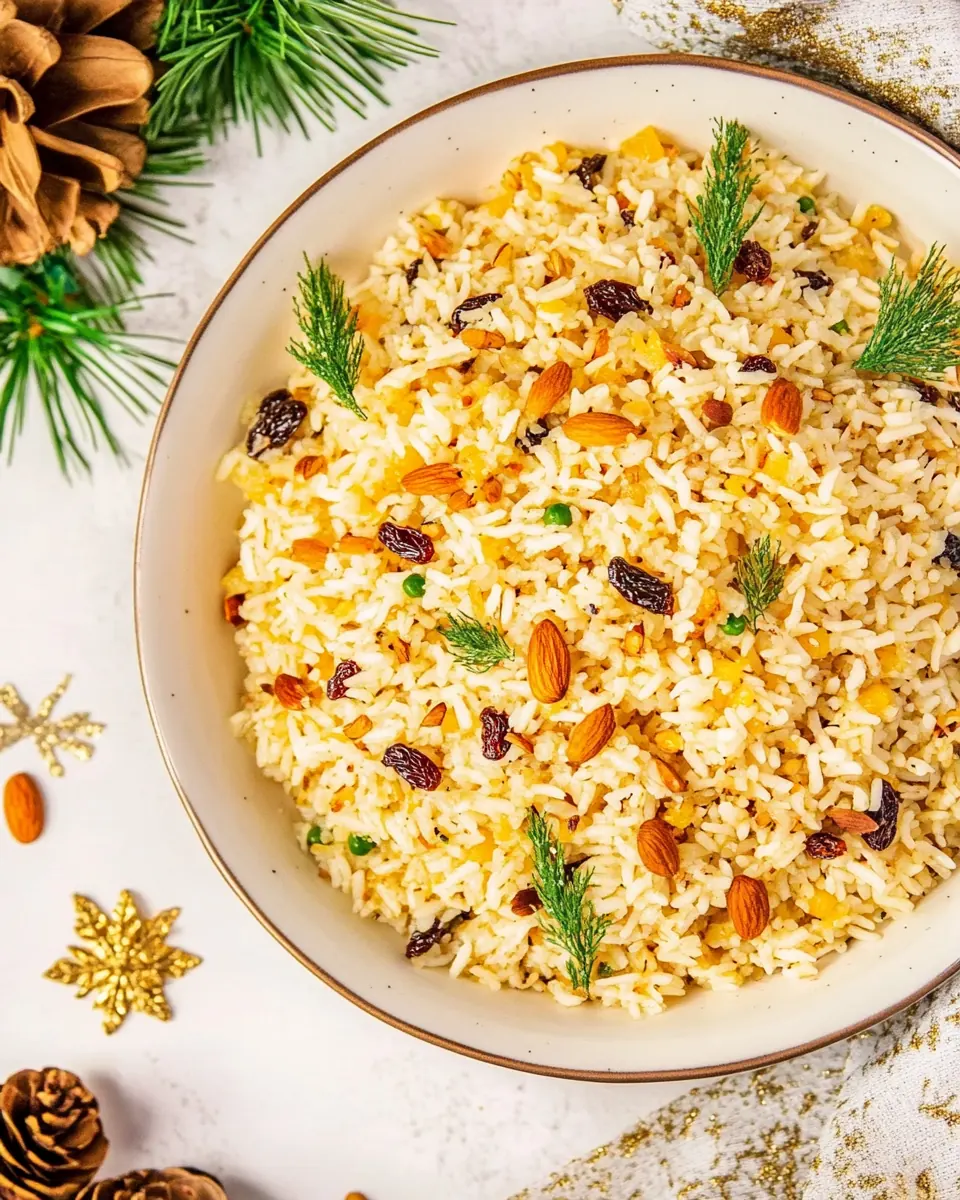
Heat the oil over medium heat. Stir in the almonds and cook stirring until they turn a light golden color. Remove the almonds from the oil and set them aside.: The pan should give off a faint, warm shimmer and the olive oil will smell slightly fruity when it reaches the right temperature, which signals readiness. You will hear a gentle fluid ripple as the oil moves, and the surface should become uniformly glossy. This gentle heat is important because it allows the almonds to toast evenly without burning. A common mistake is using high heat, which can scorch the oil and create a bitter taste, so lower the flame if you see rapid smoking.
Add the raw, unrinsed rice to the heated oil, cook stirring until the grains are coated with oil, and turn a slightly yellow color. Pour in the vegetable broth, stir and salt to taste. Boil over medium flame, stirring often, until the liquid has almost all evaporated. Add the raisins and sultanas and stir to combine. Lower the heat, cover with a tight-fitting lid, and simmer for 15 minutes. Stir the rice and simmer covered for another 10 minutes, or until the rice is cooked through. Uncover, fluff with a fork, and mix in the toasted almonds. Remove from the stove.: As you stir the almonds , pay attention to the sound, a faint crackle as they release moisture, and watch for a warm, nutty aroma to build in the pan. The color shift to pale gold is subtle, so keep stirring to ensure even browning and to prevent hot spots. Removing them promptly preserves their snap, while leaving them will continue to cook from residual heat and can produce an over toasted result. If some pieces darken too quickly, this usually means the heat was slightly too high.
Place the rice in a serving platter and sprinkle with fresh parsley.: When you transfer the almonds to a plate, they should still feel warm and crisp; this indicates they retained their texture. Setting them aside immediately stops carryover browning and keeps them from softening in the pan. I like to line the plate with paper to absorb any excess oil. A mistake at this point is leaving them in the pan, which allows trapped heat to steam them and reduce crunch.
Add the raw, unrinsed rice to the heated oil: The rice will sizzle softly as it hits the pan and begins to pick up the glossy coating from the oil. Stirring gently helps each grain become enveloped and slightly translucent at the edges, which is the visual cue that they are properly coated. This step helps the grains stay separate and prevents them from clumping later. If you skip coating, the texture can become sticky because the oil acts as a barrier against over absorption.
Cook stirring until the grains are coated with oil, and turn a slightly yellow color: You'll notice a faint shift in color and a subtle nutty aroma as the rice takes on the oil, a sign of Maillard like reactions that enhance flavor. The grains should glisten rather than look dull, and the sound in the pan will be a low, steady whisper as you stir. Overstirring after the broth is added is a frequent misstep, so keep movements gentle and purposeful here.
Pour in the vegetable broth, stir and salt to taste: As you add the hot vegetable broth , steam will rise immediately and the kitchen will fill with savory scent, which is reassuring because it means the temperature transfer is right. Stir just enough to distribute the liquid and dissolved salt , then give the pot a minute to begin simmering. Using boiling hot broth ensures the rice starts cooking evenly, while cool broth can cause uneven texture. A common error is over seasoning at this stage, so season lightly and plan to adjust later.
Boil over medium flame, stirring often, until the liquid has almost all evaporated: You will see vigorous bubbling that calms into a gentler simmer as the liquid reduces; the aroma concentrates and the surface of the pot will show small dimples where the heat meets the liquid. Stirring often prevents the grains from sticking and allows you to judge when the majority of the broth has been absorbed. If you stop stirring for too long the bottom may catch, producing a scorched flavor, so maintain regular movement and reduce heat if the simmer is too aggressive.
Add the raisins and sultanas and stir to combine: The dried fruit will plump slightly as it meets the warm grains, releasing a light sweetness that perfumes the pot. Mixing them in at this moment ensures they retain chew while soaking up just enough moisture to become juicy. If you add them too early they can break down, losing the pleasant contrast, so timing keeps their texture intact. Watch for a uniform distribution so each serving gets a balanced bite.
Lower the heat, cover with a tight fitting lid, and simmer for 15 minutes: With the lid on you will notice a softer bubbling and a gentle steam that presses down on the grains, finishing the cooking evenly. The pot will give off a steady, comforting steam that smells rounded and savory. This covered simmer is crucial because it traps heat and allows the rice to absorb residual liquid. A common mistake is peeking too often, which releases steam and lengthens the cooking time, so resist lifting the lid during this period.
Stir the rice and simmer covered for another 10 minutes, or until the rice is cooked through: After you briefly stir to redistribute moisture, the rice will settle into a final gentle simmer. The aroma should now be fully developed and the grains tender but still separate when tested with a fork. Leaving it to finish covered creates a gentle steam bath that yields even texture. If you uncover too early you might find portions undercooked, so trust the timing and check only at the end to avoid heat loss.
Uncover, fluff with a fork, and mix in the toasted almonds: Fluffing will separate the grains and release trapped steam, giving the rice an airy texture that showcases the contrast with crunchy almonds . The toasted pieces will snap audibly against the soft grains, and their aroma will feel renewed when combined. Add them and fold gently to preserve the crispness. A common error is stirring too vigorously which can crush the almonds and make the rice pasty.
Remove from the stove: Taking the pot off the heat halts the cooking process and prevents overdone grains. At this point the scent is warm and inviting, and the surface will look slightly glossy from the retained oil. Leaving it on residual heat can continue to dry out the rice, so transfer to a serving vessel or keep the lid loosely on if you must wait to serve.
Place the rice in a serving platter and sprinkle with fresh parsley: The final flourish of minced parsley adds a bright herbal contrast visually and aromatically, and scattering it over the warm rice releases a fresh green scent. Presenting the dish on a platter invites sharing and showcases the contrast of colors. Avoid chopping the parsley too far in advance because its vibrancy fades, and serve soon after garnishing to maintain its fragrance.