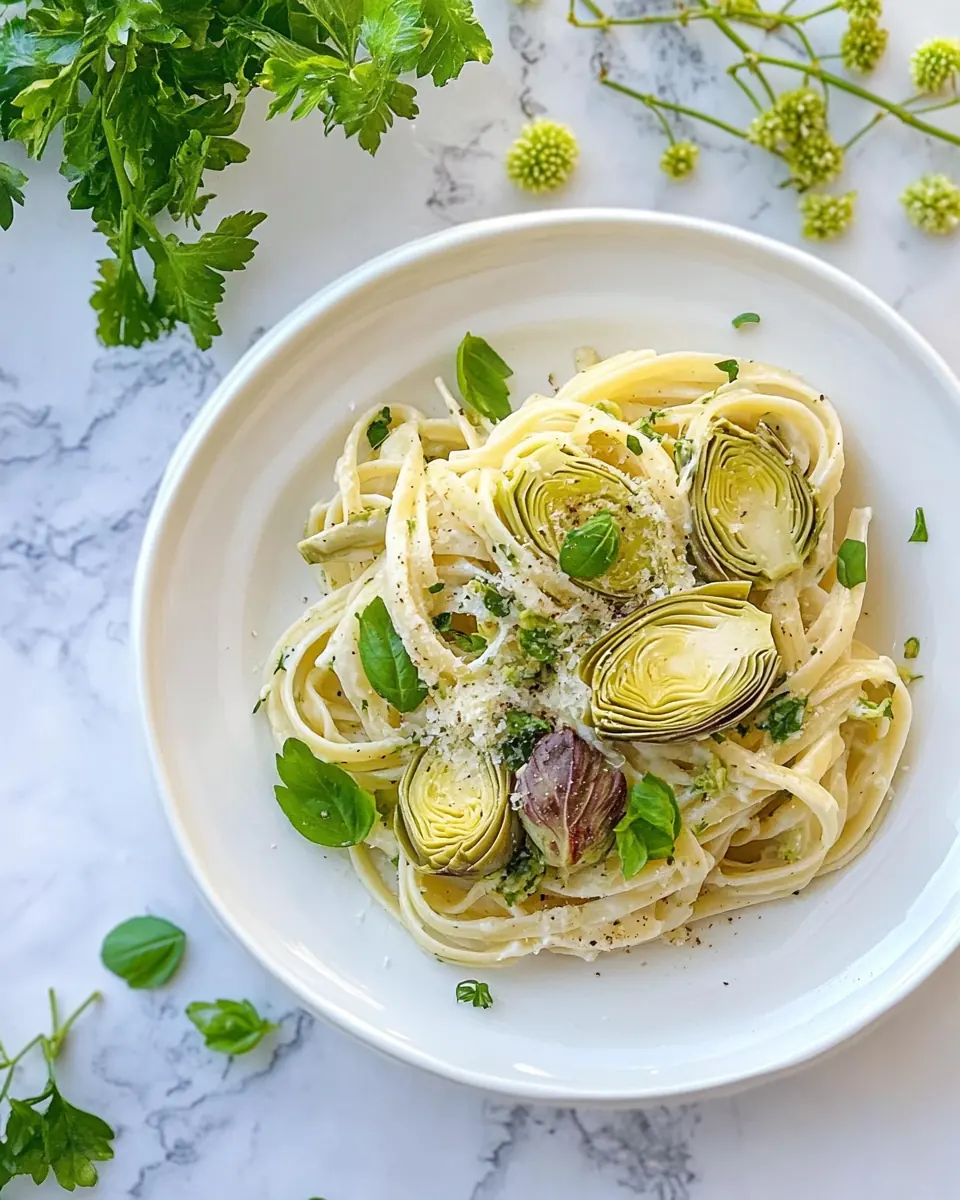
Prepare the artichokes and the lemon butter sauce.: The kitchen will fill with a warm, citrusy aroma as you melt butter and finish it with lemon. Use a small whisk or spoon to combine until the sauce is glossy, and taste for balance between buttery richness and bright acidity. The goal here is an emulsified, silky sauce that will cling to the pasta. Common mistake to avoid is overheating the butter so it separates, which makes the sauce greasy rather than silky. If your sauce breaks, add a splash of warm reserved pasta water and whisk vigorously to bring it back together.
Cook the pasta in a large pot of boiling salted water according to the package directions, or until al dente. Reserve 1/2 cup of the starchy pasta water before draining.: You will hear a steady, lively simmer as the pasta cooks and smell the salted water, which seasons the pasta from within. Aim for al dente so the strands retain a bit of bite, and stir occasionally to prevent clumping. When you drain, leave behind the starchy liquid needed for emulsifying the sauce. A common error is overcooking the pasta, which yields a limp texture; undercook slightly if you plan to finish the pasta in the sauce.
Drain and return the pasta back to the pot. Add the artichokes, lemon butter sauce, parsley, salt, and several grinds of pepper and toss to coat. If the pasta looks too dry, add the reserved pasta water, 1/4 cup at a time, until lightly saucy. Portion into bowls and top with the pine nuts and mint leaves. Serve with lemon wedges and pecorino cheese, if desired.: The reserved water should be warm and slightly cloudy, with a light starchy sheen. It will act as a binder, helping the lemon butter sauce coat the pasta evenly. Measure it immediately so you do not accidentally pour it away. A mistake to avoid is reserving cold water, which will cool the sauce and hinder emulsification; always reserve warm water right before draining.
Drain and return the pasta back to the pot: Returning the pasta to the pot keeps the heat contained and allows you to fold in other components efficiently. The pot will retain residual steam that helps the sauce absorb into the pasta. Use tongs or a pasta fork to transfer without breaking the strands. Avoid rinsing the pasta, which removes the starch needed for saucing and results in a slick, uncoated final dish.
Add the artichokes, lemon butter sauce, parsley, salt, and several grinds of pepper and toss to coat: As you toss, you should see the sauce cling to each strand and coat the artichoke pieces, creating a glossy finish. The sound is gentle, a soft clinking of utensils as ingredients amalgamate. Tossing helps distribute flavors evenly so every bite has artichoke and sauce. Do not dump everything in at once and then stop mixing, because uneven coating and clumps of seasoning can result; take your time to gently toss until uniform.
If the pasta looks too dry, add the reserved pasta water, 1/4 cup at a time, until lightly saucy: Adding a little warm starchy water will loosen the mixture and transform it into a velvety sauce that adheres to the pasta. You should see the sauce become glossy and just cling to the strands, not pool at the bottom. Add gradually so you do not overshoot the consistency. A typical pitfall is adding too much water at once, which makes the sauce watery; correct by simmering briefly to reduce or adding a touch more butter and tossing.
Portion into bowls and top with the pine nuts and mint leaves: Plating releases the final aroma of warm butter and fresh herbs, and the toasted pine nuts add an audible, pleasant crunch. Arrange the mint so it sits on top, releasing fragrance as people approach the bowl. The contrast in textures is a big part of the satisfaction here. Avoid chopping the mint too finely, which can cause it to wilt immediately under the heat; add it last for a bright finish.
Serve with lemon wedges and pecorino cheese, if desired: A final squeeze of lemon brightens the whole dish and a light grating of Pecorino introduces tangy umami. Encourage diners to add these elements to taste so each bowl can be personalized. Be careful not to overdo the cheese, as it can dominate the lemon notes. A common misstep is coating everything in cheese, which masks the delicate interplay between artichoke and lemon.