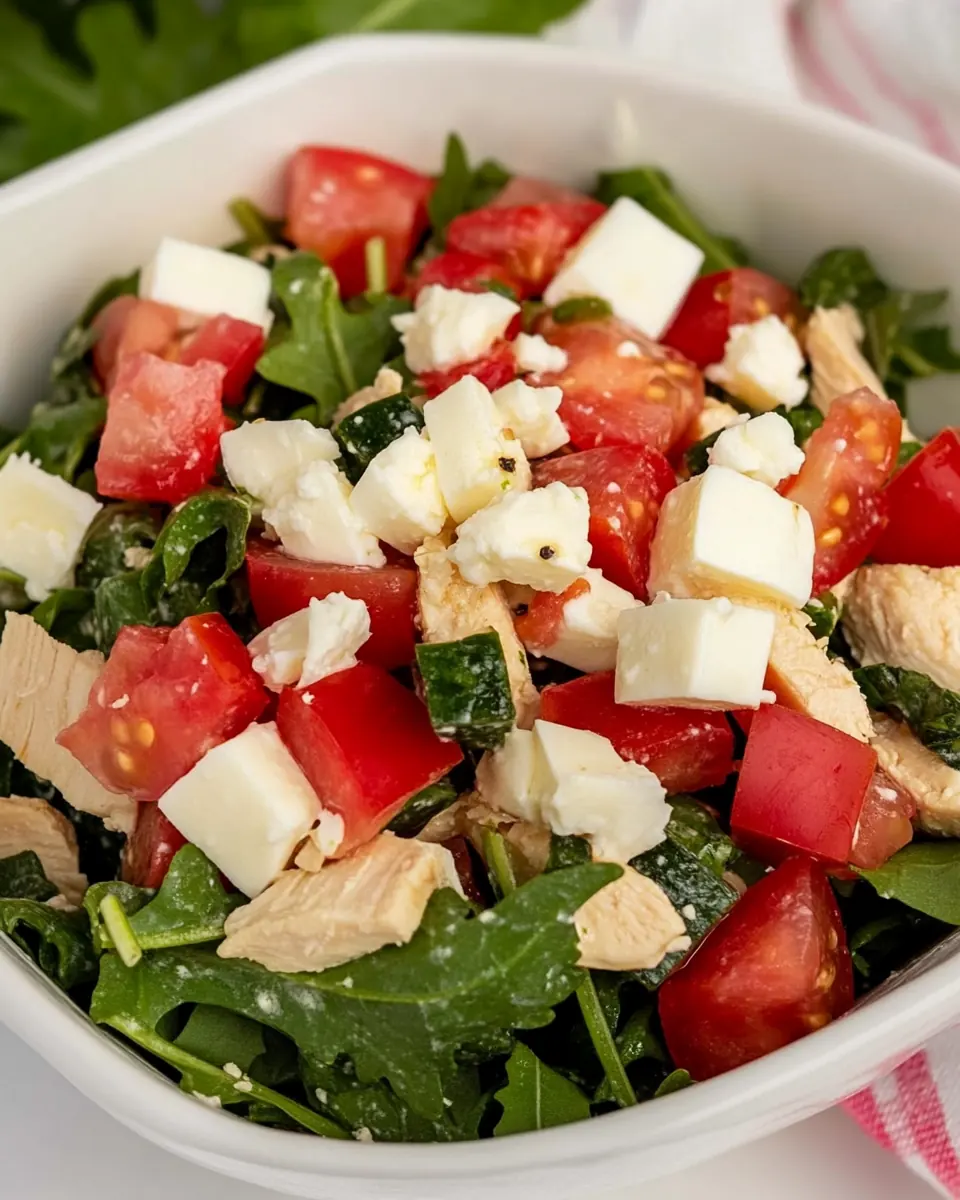
Cut leftover chicken breast or grilled chicken breast into pieces.: As you slice the chicken , notice the tender grain and any caramelized edges that carry extra flavor; cutting into uniform pieces helps the dressing cling and ensures even bites. Use a sharp knife to prevent tearing, and avoid chopping so finely that the chicken loses its presence in the salad, which can make the dish feel less substantial. If the chicken is cold from refrigeration, let it sit briefly so the oil and acid in the dressing can better penetrate during tossing.
Cut up the fresh mozzarella into small cubes.: Fresh mozzarella should be soft and moist, and cubing it lets the cheese distribute evenly so every forkful has creamy pockets. Gently press excess moisture with a paper towel if it seems watery, otherwise the cheese will dilute the dressing. One common mistake is handling the mozzarella roughly, which can make it mushy; use a light touch and clean cuts to keep the texture appealing.
In a small bowl whisk together white balsamic vinegar, lemon juice, olive oil, and Dijon mustard, and season dressing to taste with salt and fresh ground black pepper.: When you whisk these, watch as the dressing emulsifies into a glossy, cohesive mixture; the aroma of lemon and vinegar should pop through. Emulsifying matters because a stable dressing clings to leaves instead of pooling. If it separates, whisk in a tiny drop more oil or a small pinch of mustard to bring it back together. Over seasoning at this stage can overpower delicate components, so taste and adjust slowly.
Put mozzarella cubes and diced chicken into a small bowl and toss with half the dressing.: By tossing the mozzarella and chicken first, they soak up flavor and develop a shiny, appetizing coating. You will notice the oil hugging the surfaces and the citrus brightening the proteins. This technique prevents the greens from wilting under excess dressing and ensures those richer elements carry flavor through the salad. Avoid adding too much dressing here, which can make the mix oily rather than lively.
Wash and dry the baby arugula, then chop coarsely with large chef’s knife if desired. If the arugula is pretty small you can just skip that step.: Properly drying the arugula is crucial; water dilutes the dressing and leads to sogginess. The leaves should look crisp and slightly glossy, with a peppery scent when handled. If your arugula is larger, a coarse chop helps with forkful distribution. A common error is skipping the drying step, which will make the salad watery and lifeless, so use a salad spinner or towels to get the leaves dry.
Chop tomatoes or cut cherry tomatoes in half until you have about 2 cups chopped tomato.: As you cut the tomatoes , the scent should be sweet and fragrant, and the juice will glisten on your board. The size of the pieces should be bite friendly, providing bursts of sweetness against the peppery greens. If tomatoes are overly ripe and soft, remove some seeds and excess juice to avoid watering down the salad. Over chopping can create a mushy texture, so aim for uniform, medium sized pieces.
Put chopped arugula and chopped tomatoes into larger bowl and toss with the remaining dressing (or desired amount if you don't like a lot of dressing.): Tossing the greens and tomatoes separately prevents the leaves from becoming limp under dressing and lets you control coating intensity. As you toss, listen for the delicate rustle of leaves and watch them take on a light sheen, indicating proper coverage. If the salad seems dry, add more dressing gradually; if it becomes soggy, stop and serve immediately. A frequent mistake is overdressing the greens, which steals texture and overwhelms the fresh flavors.
Add the cubes of mozzarella and diced chicken you mixed with dressing and gently toss again.: Adding the dressed mozzarella and chicken last preserves their texture and keeps flavors distinct. When you fold them in, do so gently so the cheese does not break down and the chicken remains intact. The visual contrast of white cheese and golden protein against bright greens makes the plate inviting. If you toss too roughly, the salad will lose its elegance and the cheese may smear.
Season salad with more salt and fresh ground black pepper (to taste) and serve immediately.: Final seasoning is where everything comes together; small adjustments of salt and black pepper amplify the flavors without masking them. Serve right away to enjoy the textural contrasts at their peak, since sitting will soften the arugula . A common pitfall is letting the salad rest too long, which results in limp greens and muted brightness, so plate and serve promptly.