Go Back
Asparagus Chickpea Quinoa Salad

Asparagus Chickpea Quinoa Salad

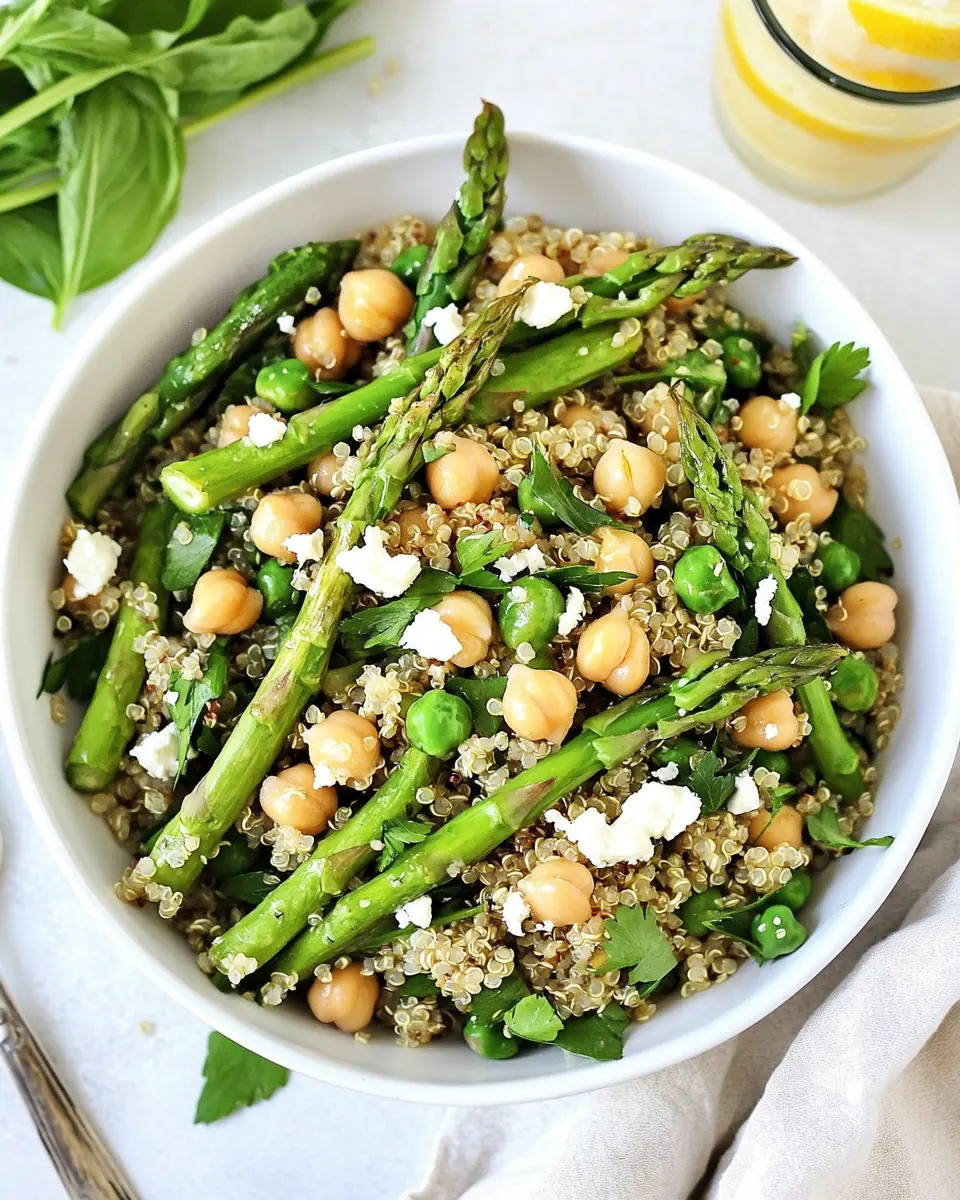
Asparagus Chickpea Quinoa Salad is a bright, protein packed bowl combining fluffy quinoa, tender asparagus, and creamy chickpeas with a lemony dressing and crumbled feta cheese. This easy weeknight salad delivers fresh, tangy, and savory notes with pleasing textures, making it perfect for lunches, potlucks, or make ahead meals, a great reason to try it tonight.
Prep Time 10 minutes
Cook Time 20 minutes
Total Time 30 minutes
Servings: 6 servings
Course: Salads
Cuisine: Mediterranean
Calories: 220

Ingredients
  

  • 1/4 cup freshly squeezed lemon juice Provide bright acidity and a citrusy backbone that balances richer flavors; use in dressing to brighten the salad and enhance other ingredients. Squeeze fresh for best aroma and avoid bottled juice to prevent added preservatives. Adjust quantity to taste to control overall tartness.
  • 1/4 cup extra virgin olive oil Offer a fruity, peppery fat that carries and melds flavors in the dressing; emulsify with lemon juice and mustard for a smooth vinaigrette. Use high-quality extra virgin olive oil for best flavor impact. Add gradually while whisking to achieve a cohesive dressing.
  • 2 teaspoons Dijon mustard Emulsify and add sharp, tangy depth to the vinaigrette while helping stabilize the lemon-olive oil mixture. Whisk into the dressing with mustard to ensure even distribution of flavor. Adjust a little at a time to avoid overpowering other components.
  • 1 clove garlic, minced Introduce a pungent, savory note that enhances overall savory complexity when minced and mixed into the dressing. Rub or mince finely to release oils for maximum flavor integration. Add according to tolerance for raw garlic intensity.
  • Kosher salt and black pepper, to taste Season and balance overall taste by enhancing other flavors and controlling seasoning levels throughout preparation. Use Kosher salt for clean salting and freshly cracked black pepper for bright spice. Taste and adjust at multiple stages for proper seasoning.
  • 2 cups water Cook quinoa by providing the necessary liquid; simmer until grains are tender and water is absorbed. Measure accurately to ensure proper texture without sogginess. Bring to a boil then simmer gently for best results.
  • 1 cup quinoa Form the base grain component that provides a nutty, slightly chewy texture and protein; rinse before cooking to remove bitterness. Combine with water and a pinch of salt, then simmer until fluffy. Cool before tossing into the salad to preserve texture.
  • 1/2 teaspoons salt Season the cooking water to infuse the quinoa with subtle savory flavor and help bring out its natural nuttiness. Measure carefully to avoid oversalting the grain component. Add at the start of the cooking process for even distribution.
  • 2 teaspoons olive oil Sauté or toss asparagus with oil to promote gentle browning and prevent sticking while adding a mild olive oil flavor. Use for quick cooking or roasting to develop texture and flavor before combining in the salad. Apply sparingly to avoid greasiness.
  • 1 small bunch asparagus, about 15 spears, cut into 1-inch pieces Provide tender-crisp vegetable texture and a fresh, grassy flavor when cut into uniform 1-inch pieces for even cooking. Steam, blanch, or roast briefly to retain color and crunch before combining with quinoa. Trim woody ends to ensure pleasant bite.
  • 1 tablespoon fresh lemon juice Add a concentrated citrus boost to brighten the dressing or finish the salad with a fresh lemon note, layering acidity beyond the primary lemon juice. Use freshly squeezed for vibrant aroma and immediate brightness. Adjust to taste for final balance.
  • 1 1/2 cups chickpeas, rinsed and drained, 15 oz can Contribute creamy, earthy protein and a slightly nutty flavor while adding bulk and heartiness to the salad; drain and rinse to remove canning liquids. Fold in toward the end to preserve shape and texture. Chickpeas also absorb dressing flavors well.
  • 3 green onions, sliced Provide a mild, onion-like bite and fresh green color while adding subtle crunch when thinly sliced. Scatter on top for freshness and mild sharpness that complements richer elements. Use both white and green parts for varied texture.
  • 1/3 cup crumbled feta cheese Introduce a salty, tangy, creamy element that adds richness and balances acidity while contributing a Mediterranean character. Crumble over the finished salad to provide pockets of savory flavor. Use sparingly to control overall saltiness.
  • Salt and freshly ground black pepper, to taste Finish by seasoning and rounding out flavors with additional salt and freshly ground pepper; use to taste for final balance. Re-taste after combining all components to ensure harmony. Grind pepper fresh for maximum aromatic impact.

Equipment

  • Medium Saucepan
  • Large Skillet
  • Mixing Bowl
  • Whisk or jar with lid
  • Fork

Method
 

  1. In a small bowl or medium jar, combine the lemon juice, olive oil, mustard, and garlic. Whisk to combine or shake with the jar lid on tight. Season with salt and pepper, to taste, and set aside.: You will smell the bright lemon and sharp mustard immediately, which signals the dressing is lively. Emulsifying until it slightly thickens helps it cling to the quinoa and vegetables. If the dressing separates later, a quick whisk before tossing will bring it back together. Avoid adding too much salt at this point, because the feta cheese will add saltiness later.
  2. Add water, quinoa, and salt to a medium saucepan and bring to a boil over medium heat. Boil for 5 minutes. Turn the heat to low and simmer for about 15 minutes, or until water is absorbed. Remove from heat and fluff with a fork.: As the pot comes to a boil you will hear a steady simmer and see the tiny grains shimmer; this is when they begin to absorb water. After simmering, the surface should show small holes where steam escapes, and the liquid should be mostly absorbed. Letting it sit off heat for a few minutes helps steam finish the job. A common mistake is lifting the lid too often, which releases steam and can make the quinoa unevenly cooked. Fluffing with a fork keeps the grains separate and prevents clumping.
  3. While the quinoa is cooking, cook the asparagus. In a large skillet, heat the olive oil over medium heat. Add the asparagus and fresh lemon juice. Cook until tender, about 5 minutes.: You want to see the asparagus turn a brighter green and hear a gentle sizzle when it hits the pan. As it cooks, the aroma of lemon will lift and the edges may show slight browning, which adds a touch of caramelized flavor. The tips should be tender but still have a bite. Overcooking results in limp, olive colored stalks, so keep an eye on texture by piercing with a fork.
  4. In a large bowl, combine quinoa, asparagus, chickpeas, green onion, and feta cheese. Pour the dressing over the salad and stir until well coated. Season with salt and pepper, to taste. Serve.: When you toss everything together you should see the dressing sheen across the quinoa and vegetables, and the scent of lemon and garlic will be front and center. Stirring gently helps keep the feta cheese crumbles intact while ensuring even distribution. Taste and adjust seasoning, bearing in mind that canned chickpeas and feta cheese carry salt, so start light. A common issue is overdressing, which can make the salad soggy; start with less and add more if needed.
Notes

  • Make ahead advantage: Prepare the quinoa and dressing the day before. Chilling them overnight lets the dressing mellow and the grains firm up, which helps the salad hold together when tossed.
  • Adjust salt carefully: Since the salad contains canned chickpeas and crumbled feta cheese, season conservatively before tasting the combined salad, then add more if needed.
  • Asparagus doneness: Aim for a tender crisp texture for the asparagus. Overcooked stalks become limp and less visually appealing, so check by piercing a piece with a fork.
  • Warm vs cold: You can toss the salad warm or fully chilled. If serving warm, add the feta cheese at the end so it keeps its texture instead of melting into the grains.
  • Vegan option: Omit the feta cheese and consider sprinkling nutritional yeast for a savory boost while keeping the salad plant based.