First, place the hazelnuts in the oven and let roast until it is fragrant and golden; 12 to 15 minutes or so.: Notice the warm nutty aroma as the hazelnuts toast, and watch their color shift from pale to golden brown, which signals caramelized oils releasing flavor. You should hear a faint popping and see them become slightly darker at the edges, a cue they are ready. This step builds a toasty contrast against the creamier elements in the dish, and skipping it will lose that textural highlight. A common mistake is leaving them too long, which creates a bitter aftertaste, so check them at around 10 minutes and shake the pan to ensure even browning.
Start the water and bring it to a boil and a separate skillet to make the pasta on the stovetop.: The boil should be vigorous enough that a wooden spoon placed in the water shows steady movement, which prevents pasta from sticking and helps the starch release into the water. Meanwhile, warming the skillet prepares you to finish the sauce while the pasta cooks, keeping everything in sync. If the water is under salted, the pasta will taste flat, so season well. Avoid an aggressive rolling boil that splatters, and use a large pot so the pasta has room to move.
Place a stalk of asparagus against a flat handle or spatula. Place the tip downward and your thumb securing the asparagus in place. Shave, down towards the counter. Repeat and flip the stalk as needed then repeat with remaining asparagus.: As you shave the asparagus , you should feel a slight resistance followed by a thin ribbon peeling away, resulting in delicate slices that cook quickly. The aroma is fresh and green, and the texture becomes silky rather than fibrous, which makes each bite pleasant. This technique prevents woody strands and keeps the vegetable tender. A common error is shaving too thickly, producing chewy ribbons, so aim for thin, even strokes for consistent cooking.
Once the asparagus is good to go, add the pasta to the boiling water and start cooking. Cook according to the package directions.: When you drop the pasta it should sink then rise gently as the water returns to a boil, indicating proper temperature. Stir early and periodically to avoid clumping. Cooking to al dente gives a pleasant chew that holds up while you finish the sauce in the skillet, and slightly undercooking by a minute helps avoid mushy final texture. The frequent mistake is overcooking, which results in a limp bite that will soak up too much sauce and lose structure.
As the pasta is cooking, heat the skillet over medium heat and add the butter. Let melt then add the garlic. Cook until fragrant and just golden, about 2 minutes. Stir in the beans with their liquid and cook until the liquid begins to thicken.: The butter should shimmer and smell creamy once melted; the minced garlic will release an immediate aromatic burst that perfumes the pan. Adding the white beans with their liquid creates a starchy, velvety base as the bean liquid reduces slightly. You will see tiny bubbles and a glossy sheen when the liquid starts to thicken, which means it is ready to embrace the pasta. Avoid browning the garlic, which turns bitter; lower the heat if it darkens too quickly. If the bean liquid reduces too much, you can loosen it later with reserved pasta water.
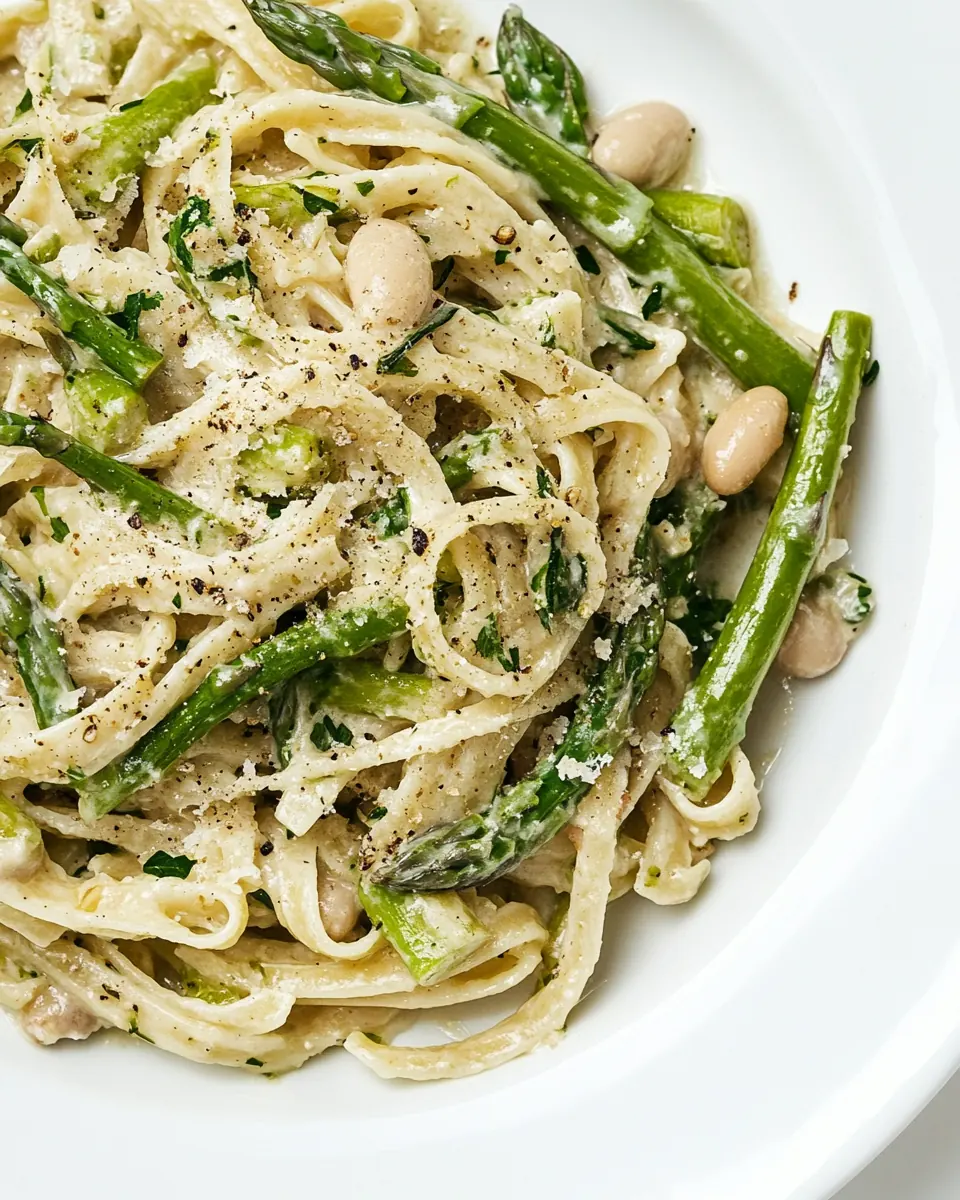
Once this happens, transfer the cooked pasta to the pan, reserving some of the pasta water. Add the shaved asparagus now as well. Cook over low until the pasta combines with the beans and the asparagus is heated. Add a splash or two of water as needed to thin the sauce. Taste and add salt as needed.: At this point you will hear a gentle sizzle as the warm pasta hits the bean sauce, and the sauce should cling to the noodles forming a glossy coating. The shaved asparagus will wilt in seconds, turning slightly brighter green and tender, which signals readiness. Stirring releases starch that helps the sauce adhere. If the mixture seems dry, add a spoonful of reserved pasta water, watching the texture change to a silky, cohesive emulsion. The common slip here is over thinning the sauce, so add water sparingly and taste, because seasoning can become diluted.
Turn off the heat and add the lemon juice, parmesan, and basil. Taste again and adjust the flavors if needed (more lemon, parmesan, or basil). Serve with black pepper, the toasted hazelnuts, and more cheese.: With the heat off, the parmesan will melt gently into the warm sauce, turning it creamy without becoming gluey. Stir in the lemon juice which will awaken the aromatics and lift the overall profile, and the minced basil will release its sweet, peppery fragrance. Finish with cracked black pepper and scattered toasted hazelnuts for crunch. The plate should smell bright, and the sauce should coat each strand of pasta. Avoid adding cheese while still on high heat as it can clump, and always taste before final seasoning to prevent over salting.