Preheat oven to 350 F. Use 1 Tbsp butter to grease a 3 quart (9×13) casserole dish.: The warm air of the oven should smell faintly of heat when ready, a subtle signal that browning will begin as soon as the dish goes in. Greasing the dish prevents sticking and helps the edges release cleanly when you serve. A common slip is skipping this step, which can make portions tear when lifted, so be sure the butter reaches corners and sides. If your dish is cold, allow it to warm slightly before adding the casserole to avoid thermal shock.
In a large pot or dutch oven over medium heat, melt 4 Tbsp butter. Add flour whisk for 2 minutes to cook off the flour taste. Gradually pour in the milk then the cream while whisking. Add salt, pepper, onion powder and garlic powder then continue whisking until sauce has thickened. Add more seasonings to taste. Remove from heat and stir in half of the shredded cheese until melted.: As the butter melts, you will hear a gentle sizzle and smell nutty butter aroma, which becomes the base of the sauce. When you sprinkle in the flour and whisk, the mixture will foam slightly and thicken, transforming into a velvety roux; cooking it for the full two minutes removes any raw flour flavor. Slowly streaming in the milk and heavy whipping cream while whisking prevents lumps and yields a glossy sauce that slowly thickens, so watch for it to coat the back of a spoon. Once spices join the mix, you will notice the aroma deepen and the sauce profile shift from bland to savory. Stirring in half the cheese off the heat ensures smooth melting, creating silkiness without overcooking the dairy. If your sauce is thin, simmer gently on low while stirring; if it splits, a quick whisk off heat can sometimes bring it back. Avoid high heat which can scorch the bottom and ruin the flavor.
Peel potatoes if desired and thinly slice to 1/8 inch thick (a food processor makes this quick and easy). Add potatoes to the cheese sauce and stir to coat, then spread the potatoes evenly in the prepared baking dish and top with the remaining grated cheese.: When slicing, the kitchen will smell faintly of raw potato, a clean vegetal scent, and you should see translucent thin rounds stack neatly. Evenness is key so each slice reaches tenderness at the same time, and a food processor or mandoline gives you consistent results quickly. Tossing the slices in the warm sauce helps them take on the creamy coating, and you should notice the sauce clinging to edges. Arrange the layers so air pockets are minimized, helping even baking, then blanket the top with remaining cheese to form that golden crust. A frequent mistake is piling slices too loosely, which can dry out interior pieces; press gently to compact layers without smashing them.
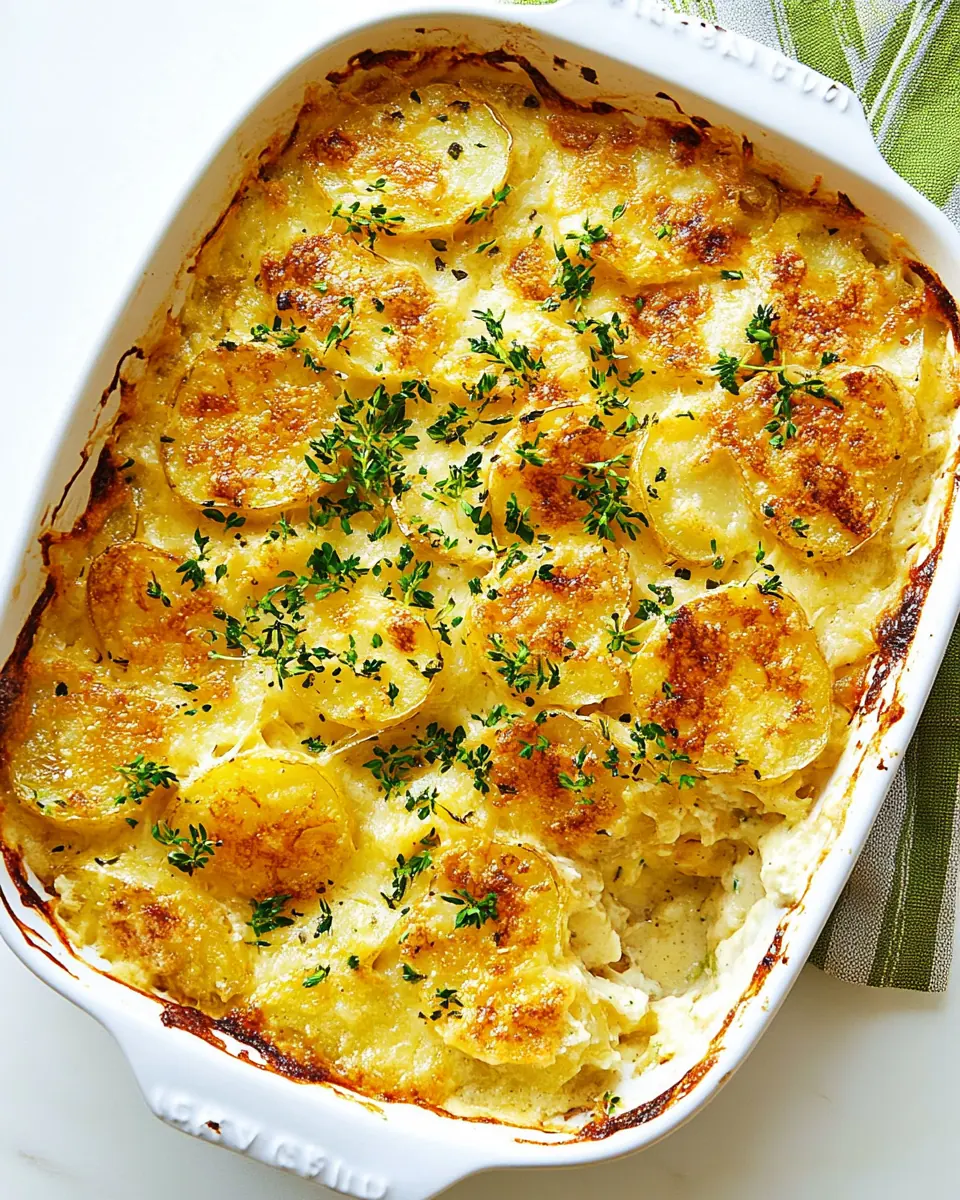
Cover with aluminum foil and bake for 60 minutes. Remove foil and bake another 15-30 minutes or until top is golden brown and potatoes are tender and can be easily pierced with a fork. You can broil for 1-2 minutes at the end if more browning is desired but keep an eye on it so it doesn’t burn. Rest for 15 minutes before serving. Garnish with chives and freshly cracked black pepper if desired.: As the dish bakes under foil, the steam inside creates a humid environment that slowly cooks the potatoes through, softening them while keeping moisture locked in. You will hear faint bubbling and detect a warm, milky scent escaping when you lift the foil briefly. This covered stage prevents the top from browning too quickly and ensures tender interiors. Avoid leaving it uncovered too soon, which can dry the potatoes and lead to uneven doneness.
Remove foil and bake another 15-30 minutes or until top is golden brown and potatoes are tender and can be easily pierced with a fork.: Removing the foil invites the heat to brown the cheese, and you will watch the surface go from pale to golden to deep brown in spots, accompanied by the pleasant crackle as crust forms. Test doneness by piercing a center slice with a fork, it should slide through without resistance. If the top is not browned enough, broil for 1 to 2 minutes with close attention to prevent burning, which happens fast under high heat. A common pitfall is overbaking during this stage, which dries the layers, so check early and often.
You can broil for 1-2 minutes at the end if more browning is desired but keep an eye on it so it doesn’t burn. Rest for 15 minutes before serving. Garnish with chives and freshly cracked black pepper if desired.: The final broil gives a toasty finish and a burst of savory aroma, but it only takes moments to go from perfect to charred, so stand by the oven. Letting the gratin rest for 15 minutes allows the sauce to settle and thicken slightly, making clean slices and ensuring it holds together on the plate. During resting, the steam redistributes, and the surface cools just enough to be approachable. If you skip resting, the slices can collapse and the sauce will run; patience yields better presentation and texture. A light sprinkle of chives refreshes each forkful with color and a hint of brightness.