Whisk together dressing ingredients or add all to a jar and shake well.: The air first meets the dressing as you whisk or shake, releasing herb oils and the sharp perfume of white balsamic vinegar , while the canola oil softens the acidity into a glossy emulsion. You should smell a bright, layered aroma of herbs, citrus, and a hint of garlic, which signals the dressing is well blended. This step matters because a well emulsified dressing clings to the spinach without pooling at the bottom, ensuring balanced flavor in every forkful. A frequent mistake is under emulsifying, which leaves the oil separated, so whisk vigorously for at least 20 to 30 seconds or shake the jar until it's uniformly opaque. If your dressing tastes too sharp, a touch more honey will round it, but add sparingly. Avoid letting the minced garlic sit in acid for too long if you want a mellow garlic note, otherwise it can become very pungent. Toss any large herb pieces gently into the dressing so they infuse without overwhelming single bites. Finally, set the dressing aside for a few minutes to let flavors integrate while you prepare the rest of the salad.
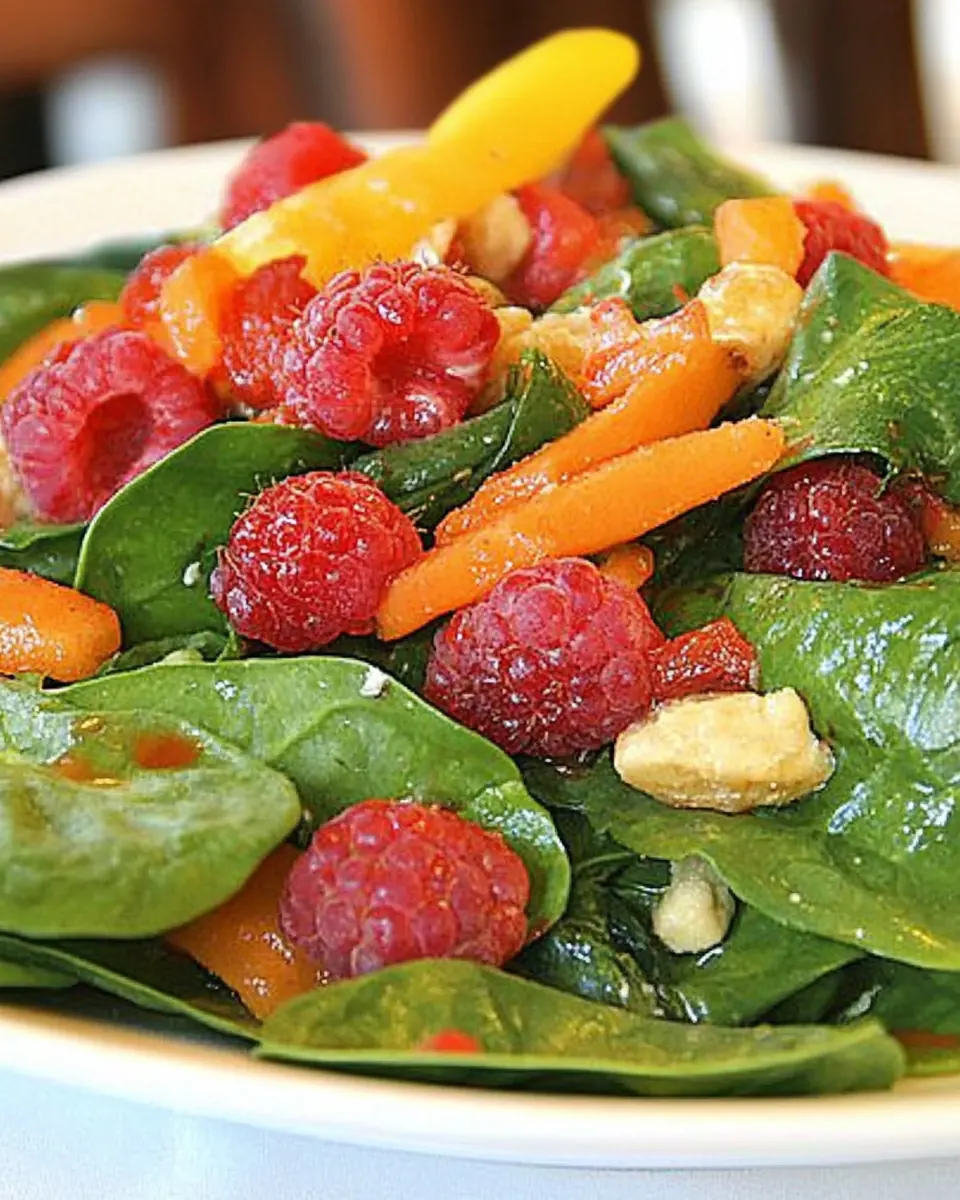
Place the spinach in a bowl and add all additional salad ingredients. Toss with desired amount of dressing, plate and serve.: As you arrange the baby spinach in a large bowl, notice the soft, almost velvety leaves forming a green bed, which contrasts with the jewel like raspberries and bright orange segments. Add the coarsely grated carrot , crisp red bell pepper strips, and the toasted sunflower seeds or pine nuts so textures are layered throughout. This order matters because distributing denser items among the leaves ensures each forkful has balance, rather than clumping all fruit together. A common error is crowding the bowl and smashing the delicate berries, so add them last or tuck them in gently with a light hand. If the bowl is too small, transfer to a larger one to avoid bruising the ingredients while tossing. You should be able to hear the faint rustle of the leaves as you add ingredients, and see a colorful contrast that promises a lively mouthfeel. If any pieces of herb are large, chop them smaller so they disperse evenly among the salad.
Toss with desired amount of dressing, plate and serve.: Once you pour a modest amount of dressing, use clean serving utensils to lift and fold the salad, aiming for a light, even coating rather than dousing the ingredients. The sound here is subtle, a soft clinking as leaves move and a brief glisten as the dressing spreads, and visually you want to see a sheen without pooling. This technique preserves the integrity of the raspberries and orange segments, which can burst if overhandled, so fold gently from the bottom up rather than stirring aggressively. Overdressing will make the salad soggy and mute the lively contrasts, so start with less and add more after tasting. If you plan to serve later, hold back some dressing and seeds to maintain crunch and color. Plate immediately for the best texture, arranging a few whole raspberries on top for visual appeal and setting aside extra dressing for guests who like a heavier pour. Avoid tossing on a surface that is too small, because crowding can bruise the fruit and make the leaves limp.