Preheat the oven to 350˚F.: As the oven warms you will notice a dry, warm convection moving through the kitchen, and this steady heat helps finish the chicken evenly after searing. Preheating ensures that residual heat from the skillet carries the pieces through to the proper internal temperature, avoiding overcooking on the stovetop. A common mistake is placing the skillet into a cold oven which lengthens cooking time and can dry the chicken . Make sure the oven reaches the set temperature before transferring the pan.
Place the chicken breast in a zip top bag, or covered container. Add the lime juice, orange juice, jalapeno slices, garlic, oregano, cumin, salt, pepper, and half of the cooking oil.: When you combine the chicken and marinade you should hear the soft squish of liquid around the meat and smell the citrus and spices immediately. This acidic bath starts to break down proteins gently, which is why it tenderizes the meat while imparting flavor. If your marinade pools unevenly, massage the bag so every surface is coated. Avoid using too acidic a ratio for longer than three hours which can make the exterior mushy.
Mix well until the chicken is evenly coated in the marinade. Let marinate in the refrigerator for at least 20 minutes, or up to 3 hours.: You will see the marinade cling to the chicken , and the flesh will take on a slightly glossy sheen. In the fridge the flavors meld and the meat firms slightly in a pleasant way. For best results avoid marinating much longer than three hours to prevent texture breakdown. If short on time, even a 20 minute marinade will impart a noticeable lift in flavor.
Heat the remaining oil in a large oven-safe skillet over medium high heat. Once hot, add the chicken breast to the skillet and let sit on the first side 2-3 minutes without moving to sear. Once a nice golden brown sear has formed, flip the chicken and cook an additional 2-3 minutes.: As the chicken hits the hot oil you should hear a steady sizzle, and the aroma of seared spices will bloom. That initial stillness is crucial for developing a golden brown crust which locks juices inside. If you move the pieces too soon they will stick and tear instead of forming that desired sear. Keep the heat high enough to sizzle, but not smoke, to avoid bitter burnt flavors.
Transfer the skillet to the oven and cook for an additional 10-15 minutes or until chicken reaches 165˚F internal temperature. Note: if you don't have an oven-proof skillet, you can transfer the chicken to a baking sheet or casserole dish, but it may take a couple of extra minutes to cook.: After flipping you will see the new side turn opaque and edges firm slightly, with a deepening golden hue. The seared crust adds Maillard richness that contrasts with the citrus tang. A common error is crowding the pan which lowers the temperature and prevents browning, so leave space between pieces for best color and texture.
Note: if you don't have an oven-proof skillet, you can transfer the chicken to a baking sheet or casserole dish, but it may take a couple of extra minutes to cook.: The oven finishes the chicken gently, and you may notice a faint citrus steam rise when you open the oven. The internal temperature ensures safety while preserving juiciness. If you don't have an oven proof skillet, using a baking sheet will work but watch closely, as it can require a couple extra minutes. Avoid overshooting the temperature which will dry the meat.
Let sit 5 minutes, then slice.: if you don't have an oven-proof skillet, you can transfer the chicken to a baking sheet or casserole dish, but it may take a couple of extra minutes to cook. : Using an alternate vessel can slightly change heat transfer, so expect a touch more cooking time and adjust by checking temperature. Visual cues such as juices running clear and flesh losing translucence are helpful. The common pitfall is forgetting to adjust time, which leads to undercooked centers; use a thermometer to be confident.
Place all sauce ingredients in a blender or food processor and blend until smooth.: Resting allows the juices to redistribute so each slice remains moist, and you will notice the meat firms just enough to slice cleanly. Slicing too soon causes the juices to run out, leaving drier pieces. Use a sharp knife and slice against the grain for the most tender bites.
Place one cup of rice in the base of each bowl, and set the sliced Baja chicken on top of the rice.: When you blend the greek yogurt , salsa verde , cilantro , lime juice , and the extra garlic , the aroma becomes herbaceous and bright. The texture should be silky and pourable so it drapes the bowl without being too thin. If the sauce is too thick add a teaspoon or two of water to reach the right consistency. Overblending can warm the sauce slightly and mute fresh herb notes, so pulse to keep it vibrant.
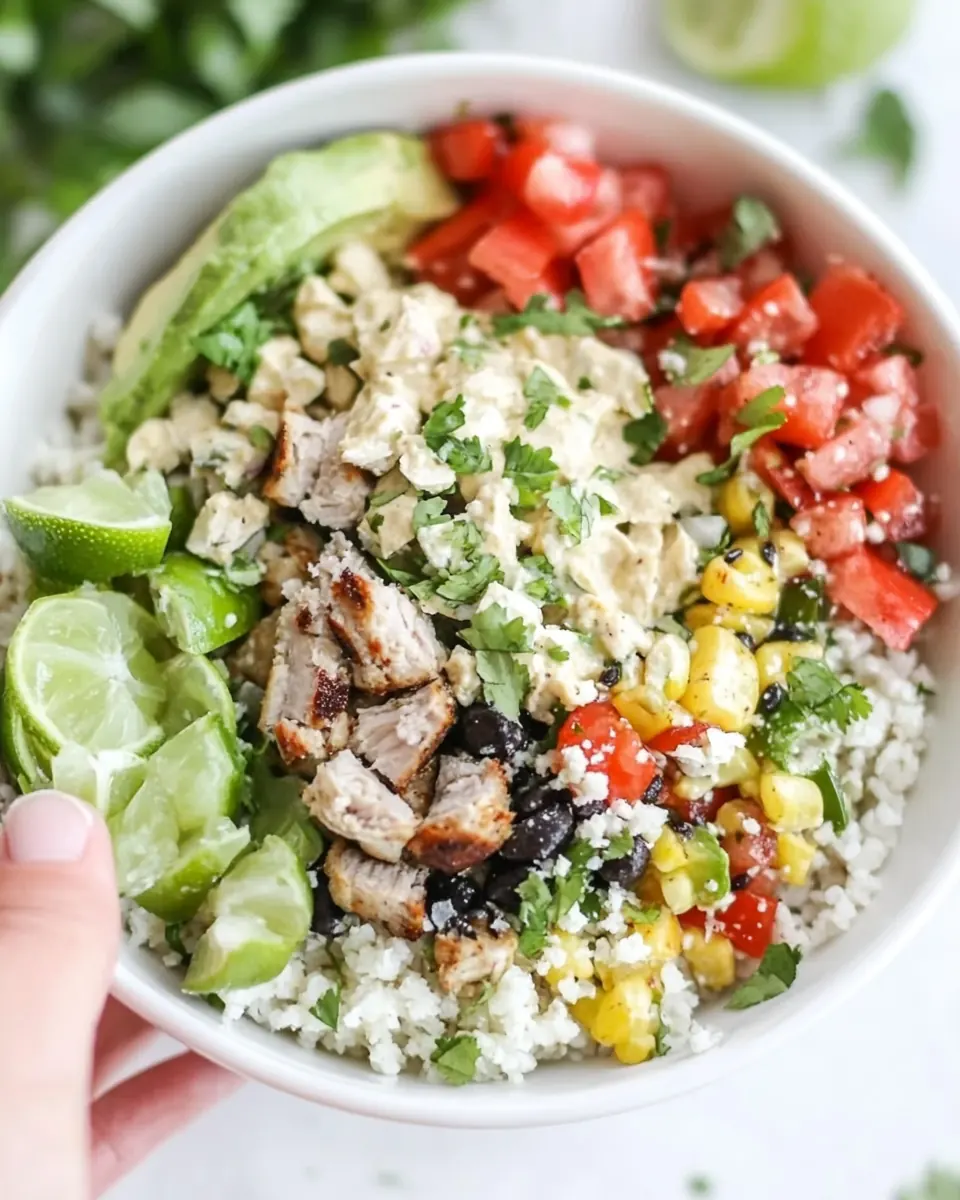
Layer on the black bean and corn salsa, tomatoes, and avocado.: The warm cilantro lime rice creates a comforting base that contrasts with the chilled toppings. Spoon the rice gently so it forms a tidy bed, then fan the sliced chicken across for an attractive presentation. A common mistake is piling everything together which makes it hard to get balanced bites; arrange components so each scoop gets a little of everything.
Drizzle the creamy cilantro sauce over the top of the bowl. Sprinkle feta and serve.: As you add the black bean and corn salsa , halved grape tomatoes , and sliced avocado , the bowl takes on color and texture. The salsa adds a sweet pop, tomatoes give juicy acidity, and avocado offers creamy relief. To avoid sogginess, place wetter components like salsa on top rather than directly against the rice for long storage.
Drizzle the creamy cilantro sauce over the top of the bowl. Sprinkle feta and serve.: A ribbon of the cilantro sauce ties the bowl together with cooling, tangy creaminess, and the crumbled feta cheese adds salty brightness. The final plate should look layered and balanced, with pops of green, red, and creamy white. Resist the urge to drown the bowl in sauce, a light drizzle complements rather than overwhelms.