Preheat oven to 350. Spray a 9 x 13 inch casserole dish with nonstick spray and set aside.: As you set the oven, notice the faint mechanical hum and the gradually rising warmth that will coax sugars to bloom and toppings to brown. Preheating ensures an even start so the topping begins to toast at the same time the fruit begins to release juices. A common mistake is putting the dish into a cold oven, which can make the topping soak instead of crisp. Be sure your oven actually reaches the temperature before you slide the pan in.
Combine all ingredients in a large bowl and toss to coat the apples in the sugar, cinnamon, and flour. Pour into the prepared pan. Set aside.: Coating the dish prevents sticking and preserves the integrity of the baked fruit when you serve it. When the pan is lightly greased, the edges peel away cleanly and you get nice portions. Avoid using too much spray, which can cause excess oil to pool. If you have a silicone brush, a light sweep of oil will do the job more evenly.
In a large bowl (this can be the same bowl used for the apples) combine all ingredients. Using your hands, gently rub the ingredients together to make fine crumbs. Pour on top of the apples.: When you toss the diced apples with coconut sugar , cinnamon , and the tablespoon of almond flour , you should see a glossy coating and smell warm spice. This step helps the apples begin to macerate, releasing juices that will mingle with the flour to thicken into a sauce. A typical error is overmixing, which can break down the apple pieces and make the filling mushy. Gently fold so the pieces stay intact.
Bake for 30 to 40 minutes until apples are soft and topping is golden. Let cool slightly before serving. Enjoy!: As you spread the coated fruit, try to distribute it evenly so every spoonful has a similar apple to topping ratio. The apples should sit in a single, even layer so heat penetrates uniformly and pieces soften at the same rate. Piling them can create pockets that take longer to cook and leave uneven texture. Use a spatula to level the layer smoothly.
Set aside: Allowing the fruit to rest briefly before topping helps the flavors settle. During this pause you can prepare the topping without the hassle of fruit juices splashing. If you rush, the topping may slide into puddles of juice rather than forming crumbs. Patience here makes a noticeable difference in final texture.
In a large bowl combine all ingredients: For the topping, mix the old fashioned oats , almond flour , chopped pecans , additional cinnamon , salt , melted coconut oil , and honey until the components are evenly distributed. The scent should shift toward toasted nuts and warm spice as the oil binds the dry ingredients. A common slip is adding too much oil which leads to greasy crumbs, so aim for a mixture that clumps lightly when pressed between fingers.
Using your hands gently rub the ingredients together to make fine crumbs: The tactile method is key, because rubbing with fingers creates irregular clusters that toast differently and provide that bakery style crumble. You will feel the mixture transform from dusty to slightly tacky, and you should hear the faint rustle of oats. If the mixture feels too wet, sprinkle a touch more old fashioned oats or almond flour . Avoid overworking which can crush the pecans too finely.
Pour on top of the apples: Scatter the topping so it covers the fruit in an even blanket, leaving no bare zones. The contrast between thick and thin patches creates variety in every spoonful. If you pack it down, you will end up with denser clusters rather than crisp, flaky crumbs. Use gentle pressure to settle the topping without compressing it.
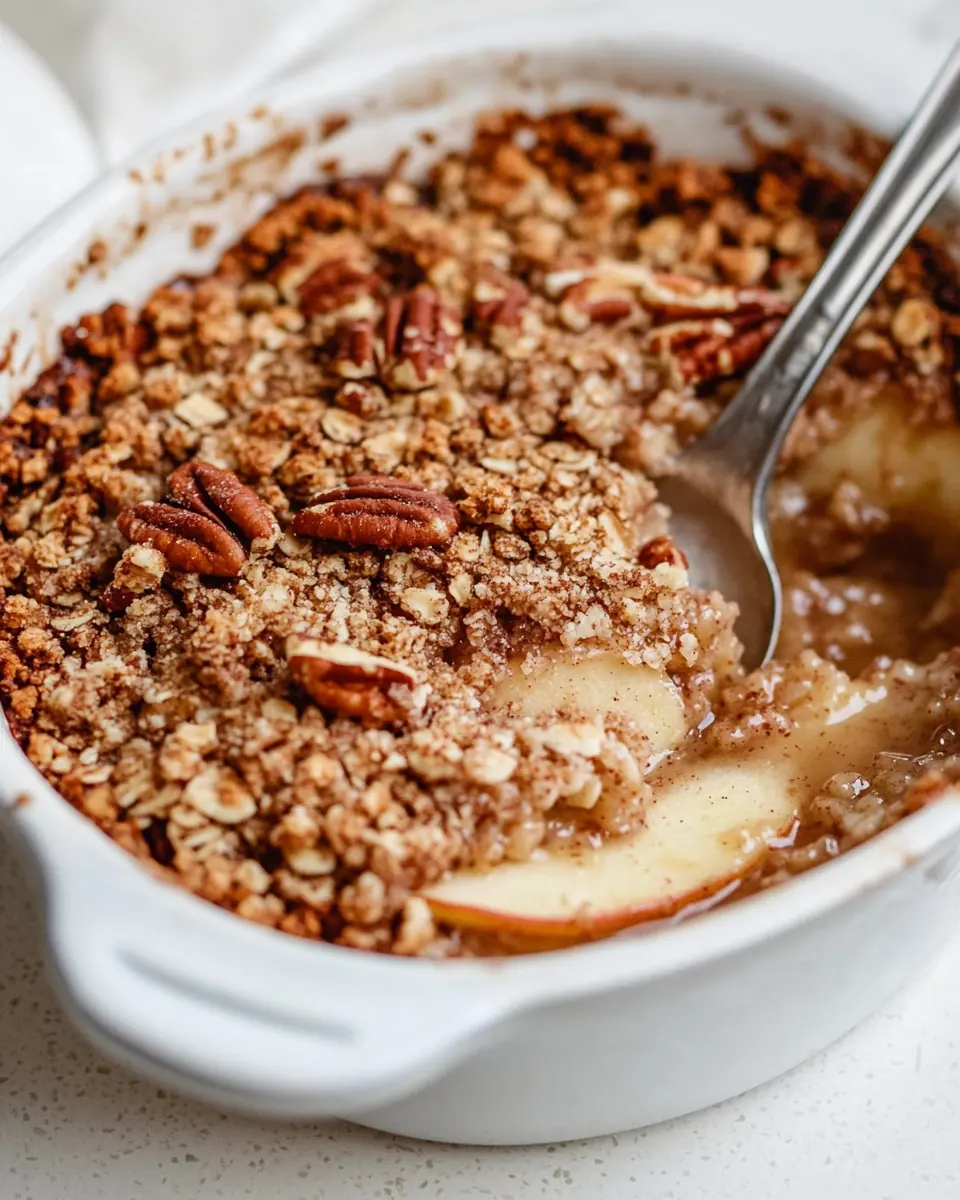
Bake for 30 to 40 minutes until apples are soft and topping is golden: As it bakes, watch for a slow bubbling at the edges and a deepening golden brown on the topping. The kitchen will fill with a nutty, spiced aroma and the topping should begin to crisp with tiny browned pockets. If it browns too fast, tent with foil to prevent burning while the fruit finishes cooking. Underbaked fruit will remain firm and lack sauciness, so trust the bubbling and the softening of a piece when pierced with a fork.
Let cool slightly before serving: Cooling allows the filling to thicken as the juices set and makes serving easier. You will notice steam rising and the topping becoming pleasantly warm but not scalding. Serving piping hot can cause runners of juice to escape and a sloppy presentation. Aim for a brief rest time so textures settle and flavors meld.
Enjoy: When you dig in you should experience a mix of gentle sweetness, toasty nuts, and warmly spiced fruit. Each spoonful should offer warm, soft apples under a crisp, nutty top that crackles. If the texture seems uneven, take note for next time whether to dice apples smaller or to-toast the pecans first for extra crunch.