Preheat oven to 375 F and line two baking trays with Silpats, parchment paper, or aluminum foil and spray with cooking spray; set aside. I highly recommend lining your baking trays because the fritters will stick badly if you don't.: The first sensory cue is the warm surge of oven heat, which primes the trays to welcome the fritters and encourages immediate browning. Lining the trays prevents sticking, which otherwise ruins the tender bottoms when you try to flip them later. If your oven runs hot, the edges will brown too quickly before the centers set, so use an oven thermometer if unsure. A common mistake is skipping the liner, leading to tearing and sticking when removing the fritters. Make sure trays are spaced so air circulates evenly.
In a large microwave-safe bowl, melt the butter, about 1 minute on high power. To the melted butter, add the egg and beat with a fork to combine. Add the chipotle seasoning, salt, pepper, and stir to combine. Add the flour and stir to combine. Add the sweet potato, zucchini, and toss to combine. Mixture will be loose and a bit soggy. Using a 1/2-cup measure, form fritters by transferring one heaping half-cup of vegetable mixture from mixing bowl directly to baking trays. My fritters were each about 4 inches in diameter and about 1 inch high and they weren't traditional well-packed patties; rather I mounded the mixture into loosely packed circular shapes on the baking trays. I baked 4 fritters on one tray, and 3 on the other tray.: You will smell a warm, buttery aroma as the butter melts, which helps distribute fat evenly. Using a microwave is quick, but if you prefer, melt it gently on the stove to avoid overheating. Stir once after melting so any hotter pockets cool slightly. Overheating can give the butter a scorched scent and alter the flavor. Let the melted butter sit for a moment so it is warm rather than hot before adding the egg.
Bake fritters for 10 minutes at 375 F and if fritters have "leaked" or released any liquids, either from the zucchini releasing water, or the butter-egg mixture, just "push" the liquid back into a fritter using a spatula.: The bowl will hiss softly if the butter is still warm, and the mixture should look glossy and uniform. Beating briefly with a fork creates a cohesive binder that will set during baking. If you add the egg to scalding butter, it can cook unevenly, creating bits of cooked egg, so allow the butter to cool slightly. Avoid vigorous beating which can introduce too much air and change the fritter texture.
Lower oven temperature to 350 F and bake for about 15 minutes. Carefully flip fritters over (they will be soft and delicate; I used two spatulas to scoop-and-flip without breaking them) and bake for about 15 more minutes, or until browned. Fritters will be browned but soft upon removal from oven. Allow them to cool and firm up on the baking trays for at least 10 minutes before moving or serving them.: As you stir in the chipotle seasoning , notice the smoky perfume lift from the mixture, promising depth. The salt and pepper unify the flavors, sharpening the sweet and vegetal notes. Stir just until evenly distributed. Over mixing at this point does not harm much, but adding too much seasoning will dominate the delicate vegetable flavors, so adjust carefully.
Serve fritters with Spicy Honey Mustard (gluten-free and to keep vegan, use agave in place of the honey) or a favorite mustard, ketchup, hot sauce, sour cream, salsa, or other favorite condiment. Fritters will keep in an airtight container for up to 5 days in the refrigerator. They can be wrapped individually in plastic wrap and make for handy lunchbox food.: The addition of flour changes the batter from runny to slightly more cohesive. You will see the mixture begin to cling to itself, and the texture will transition. Use a spatula to scrape the bowl so everything is evenly incorporated. A common error is adding too little flour when vegetables are watery, leading to spreading; too much flour makes the fritters dense, so balance is key.
Add the sweet potato, zucchini, and toss to combine: When you fold in the grated sweet potato and zucchini , the bowl will become colorful and fragrant, and you may notice moisture release from the zucchini. Toss gently so the shreds remain distinct and evenly coated. If the mixture seems excessively wet, a little extra flour will help, but try to maintain a light, loosely packed structure for a tender interior. Overhandling the shreds can crush them, resulting in a pastier texture.
Mixture will be loose and a bit soggy: The loose texture is normal, and you will see pools of liquid occasionally from the zucchini. Resist the urge to press aggressively, because the water will mostly reabsorb during baking and the fritters will set. If you prefer firmer patties, let the mixture rest in a strainer for a few minutes to drain some liquid, but do not squeeze aggressively or you will lose moisture that keeps the interior tender. Expect some shifting during the first bake; that is normal.
Using a 1/2-cup measure, form fritters by transferring one heaping half-cup of vegetable mixture from mixing bowl directly to baking trays: As you mound each fritter, observe how the loose mixture settles into a round, slightly mounded shape, roughly four inches across and about one inch high. The sight and feel when transferring determine how they will crisp along the edges. I use a spoon to coax the mixture off the measure, letting gravity create a gentle mound. Overpacking the measure produces dense fritters, while too little yields thin, fragile discs.
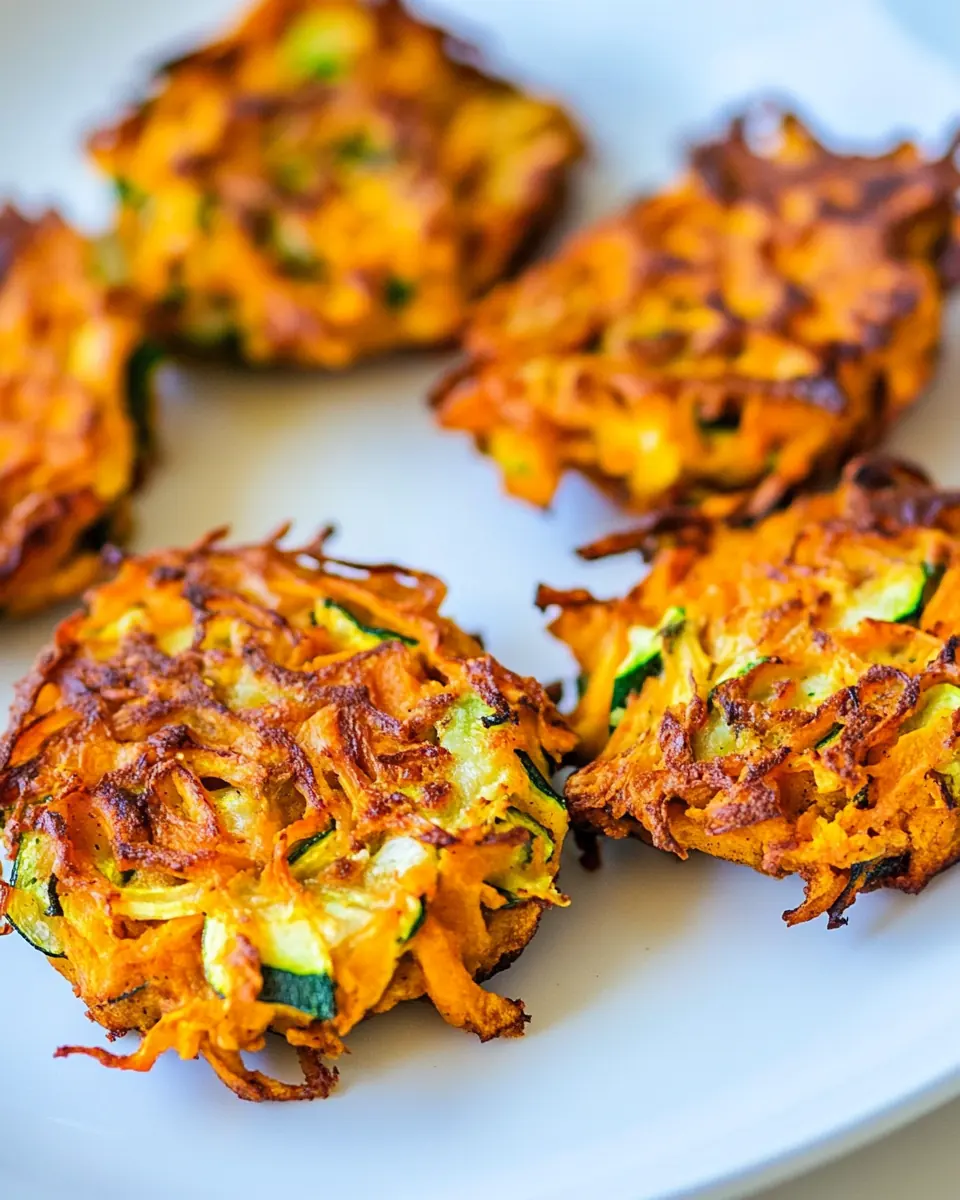
My fritters were each about 4 inches in diameter and about 1 inch high and they weren't traditional well-packed patties; rather I mounded the mixture into loosely packed circular shapes on the baking trays: The visual cue here is a loosely packed mound with visible threads of sweet potato and zucchini . This shape encourages a crisp rim while keeping the center yielding. If you prefer a flatter patty, press lightly with the back of a spoon, but be aware this changes the texture. A frequent mistake is making them too thin, which results in very crisp edges but a dry center.
I baked 4 fritters on one tray, and 3 on the other tray: Space the mounds so heat circulates around each fritter. You should hear a gentle hum from the oven as air moves, and the trays should feel evenly warm when you rotate them. Overcrowding leads to steaming rather than browning, so leave sufficient gaps. If your trays are crowded, the fritters may stick together or remain pale instead of developing that desirable golden-brown color.
Bake fritters for 10 minutes at 375 F and if fritters have "leaked" or released any liquids, either from the zucchini releasing water, or the butter-egg mixture, just "push" the liquid back into a fritter using a spatula: After the initial bake you will see small pools of liquid which is the zucchini releasing moisture. Use a spatula to gently coax that liquid back into the surrounding fritter, which helps them finish cooking without drying. The surface will start to look set but still soft. Ignoring the leaked liquid can cause unevenness in texture; re-incorporate it gently for a uniform crumb.
Lower oven temperature to 350 F and bake for about 15 minutes: Reducing the temperature allows the centers to cook through without burning the edges, and you will notice the aroma deepen into toasty, vegetal notes. The surface will take on a light golden hue. If you leave the oven at the higher setting, edges may become dark before the interior is done. Check visually rather than relying solely on time, since ovens vary.
Carefully flip fritters over (they will be soft and delicate; I used two spatulas to scoop-and-flip without breaking them) and bake for about 15 more minutes, or until browned: When flipping, listen for the quiet scrape of spatulas and look for a slightly set underside with gentle browning. Using two spatulas supports the fritter during the turn, preventing tearing. After flipping, watch the color change to a deeper golden brown and the scent will become more toasty. Flipping too early can cause fall apart, while flipping too late may result in one side overbrowned.
Fritters will be browned but soft upon removal from oven: The immediate sensory impression is warmth and a gentle give when you press the center, indicating a tender interior. The edges will be crisp and aromatic. Allow them to rest because the residual heat finishes the cook and helps them firm up. Cutting into them hot can make them collapse slightly, so patience is rewarded here.
Allow them to cool and firm up on the baking trays for at least 10 minutes before moving or serving them: Cooling on the tray lets steam escape and the structure set, giving you fritters that hold together when plated. Ten minutes is enough for most ovens, and during this time you will notice the aroma mellow and the texture stabilize. Moving them too soon is the most common mistake, often leading to breakage. Use a thin spatula to loosen them after resting.
Serve fritters with Spicy Honey Mustard (gluten-free and to keep vegan, use agave in place of the honey) or a favorite mustard, ketchup, hot sauce, sour cream, salsa, or other favorite condiment: The serving moment brings bright, piquant, or creamy contrasts that complement the fritters. A sweet and spicy mustard accentuates the chipotle notes while a tangy salsa adds freshness. Mix and match condiments to suit the occasion. Avoid heavy sauces that will mask the delicate vegetable flavors.
Fritters will keep in an airtight container for up to 5 days in the refrigerator: Stored chilled, you will notice the fritters firm further and the flavors meld. Reheat gently to restore crisp edges. The good thing is they stay convenient for quick lunches. A common storage error is leaving them at room temperature too long which shortens shelf life.
They can be wrapped individually in plastic wrap and make for handy lunchbox food: Wrapping preserves shape and moisture, and makes transport easy. When you unwrap, a quick reheat brings back that fresh-baked aroma. Avoid stacking while warm to prevent condensation sogginess.