Preheat oven to 325 degrees (F). Generously grease a bundt pan with non-stick cooking spray; set aside.: Warmth fills the kitchen as the oven approaches 325 degrees F , and you should notice the very faint scent of warm metal as the cavity heats. Preheating ensures the cake begins baking immediately, creating a steady rise and even browning, which is especially important for a bundt's thicker center. A well greased bundt pan helps the cake release cleanly, so coat every nook thoroughly then shake out excess spray. A common mistake is skipping full greasing, which can cause the cake to stick in the fluted ridges, so take the extra minute to be thorough.
In the bowl of stand mixer fitted with the paddle attachment beat butter and sugars until light and fluffy - about 5 minutes. Add eggs, one at a time, beating well after each addition.: You will see the butter and both sugars become paler and aerated, and you might hear the soft beat of the mixer increase as air is incorporated. This creaming traps tiny air bubbles that contribute to a lighter crumb, and the change from glossy to matte is a visual cue that you’ve gone long enough. Adding each egg separately lets the batter emulsify smoothly, avoiding separation. If the mixture looks curdled after adding eggs, it usually means ingredients were too cold, so warm them slightly and continue; overbeating after eggs can also deflate the mixture, so stop once it’s homogenous.
Add mashed bananas and vanilla extract.: When you fold in the mashed bananas , you’ll notice the batter gain moisture and a distinct ripe fruit aroma. The batter becomes thicker and flecked with banana, and a sweet fragrance will lift as you mix. Vanilla extract melds into the batter, rounding out the fruity notes. Mix just until evenly combined, because overmixing at this stage can lead to a dense cake. A slip to avoid is adding chunky, unmashed banana pieces, which can create uneven pockets and affect texture.
In a separate bowl, mix together flour, salt, and baking soda.: Dry ingredients like flour , salt , and baking soda should be whisked to distribute the leavening uniformly, and you’ll notice the pale, floury aroma as they mix. Even distribution prevents concentrated pockets of baking soda , which can leave metallic tasting bits and uneven rise. Sifting is optional, but whisking until homogenous ensures a consistent structure. A common error is adding the dry mix straight from a measuring cup without aerating, which can lead to lumps in the batter.
Add flour mixture alternately with the buttermilk, beginning and ending with the flour.: As you alternate spoonfuls of the dry mix with splashes of buttermilk , the batter will become silkier and smoother, and you should stop each addition once the streaks disappear. This technique helps build structure without overworking gluten, yielding a tender crumb that still slices cleanly. The batter should be cohesive, not runny; if it looks curdled, a short gentle stir often brings it back. Avoid dumping all the buttermilk at once, a mistake that can result in an overly loose batter and gummy texture.
Pour finished batter into the prepared bundt pan and bake for 55-65 minutes, or until a cake tester inserted in the cake comes out clean.: When the cake goes into the oven you will immediately smell a warming sweetness and the kitchen will slowly fill with a caramelizing aroma. The top should gently rise and the ridges will darken to a golden tone. Use a thin tester inserted into the thickest part to check doneness, and expect some crumbs but no wet batter to adhere. Ovens vary, so start checking around 55 minutes to prevent overbaking which dries the crumb. A typical mistake is relying only on color, as internal temperature and moisture are the true indicators of doneness.
Cool cake in the pan for 10 minutes, then run a knife gently around the edges, and carefully turn out onto a cooling rack. Cool cake completely before cutting/adding drizzle.: The cake will relax as it cools, and you may notice a gentle settling sound when you turn it out. Ten minutes lets the crumb set without sticking to the pan, and running a knife ensures clean separation from the fluted edges. Transfer to a cooling rack so air circulates around the cake and the bottom does not steam and become soggy. Patience is crucial here; adding the drizzle while the cake is warm will cause the chocolate to melt and run, losing its glossy look, so cool completely. A common slip is forcing the cake out too soon, which can splinter or tear delicate edges.
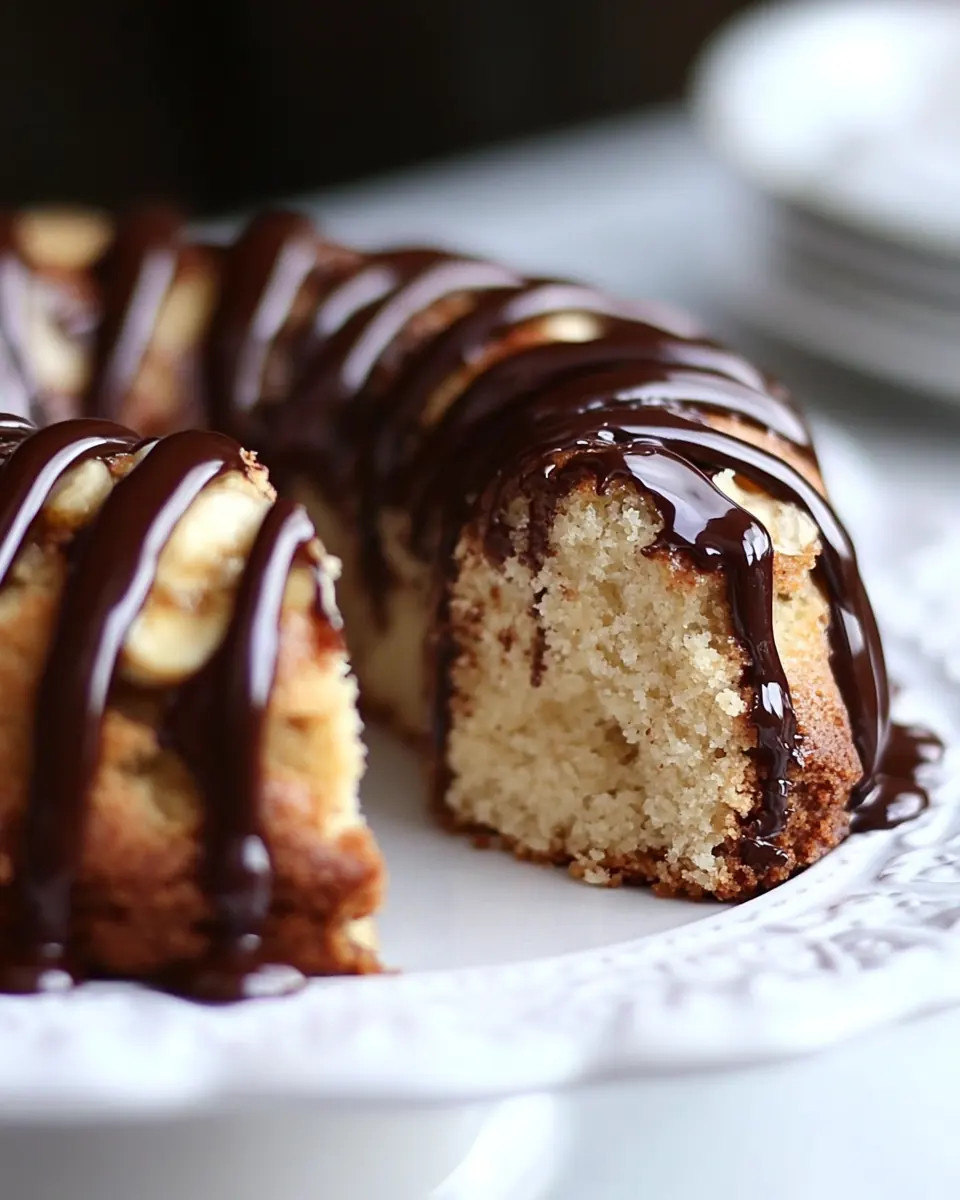
For the drizzle - Combine chocolate chips and milk in a microwaveable bowl. Heat in 20 second increments until chocolate has been completely melted and can be whisked into a smooth mixture. Let the chocolate mixture cool for a few minutes, then pour into a large ziplock bag and snip a small corner off one end. Generously drizzle chocolate over the cooled cake. Cut and serve!: As you warm the milk chocolate chips with whole milk , you’ll see the chips soften then glossy chocolate form, releasing a comforting cocoa aroma. Short bursts of heat and stirring prevent scorching, and whisking produces a silky, homogenous glaze. The final texture should be pourable but thick enough to hold some shape on the bundt ridges. Overheating will seize the chocolate, making it grainy, so remove from heat just before fully melted and stir to finish melting.
Oh, and feel free to garnish with sliced bananas if you want an extra pretty presentation 🙂: Cooling the glaze slightly keeps it from running off the cake and helps it set with a shiny finish. Filling a bag creates control, and you’ll hear the soft whisper of chocolate as it glides across the bundt surface. The contrast between the matte cake and glossy drizzle looks and tastes delightful, and slicing reveals the tender, banana flecked interior. A small error to avoid is drizzling while the glaze is too hot, which causes it to soak into the cake and lose visual impact.
Oh and feel free to garnish with sliced bananas if you want an extra pretty presentation: Fresh sliced bananas add a bright visual accent and a fresh texture against the rich cake and chocolate. Arrange slices just before serving to prevent browning, and consider placing them sparingly to avoid overpowering the chocolate finish. The garnish is optional but adds a lovely final touch. Avoid pre-slicing early, since exposed bananas brown quickly and look tired on a plated slice.