In the bowl of a stand mixer fitted with the paddle attachment, or in a large bowl with an electric mixer, beat the cream cheese for 3 minutes. Scrape down the sides of the bowl and add in powdered sugar and vanilla and beat an additional 3 minutes.: When you begin, you will notice the cream cheese loosen and lighten as air incorporates, producing a smoother, more spreadable base. The room temperature cream cheese should feel silky under the beaters, and the sound will ease into a softer thrum as lumps disappear. Beating for the full time helps eliminate any residual firmness, preventing a lumpy final texture. If you stop too soon you risk streaks of dense cheese in the final fluff, so scrape the bowl thoroughly to gather any bits on the sides. A common mistake is using cold cream cheese , which resists smoothing and produces an uneven mixture, so always allow it to soften beforehand.
In a large bowl, whisk together the dry pudding mixes and milk. Allow pudding to set up for a few minutes.: Whisk the dry powder and cold milk briskly until uniform, then let it rest so the starch hydrates and thickens. The mixture will transition from glossy liquid to a more substantial, pudding like texture that holds its shape slightly. You will smell the sweet banana notes emerging as it sets. If you try to fold it in too early it will be runny and may weaken the overall structure, so patience is necessary. A frequent oversight is under whisking, leaving small lumps of mix; vigorous initial whisking avoids that issue.
Add the pudding to the cream cheese mixture and beat until fully incorporated. Be sure to scrape down the sides of the bowl to incorporate all of the cream cheese.: At this stage the pudding brings body and banana flavor into the whipped cream cheese base, creating a cohesive mixture. The combined batter should become glossy and slightly thicker, with the pudding mellowing the tang of the cheese. You may notice a gentle, fragrant banana aroma that signals the flavors are coming together. Scraping down the bowl ensures no dense pockets remain that could affect texture. Overworking the mix once combined can introduce excess air or warmth, so beat just until even. One slip is assuming the mix is uniform without scraping, which can leave streaks of unincorporated cream cheese .
Fold in whipped topping until completely incorporated. Fold in the marshmallows.: Use a rubber spatula to fold in the thawed whipped topping with soft, sweeping motions to preserve air. The mixture should lighten and become cloudlike, and you will feel the lift as the bowl fills out. Next, gently fold in the mini marshmallows , which add little pockets of chew. The visual cue is the disappearance of white streaks from the whipped topping, resulting in a uniform pale banana color with marshmallow flecks. Overmixing will deflate the volume, so stop as soon as it looks even. A common error is using a whisk at this point, which knocks out the air and leads to a dense outcome.
Cover and refrigerate for at least 2 hours.: Chilling firms the structure and allows flavors to meld, producing a sliceable, scoopable consistency. You will notice the aroma mellow and the mixture settle into a firmer body after refrigeration. The cold also allows the marshmallows to soften just enough to integrate texturally with the pudding. If you skip this rest, the fluff can be too loose and may not hold garnishes well. Avoid storing uncovered, as it can absorb fridge odors and form a thin skin on top.
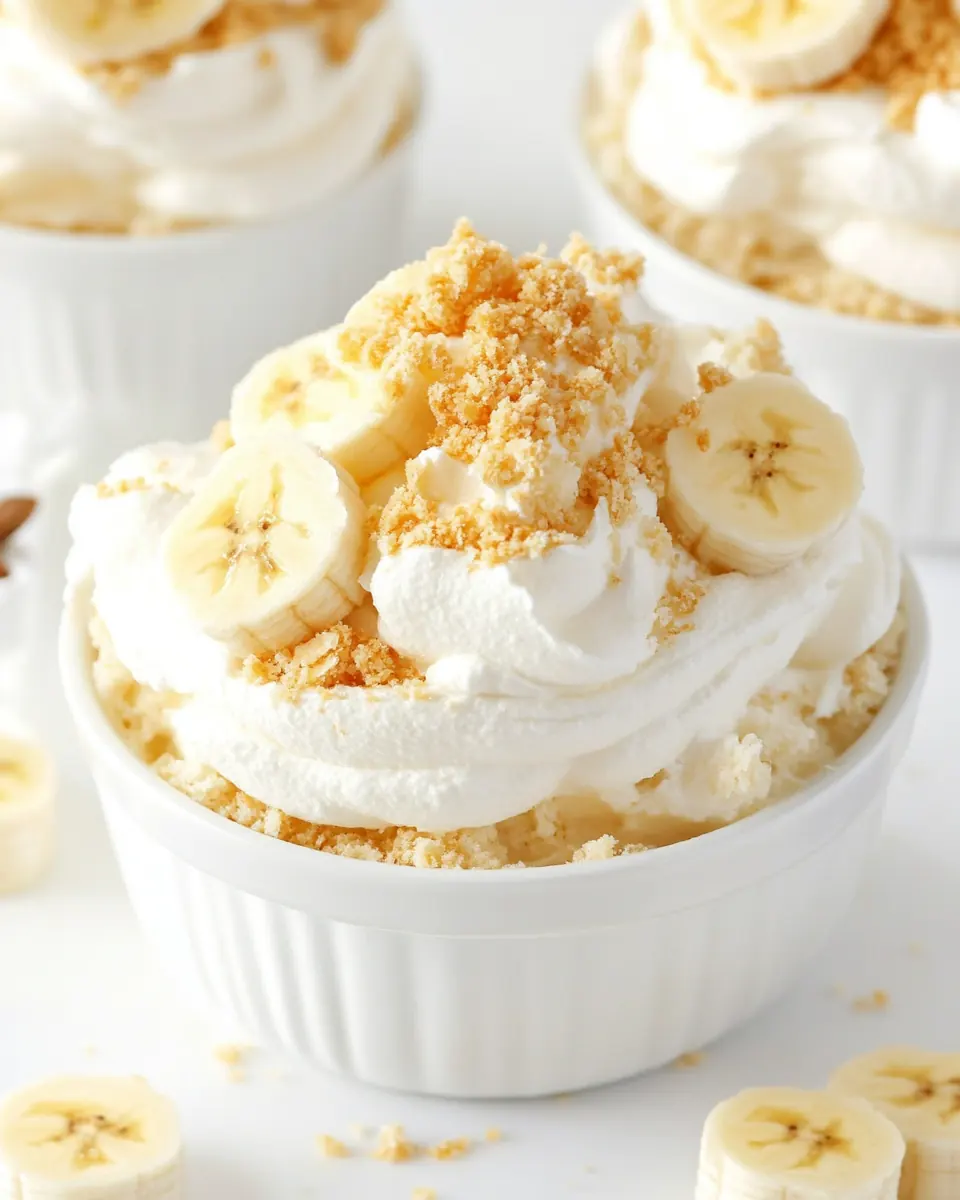
Just before serving, fold in the sliced bananas and top with crushed vanilla wafers.: Add the fresh bananas at the end to preserve their color and texture, folding them in gently so slices remain intact. The cold dessert will cradle the banana slices, and the crushed vanilla wafers sprinkled on top provide the desirable crunch that contrasts the creamy interior. As you fold, watch for even distribution without overhandling the fruit, which can release juice and make the mixture watery. A typical mistake is mixing the fruit in too early, causing it to brown and break down.