In a small mixing bowl whisk together the mayo, sweet chili sauce, lime juice, and sriracha sauce until it is smooth. Set it aside.: The moment you whisk these together you will notice a glossy, slightly thickened sauce with a balanced aroma of sweet and tangy notes, along with a subtle peppery lift from the sriracha sauce . This step matters because a smooth emulsion helps the sauce cling to the spaghetti noodles , ensuring each strand is evenly coated. A common mistake is under whisking which can leave the sauce slightly separated and less cohesive. If your sauce feels too heavy, add a tiny squeeze of extra lime juice to loosen it and sharpen the flavor profile.
Using a medium-size mixing bowl toss together the shrimp, 1/2 tablespoon olive oil, fresh minced garlic, paprika, kosher salt, black pepper, and red pepper flakes.: As you toss, the oil helps the spices adhere to the surface of the shrimp , and the aroma of the fresh garlic will begin to bloom, giving off a warm, savory note. This seasoning step is crucial because it ensures each shrimp carries flavor through to the final bite. A typical error is overmixing with too much force which can bruise delicate shrimp , so toss gently but thoroughly. If your shrimp seems watery, pat it dry first so it sears instead of steaming.
In a large 12 inch skillet over medium heat, add 1 tablespoon of olive oil.: When the oil warms you will notice it shimmer subtly, indicating it is ready. Heating the skillet first prevents the shrimp from sticking and promotes even browning, which adds flavor through caramelization. If the pan is too cool the shrimp will release liquid and stew rather than sear, producing a bland texture. A common oversight is using too high heat which can scorch the garlic ; aim for medium so the aromatics and proteins develop flavor without burning.
Add in the coated shrimp, constantly stirring to ensure the garlic does not burn and the shrimp cooks evenly, about 8 to 10 minutes. The shrimp will turn pink when completely cooked. There will also be liquid in the pan that the shrimp releases during cooking. Turn off the stovetop.: As the shrimp hits the hot oil you will hear a gentle sizzle and smell the garlic toasting, which deepens the dish. The shrimp will change from translucent to an opaque pink, indicating doneness, and some juices will be released that mix with the pan fond to concentrate flavor. This pan release is important because it becomes part of the sauce, amplifying savory notes. Avoid overcooking which makes shrimp rubbery; remove from heat the moment they are just opaque and springy. Stirring frequently prevents hotspots and ensures the garlic does not brown too quickly, which would introduce bitterness.
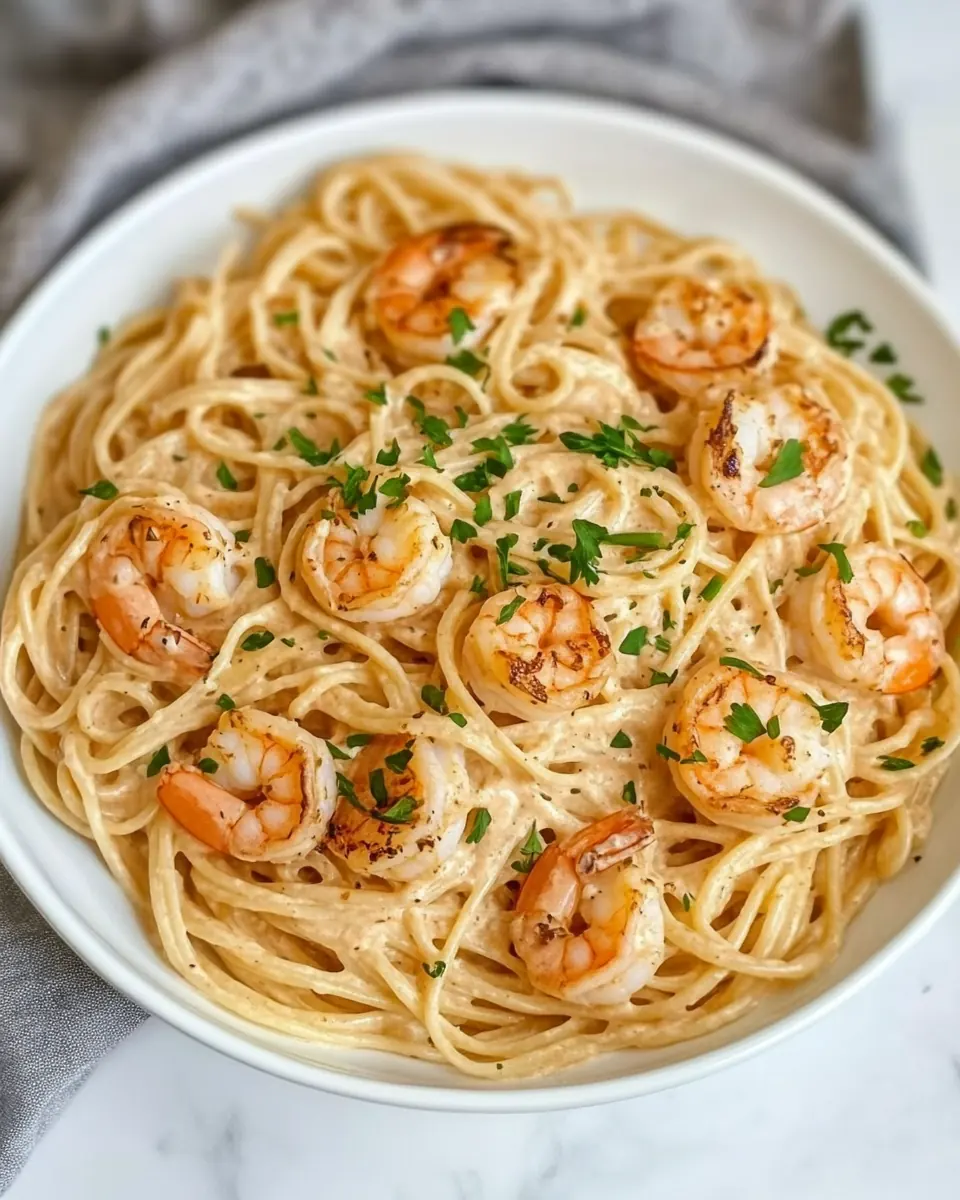
Leaving the skillet on the stovetop, add the cooked spaghetti and sauce on top of the cooked shrimp. Toss to completely coat the noodles and the shrimp.: When you add the hot spaghetti noodles and the prepared sauce, you will see the sauce slick across the pasta and the residual heat will marry everything together, creating a cohesive coating. The visual should be glossy strands of pasta with pink shrimp suspended throughout. This finishing step is key because the heat encourages the sauce to cling to the noodles rather than pool at the bottom. A mistake here is adding cold pasta which can cool the pan and make the sauce separate; always use hot, freshly drained noodles.
Garnish with either the fresh chopped parsley or fresh chopped cilantro. Serve while hot.: As you toss, listen for the light clink of pasta against the pan and watch the sauce thicken slightly as it warms. Tossing ensures even distribution of sauce, so every bite has a balance of creamy spice and seafood flavor. This stage allows the flavors to meld briefly, so resist the urge to overwork it which can break the sauce. If the mixture seems dry, add a small splash of reserved pasta water to loosen the sauce and help it adhere.
Garnish with either the fresh chopped parsley or fresh chopped cilantro: The final sprinkle of herb adds color and a fresh aromatic note that brightens the plate. Chopping the herb finely releases oils that perfume the dish right before serving. A common slip is adding the herb too early which causes it to wilt and lose vibrancy, so add it at the end for a lively finish. Serve immediately while the dish is hot for the best contrast of textures and flavors.