Make the basil tahini: in a food processor, combine the tahini, olive oil, garlic, lemon juice, basil, salt and pepper. Pulse the machine until the basil is finely chopped and incorporated. With the motor running, drizzle the cold water into the feed tube until you have a creamy but still loose consistency, similar to table cream. Add more water if necessary and check the basil tahini for seasoning. Adjust and set aside.: in a food processor, combine the tahini, olive oil, garlic, lemon juice, basil, salt and pepper. : The moment you pulse the tahini , lemon juice , and basil together, a bright green, herbaceous scent rises and tells you the sauce is coming alive. Listen for the processor motor’s steady hum, and watch as the mixture shifts from pasty to more unified. I keep a wooden spoon nearby so I can scrape down the bowl once or twice, ensuring even blending. One common mistake is adding too much water at once, which makes the sauce too thin; add the cold water slowly while the machine runs to control texture and achieve a creamy, table cream consistency.
Cook the pasta according to package directions. Reserve 1 cup of the salted and starchy cooking water. Drain the pasta and set aside.: As the basil breaks down, the fragrance intensifies and the color deepens to a vibrant shade. The visual cue to stop pulsing is when you no longer see whole leaves and the mixture looks smooth but still has body. If you overprocess, the sauce can warm slightly and lose some vibrancy, so pulse in short bursts. A typical pitfall here is rushing and creating a watery emulsion; patience with short pulses prevents a diluted sauce.
Heat 2 teaspoons of the olive oil in a large, deep skillet (or braiser) over medium heat. Add the tomatoes to the skillet and stir. Keep stirring the tomatoes until they are lightly browned, glistening, and starting to burst. You will have to use the back of your spoon to get this process going. I find this takes a good 8-10 minutes total. Scrape the burst tomatoes out into a bowl and give the skillet a good wipe.: When you add the cold water slowly, the tahini loosens and becomes glossy, silky, and pourable. Keep an eye on texture, stopping when the sauce coats a spoon lightly and flows slowly. The temperature matters, colder water keeps the emulsion stable. Avoid adding hot liquid here, as heat can change the mouthfeel and slightly separate the emulsion.
Return the skillet to the heat with the remaining olive oil. Add the mushrooms to the skillet and let them sit for a full 2 minutes. Then, stir the mushrooms and season them with pepper. Let them sit another full minute. Then start stirring them again. They should be lightly browned and glistening. Season the mushrooms with salt. Continue letting them cook until evenly browned, soft, and glistening.: Taste for salt , black pepper , and acid from the lemon juice , adjusting incrementally. The tahini will mellow with a touch more salt , and a small squeeze of additional lemon juice brightens it. Overseasoning is a frequent error, so correct in small steps and remember you will add reserved pasta water later which carries salt too.
Add the pasta to the skillet along with the basil tahini. Stir everything up until evenly combined and warmed through. Season the pasta with salt and pepper and stir. If the pasta seems a little dry, add some of the reserved pasta water until you reach your desired consistency. Transfer the pasta to your serving vessel and scatter the burst tomatoes on top along with the extra basil and red pepper flakes. Serve and enjoy immediately.: Once balanced, transfer the basil tahini to a bowl and set it aside so the flavors meld slightly while you work on the tomatoes and mushrooms . You should notice a harmonious aroma of sesame and herb. If you store it too hot near the stove, the color can fade and the sauce might thin prematurely, so keep it at room temperature away from direct heat.
Cook the pasta according to package directions.: While the sauce is resting, bring a large pot of well salted water to a rolling boil and add the shaped pasta . The sound of the pot moving and gentle boil signals the right heat level. Stir a few times early to prevent sticking, and cook until al dente so the pasta maintains pleasant bite against the creamy tahini. Overcooking is common, so test a piece a minute or two before the package recommends.
Reserve 1 cup of the salted and starchy cooking water.: Before you drain, scoop out a cup of the pasta water. That cloudy, salted liquid is gold for adjusting the sauce viscosity and seasoning later. Its starch helps the tahini cling to the pasta . A mistake is forgetting to reserve this water, which can make the final dish dry or harder to blend smoothly.
Drain the pasta and set aside.: Drain the pasta promptly and set it aside in the colander or back in the pot off heat, keeping it from overcooking. If it sits too long, it can absorb liquid and become gummy, so plan to toss it into the skillet shortly after draining. Rinsing is a misstep here because it removes the starch that helps sauce adhere.
Heat 2 teaspoons of the olive oil in a large, deep skillet (or braiser) over medium heat.: The oil should shimmer but not smoke, that sheen tells you the pan is ready. The sound is a faint sizzle when you first add an ingredient. Using the correct heat level ensures the tomatoes blister instead of simply steaming. If the oil smokes, reduce the heat and wipe the pan if necessary to avoid burnt flavors.
Add the tomatoes to the skillet and stir.: As you stir, the tomatoes will soften and start to glisten, releasing sweet juices. Use the back of your spoon to press a few against the pan to encourage them to burst. You will smell a concentrated tomato perfume as sugars caramelize. Stirring too aggressively can break them down into an indistinct purée, so be gentle and patient.
Keep stirring the tomatoes until they are lightly browned, glistening, and starting to burst.: This transformation, which can take about 8 to 10 minutes, creates pockets of concentrated sweetness and a hint of char. Visual cues include a mix of blistered skins and glossy, saucy juice pooling in the pan. A typical error is turning up the heat to rush browning, which can char the skins too harshly and create bitterness.
You will have to use the back of your spoon to get this process going.: Gentle pressure helps coax the tomatoes to release their insides and caramelize. You want some intact tomatoes alongside some that have yielded their juices for contrast. Avoid smashing everything into oblivion, that spoils texture and the distinct bursts you are aiming for.
Scrape the burst tomatoes out into a bowl and give the skillet a good wipe.: Removing the tomatoes preserves their concentrated flavor and clears the pan for the mushrooms, preventing flavor cross contamination that could lead to steaming rather than browning. Wiping the skillet also removes stuck bits that might burn. Leaving them can cause bitterness when you cook the mushrooms.
Return the skillet to the heat with the remaining olive oil.: Add the second portion of olive oil so the pan develops a fresh surface for browning the mushrooms . The oil helps achieve even color and prevents sticking. If you add mushrooms to a cold pan, they will release moisture and steam instead of developing a caramelized exterior.
Add the mushrooms to the skillet and let them sit for a full 2 minutes.: This stillness is crucial for forming golden brown surfaces. You will hear a low sizzle turn into a steady sear and begin to smell a toasty, nutty aroma as the moisture evaporates. Resist the urge to stir early, since movement interrupts browning and leads to limp, gray mushrooms.
Then, stir the mushrooms and season them with pepper.: After the initial sear, a gentle stir redistributes heat and lets the mushrooms brown more evenly. Adding black pepper here helps it toast slightly and release aroma. A frequent mistake is overcrowding the pan with too many mushrooms, which causes steaming rather than browning.
Let them sit another full minute.: This second rest promotes more even caramelization and deepens flavor. Watch the edges darken and the mushrooms take on a translucent quality. When they begin to glisten, you know the sugars are concentrating nicely. If your mushrooms are still watery after sitting, the pan may be too cool.
Then start stirring them again.: Stirring now helps build an even golden color across slices and integrates any fond left on the pan into the mushrooms’ surface. The aroma will be rich and earthy. Avoid excessive stirring which prevents the crisp edges you want.
They should be lightly browned and glistening.: The ideal mushroom has a caramelized edge and a plush center, with an audible faint sizzle as it moves in the pan. This texture provides contrast to the creamy tahini and bright tomatoes. Undercooking leaves them raw and rubbery, overcooking makes them dry and shriveled.
Season the mushrooms with salt.: Add salt at this stage to draw out and concentrate flavors, enhancing their natural umami. The seasoning should be balanced so it does not pull moisture excessively. A common misstep is over salting, which can make the final pasta taste flat once combined with the reserved starchy water.
Continue letting them cook until evenly browned, soft, and glistening.: Cook a few minutes more until the mushrooms are uniformly caramelized and tender, releasing a roasted aroma. Their glossy surface indicates properly rendered juices and an appealing mouthfeel. If they begin to blacken intensely, lower the heat to prevent burning, which creates a bitter note.
Add the pasta to the skillet along with the basil tahini.: At this point the sensory orchestra is full the pan smells of toasted mushrooms and the air is perfumed with basil from the tahini. The hot pasta loosens the sauce and helps it coat every piece. Do not pour the sauce in from too high up as you want even coverage without splatter.
Stir everything up until evenly combined and warmed through.: Use tongs or a large spoon to fold the components so the tahini warms and clings to the pasta , creating a silky coating. The sound is a soft, cohesive swish as ingredients marry. If the sauce looks too thick, add small splashes of the reserved pasta water to achieve a satin finish.
Season the pasta with salt and pepper and stir.: Final seasoning lets you fine tune the balance after tasting the combined flavors. Adjust in small increments since the reserved pasta water may carry salt. Over seasoning at this late stage is hard to reverse.
If the pasta seems a little dry, add some of the reserved pasta water until you reach your desired consistency.: The starchy water binds the tahini and creates a glossy emulsion, transforming the dish from clumpy to cohesive. Add a tablespoon at a time until you reach a silky, clingy sauce. A common error is pouring in too much water, which dilutes the flavors and flattens the sauce.
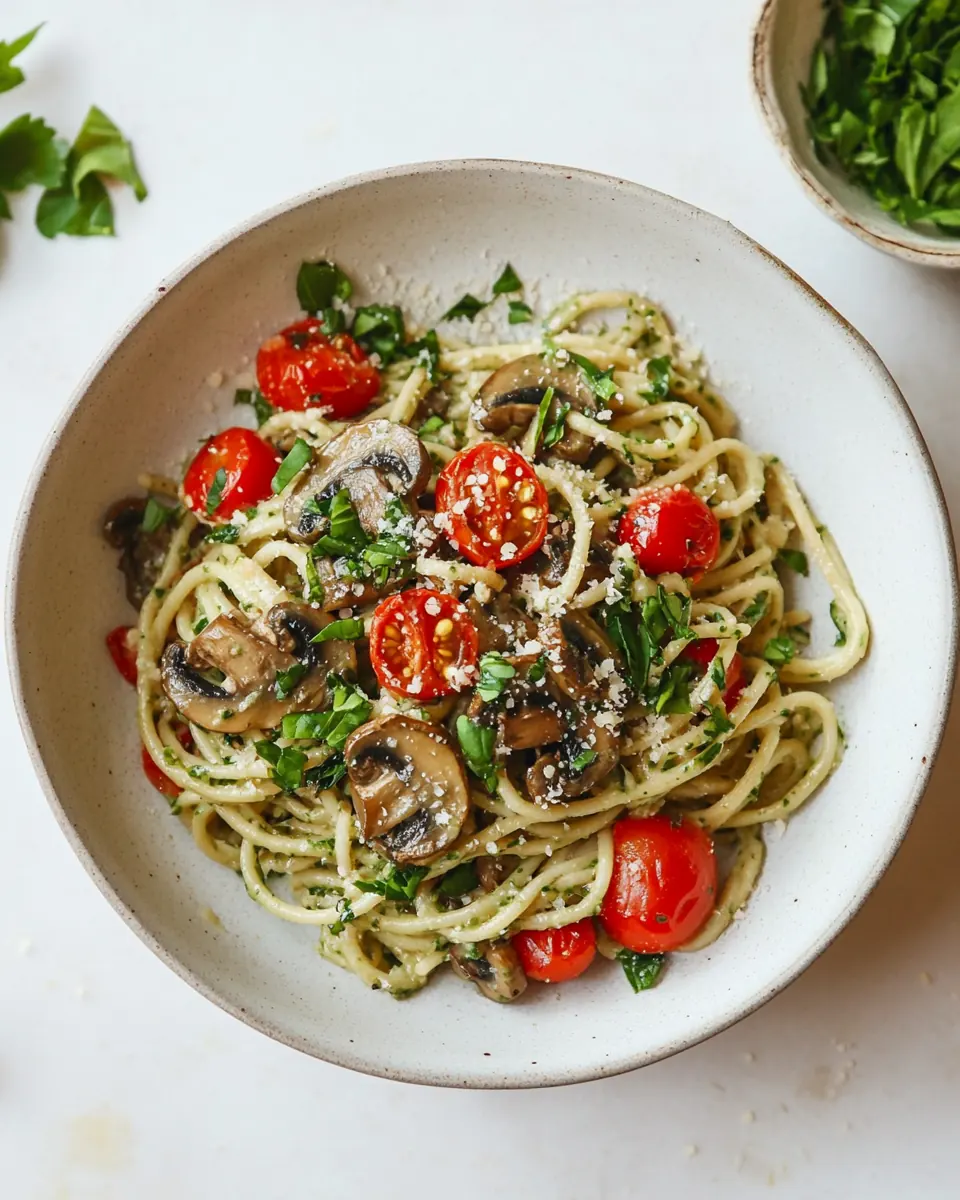
Transfer the pasta to your serving vessel and scatter the burst tomatoes on top along with the extra basil and red pepper flakes.: Presenting the burst tomatoes on top gives striking contrast and a hit of concentrated sweetness in each bite. Sprinkle reserved basil leaves for fresh aroma and red pepper flakes for heat. If you mix everything too aggressively, the tomatoes may break down and lose their delightful pockets of juice.
Serve and enjoy immediately.: The best moment is when steam rises from the bowl and the first forkful brings creamy tahini, tender mushroom , and a pops of tomato sweetness together. Serve hot so the textures and flavors are at their peak, and savor the balance you created. Letting it sit too long makes the tahini set and the pasta lose immediacy.