If you want to keep the fried French toast warm, preheat the oven to 250° F. Prep a sheet pan.: The warm oven helps maintain crispness without continuing to cook the interior too much. You should feel gentle warmth from the oven and see the sheet pan ready to hold finished slices. A common error is using too high an oven temperature which will dry the toast out rather than keeping it tender.
In a shallow dish (pasta bowl works great), whisk milk, eggs, salt, sugar, and vanilla. Whisk until smooth.: Right away you will notice the aroma of vanilla lifting from the bowl and the custard taking on a pale yellow hue. The sound is a steady whisking rhythm, and the surface should look homogeneous, with no streaks of egg white. If the mixture looks separated, keep whisking; poor mixing leads to uneven texture.
Preheat griddle. I use a cast iron skillet because it distributes the heat evenly and creates a perfect texture.: As the skillet heats you might see a faint shimmer on the cooking surface, and it should be hot enough that a drop of water skitters across. Cast iron gives a steady, even sear, producing an even golden color. A mistake here is not waiting long enough, which causes the toast to absorb fat and become greasy.
Melt a little bit of butter in skillet.: The butter should foam gently and then settle into a clear, fragrant pool without burning. You will smell nutty, toasted butter notes, and the surface will glisten. If the butter smokes quickly, lower the heat, because burned butter will give an off taste.
Dip each bread slice on each side, do not let it sit in the mixture.: You should hear a soft pat as excess custard falls back into the dish and see the bread change color slightly as it soaks. The goal is even coating without saturation. Leaving slices to soak too long risks a gummy interior and collapsing when you try to fry.
Place dipped slice in a skillet and fry for 2 to 3 minutes.: Listen for a steady sizzle that tells you the surface is searing, and watch the edges begin to turn a warm, golden brown. The surface should feel firm when nudged with a spatula. Frying too briefly leaves the center undercooked; fry long enough to form a crust.
Just before flipping, sprinkle the un-fried side with about 1/4 teaspoon of granulated sugar.: The sugar will start to melt and create tiny, amber spots that deepen the crust flavor. You may notice a slight crackle as the sugar hits the hot surface. Using too much sugar can cause excessive caramelization and bitter burnt spots.
Flip the slice and fry on the other side.: You should see an even golden color develop and smell a rich, toasty aroma. The second side usually takes a bit less time, and pressing gently will reveal a custardy interior that remains resilient. Overbrowning here can hide the gentle custard inside, so monitor closely.
Place fried slices on the prepared sheet pan and keep warm in the oven or serve right away.: The tray should be warm to the touch, and the toast will stay crisp on the outside while the interior relaxes into a tender custard. Crowding the pan can trap steam and soften the crust, so space slices out if possible.
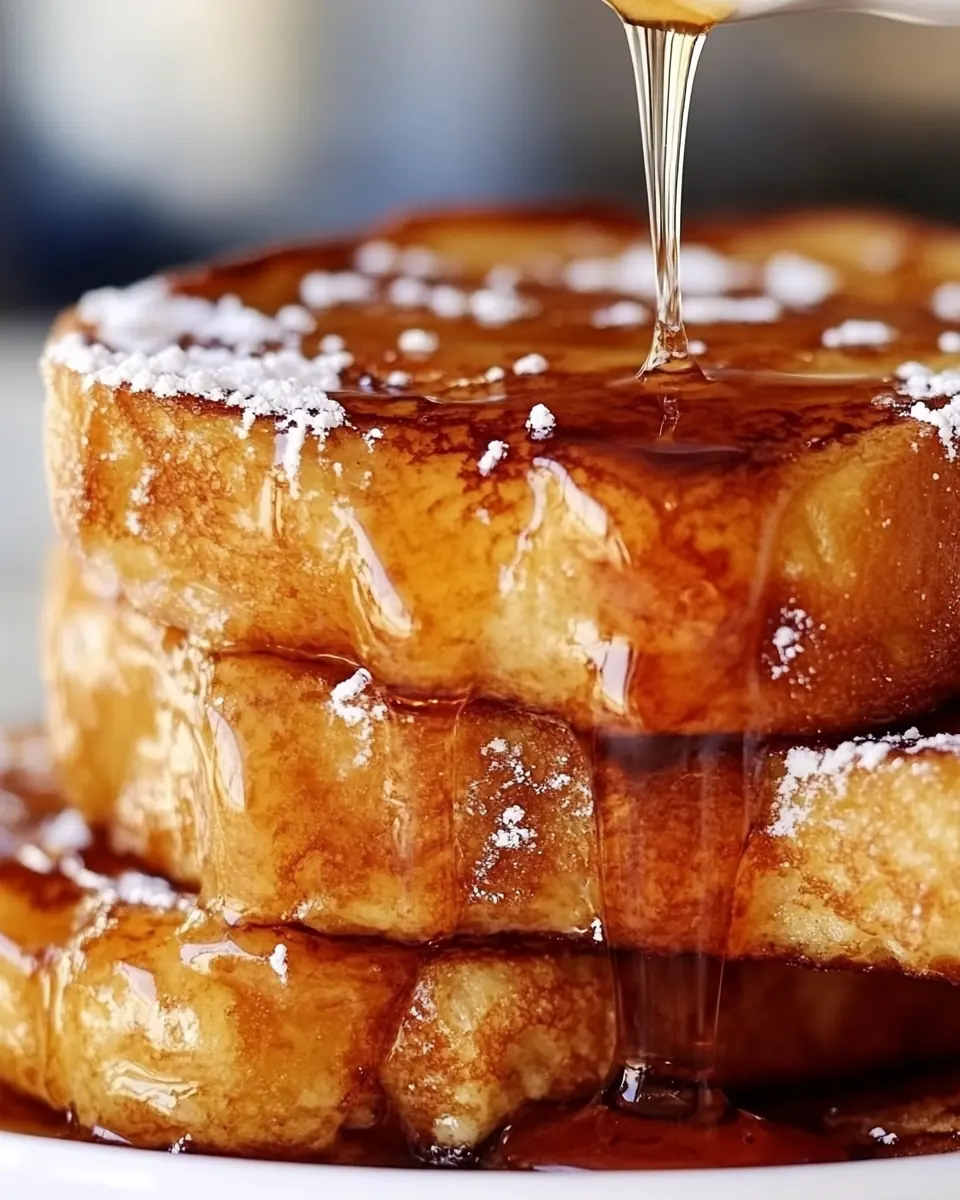
Serve French toast with maple syrup, powdered sugar, fresh fruit, fruit sauce, or whipped cream.: You will see glistening syrup pooling, powdered sugar dusting the surface, and vibrant fruit colors creating contrast. Taste combinations balance sweet and bright elements against the rich custard. A frequent misstep is piling too many toppings which can overwhelm the delicate custard texture.