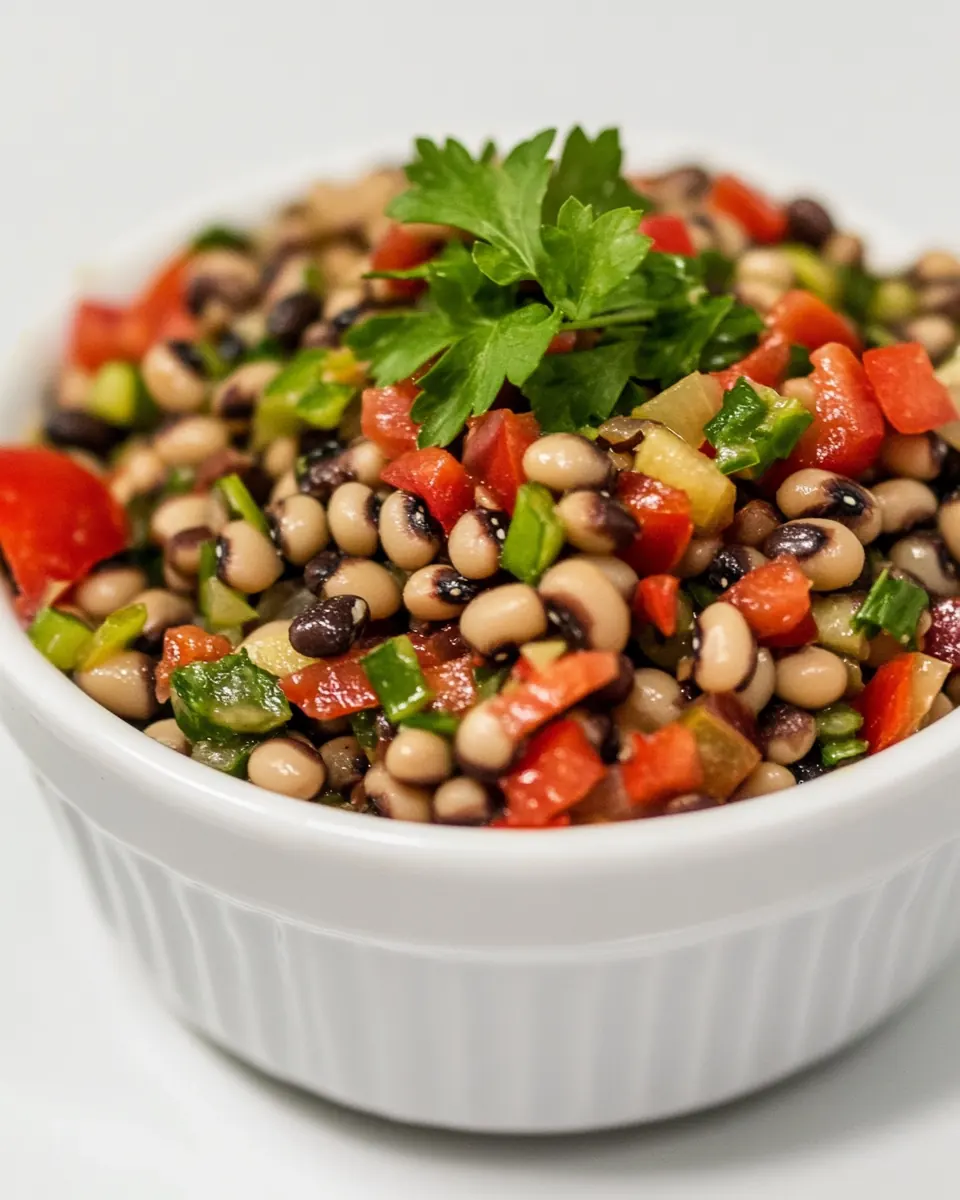
Cook frozen black-eyed peas if that's what you're using.: The aroma of cooking peas is mild and earthy, and as they warm they soften predictably. Use gentle simmering to avoid splitting the skins, and stir occasionally so they heat evenly. You want the peas tender but still holding shape, not mushy, which is why I watch the pot closely during the last few minutes. If they become too soft you lose the pleasing contrast with the black beans , so remove from heat as soon as they are fork tender. A frequent error is boiling too vigorously, which causes skins to burst and texture to collapse.
For canned beans, simply drain black beans and black-eyed peas into a colander placed in the sink, rinse with cold water until no more foam appears, then let beans drain at least 5 minutes.: The cold rinse removes starchy residue and canned brine that can dull flavors and add unwanted sodium. Listen for the steady patter of water and watch the foam clear; this is a reliable visual cue that the rinse is working. Letting beans drain prevents a watery salad and helps the dressing cling. If you skip the drain, your dressing will slide off and the salad will taste diluted.
While beans drain, put Spike seasoning, ground cumin, and ground Ancho chili pepper in a small bowl, then add lime juice and white balsamic vinegar and stir to combine. Whisk in the olive oil until dressing ingredients are well combined.: The dressing should smell bright and spice-forward, with citrus top notes and an oily sheen from the olive oil . Whisking creates an emulsion so the oil and acid bind, which helps coat the beans uniformly. Taste and adjust acidity or oil balance now, because this foundation defines the salad. A common slip is adding oil without balancing acid, resulting in a flat dressing.
Remove drained beans from colander (blot dry with paper towel if they still seem wet) and put them in a bowl large enough to hold all the salad.: You want the beans relatively dry so the dressing clings rather than pools. The bowl should give you room to toss comfortably. The beans’ matte appearance signals they are ready to absorb dressing, while glossy wet beans indicate excess water. Packing beans into too small a bowl makes even tossing messy and uneven.
Mix 1/4 cup of dressing mixture into the beans and let them marinate while you chop the peppers, onions, and cilantro.: As the dressing meets the beans you’ll notice a gentle sheen and a burst of aroma. This short marination jumpstarts flavor absorption and softens edges. Letting them sit even ten minutes deepens taste without making the texture soggy. Don’t overdress at this stage, because the vegetables will release moisture; reserve some dressing to adjust later.
Chop red and green bell pepper and red onion into small pieces about the size of beans.: Uniform pieces create balanced mouthfuls and pleasing mouthfeel. The sound of a crisp pepper under your knife is a satisfying cue that it is fresh. Aim for pieces that match the beans, so no single element overwhelms. A typical mistake is irregular chopping which leads to inconsistent bites where one component dominates.
I cut off the stem and bottom end of the peppers, cut out the seeds, then cut a slit down one side of the pepper and flatten it out for an easy way to cut small pieces like this.: This method creates a flat surface for neat slicing and speeds up prep. The pepper will lay flat and you can make thin strips before dicing, producing even cubes. That technique also helps you avoid the pith, which can be bitter. Avoid sawing motions; use a clean downward push for precise cuts.
Wash cilantro (or green onions) and spin dry in salad spinner or dry with paper towels if needed, then chop cilantro (or slice green onions.): Clean, dry herbs toss better and retain their bright aroma. The spinner hums as water separates, and you’ll smell the herb lift as you chop. Slice just before adding so the leaves keep their color and vibrancy. If herbs are wet, they will water down the salad and cause the dressing to slip off.
Add chopped peppers and red onion to the beans.: As you add the chopped vegetables, you’ll notice the salad become more colorful and aromatic. Toss gently so the beans don’t break, and use a folding motion to distribute elements evenly. The crunchy textures should remain fresh and distinct; if they appear limp, consider chilling briefly before serving. Overmixing will bruise the vegetables and flatten the texture.
Then stir in chopped cilantro or sliced green onion.: The herb adds a final aromatic lift and a green visual highlight. Stir lightly to integrate without compacting the mixture, and breathe in the citrusy herbal scent as it releases. If using green onions, the bite will be subtler than raw onion and blends seamlessly. Overworking the salad here can make the herbs turn limp quickly.
Add additional dressing until the salad is as moist as you’d like it. (You might not need all the dressing, but save it to re-moisten any leftover salad after it’s been refrigerated.): Adding dressing in small increments lets you control moisture and flavor intensity. You should see a glossy coating and smell a balanced hit of acid and spice. Taste often, because you can always add more, but you cannot remove excess oil. If the salad gets too wet, refrigerate on a colander to drain briefly before serving.
Season with salt and fresh ground black pepper to taste, and serve.: Proper seasoning brings all elements into focus. Add a small amount, mix, then taste; canned beans vary so adjust carefully. Fresh cracked black pepper adds a finishing note. Serving slightly chilled highlights the bright flavors, while room temperature accentuates the aromatics. Over-salting is the most common error, so season conservatively.
The salad can also be made ahead and chilled before serving.: Chilling allows flavors to marry and often improves the overall profile. After refrigeration the dressing will adhere differently and the salad will taste more integrated. Give it a final stir and, if necessary, a splash of reserved dressing before serving. Beware of making it too far ahead, as very long storage can soften the vegetables excessively.