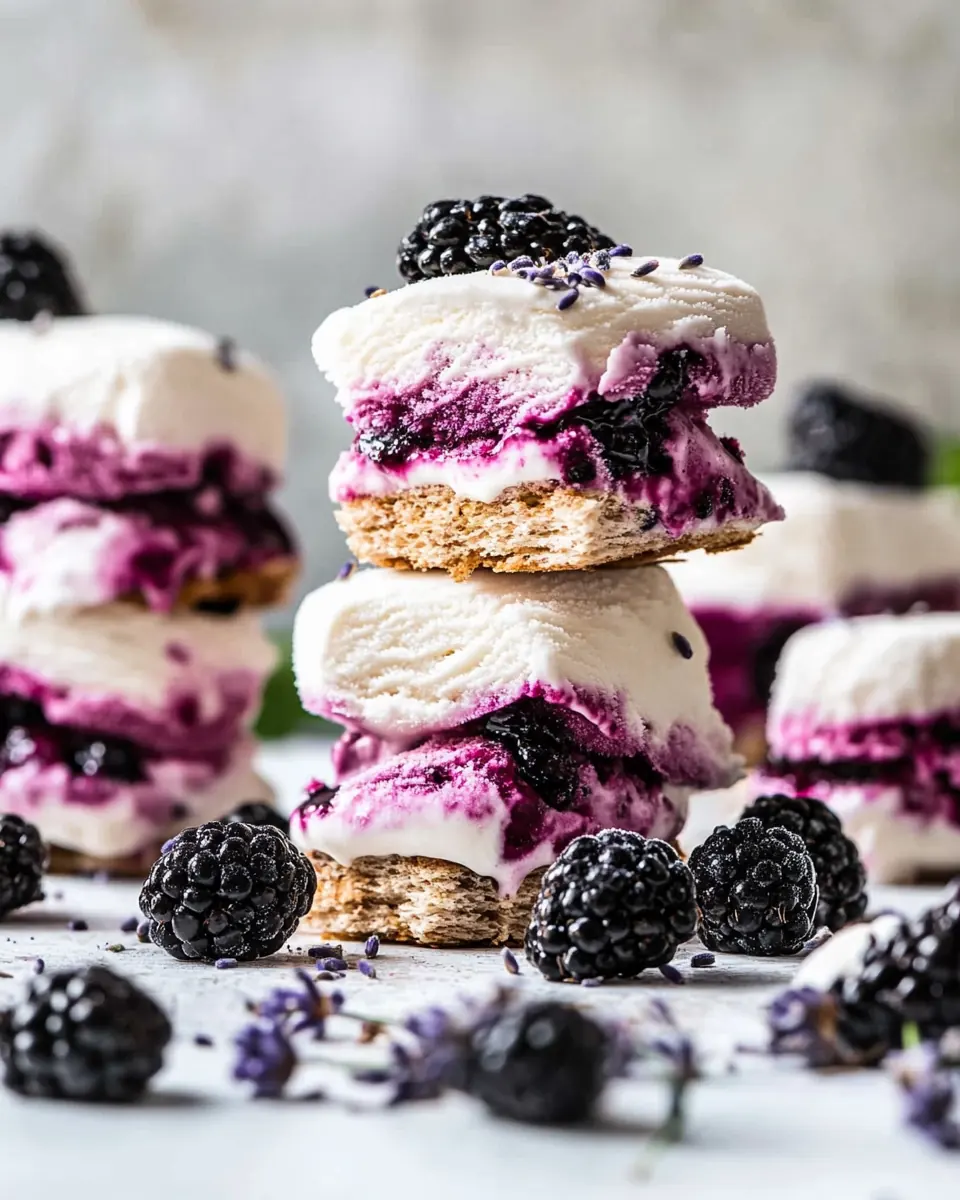
To make the jam. Add the blackberries, honey, lemon juice, and lavender to a medium-size pot set over high heat. Bring the mixture to a boil. Once boiling use a potato masher or fork to break down and mash the berries. Continue to cook for 5-8 minutes or until the jam has reduced and thickened by 1/3. Remove from the heat and let cool. This should thicken more as it cools. Line a 9×13 inch pan with parchment paper. In a bowl, combine the ice cream and jam until swirled/mixed. Don't over mix, you want swirls. Spread the ice cream in an even layer, then cover and freeze until firm, at least 2 hours. Preheat oven to 350° F. In a bowl, cream together the butter, honey, and vanilla until combined, 3-5 minutes. Add the flour, baking soda, cinnamon, and salt. Beat until combined. Mix in the white chocolate. Add 1 tablespoon of water at a time, until the dough comes together and forms a ball. Divide the dough in half. Roll out one disk of dough between 2 floured pieces of wax paper to about 1/4 inch thickness. Cut 24 squares (roughly 2×2 inch). Transfer the cookies to a parchment-lined baking sheet. Repeat with the remaining disk of dough. Combine the lavender and sugar, then lightly sprinkle the lavender sugar over the cookies. Bake 10-12 minutes. Let cool. Remove the slab of ice cream from the freezer, cut into 12 squares. Sandwich the ice cream between the cookies. Freeze. Enjoy!: As the pot heats, the blackberries will begin to sigh and release bright purple juices that steam and perfume the kitchen; listen for a steady simmer and watch for the mixture to bubble evenly across the surface which tells you the fruit is breaking down. The reason you bring this to a full boil briefly is to concentrate the fruit and evaporate excess water so the jam will not make the ice cream runny. Use a potato masher to break the berries down, tasting for balance between tartness and sweetness, and watch the color deepen to a glossy, rich purple. A common mistake is boiling too aggressively which can scorch the fruit and create bitterness, so keep the heat at a lively simmer, stirring to prevent sticking. When the mixture has reduced and thickened by about one third, the surface will cling slightly to a spoon, and you can remove it from heat to cool, remembering it will set more as it chills.
Add the blackberries honey lemon juice and lavender to a medium size pot set over high heat: You will notice the raw lemon and honey brightening the fruit immediately, the scent turning floral as the lavender warms; this combination boosts freshness while the honey brings viscosity. This step matters because the acid from the lemon juice helps the jam gel and keeps color vibrant, while the honey layers in flavor that pairs well with the cookie. Avoid adding too much lavender at once as it can dominate; start lighter and adjust in future batches. If your jam tastes flat, a little extra lemon will often revive it.
Bring the mixture to a boil: Watch the pan as the first vigorous bubbles rise, releasing a heady aroma; the sound shifts from a gentle simmer to a livelier boil which concentrates the sugars and intensifies the fruit. Boiling briefly accelerates reduction, but you should lower to a steady bubble if it threatens to splatter. The why is simple, evaporation thickens the jam and concentrates flavor. Common trouble is boiling too long which may cause the jam to become overly thick once chilled, so remove at the right viscosity described earlier.
Once boiling use a potato masher or fork to break down and mash the berries: The mash should transform large chunks into a cohesive jam, releasing seeds and pulp into a spreadable texture; you want visible fruit presence without giant lumps. This step controls mouthfeel in the final sandwich, because large berry chunks can freeze into ice crystals inside the ice cream slab. A common oversight is mashing too little, leaving uneven pockets of unbroken fruit that will freeze hard, so work the berries until the texture is consistent but still slightly rustic.
Continue to cook for 5 to 8 minutes or until the jam has reduced and thickened by 1/3: You will notice the mixture darkening and slowing as it simmers, and the spoon test will show a thicker coating on the surface, signaling readiness. This timing creates a jam that holds its shape in the ice cream without bleeding. One mistake is undercooking which yields watery jam that will ruin the ice cream texture; if you see too much liquid, continue gently until you reach the right body.
Remove from the heat and let cool this should thicken more as it cools: Cooling lets the jam finish setting and the flavors meld; the aroma will become more focused and the surface glossy. Cooling also prevents the ice cream from melting when mixed later. A common error is rushing this step, which can make assembly messy and melt the ice cream, so allow ample cooling time.
Line a 9×13 inch pan with parchment paper: The parchment creates a nonstick surface that makes unmolding the ice cream slab simple and prevents freezer burn on the edges. Press the paper so it sits flat and leave an overhang to lift the slab out later. If you skip this, the ice cream may adhere to the pan and crack when removed, so take the extra thirty seconds to line it well.
In a bowl combine the ice cream and jam until swirled slash mixed: The goal is visible streaks not a homogeneous color; gently fold softened vanilla ice cream with cooled jam so you see purple ribbons throughout. This method keeps pockets of concentrated flavor while maintaining creamy texture. Overmixing will turn the slab uniformly colored and intensify sweetness, so stop when you like the swirl pattern. If the ice cream is too soft, it will become soupy, so keep it slightly firm while folding.
Do not over mix you want swirls: The visual appeal depends on this restraint, as swirls create contrast and bursts of jam rather than an even spread of fruit. Swirled ice cream also freezes with interesting textures that feel handcrafted. A common misstep is impatience leading to overmixing, which diminishes texture and makes the final sandwich less dynamic.
Spread the ice cream in an even layer then cover and freeze until firm at least 2 hours: Use an offset spatula to create a level surface so the slab is uniform and easy to cut into even squares later; when frozen solid it will give clean edges. Firm freezing prevents melting during assembly and ensures the sandwiches are neat. If you assemble before the slab is solid, the ice cream will ooze, so be patient and allow the full freeze time.
Preheat oven to 350 F: The oven reaches an ideal temperature where cookies bake through and develop gentle color without burning the white chocolate pieces. Preheating ensures consistent bake time and structure. A frequent error is placing cookies into a cool oven which can cause excessive spread and a thin, fragile cookie texture.
In a bowl cream together the butter honey and vanilla until combined three to five minutes: Creaming aerates the dough and dissolves sugars, creating a lighter, tender cookie; you will see the mixture lighten in color and become glossy. This matters for texture because it distributes fat and liquid evenly. Under creaming can leave the cookie dense, while over creaming can incorporate too much air causing collapse, so aim for a smooth, slightly fluffy consistency.
Add the flour baking soda cinnamon and salt: Incorporating dry ingredients builds the dough structure; mix until just combined to avoid activating gluten excessively which would toughen the cookies. You should see a cohesive but still slightly crumbly mixture before the chocolate is folded in. Overworking here leads to rigid cookies, so stop mixing as soon as the dough comes together.
Beat until combined: The texture will shift to a pliable dough that holds together; this ensures even distribution of baking soda and salt for consistent rise and flavor. Avoid vigorous mixing which develops gluten, and scrape the bowl to ensure no pockets of flour remain.
Mix in the white chocolate: As you fold in the finely chopped white chocolate you will see small pockets of ivory that will soften in the heat of baking, creating creamy notes. This element adds sweetness and a velvety contrast to the fruit jam. A common mistake is adding large chunks which melt unevenly; fine chop ensures harmonious distribution.
Add 1 tablespoon of water at a time until the dough comes together and forms a ball: A touch of water helps bind the dough without making it sticky; add sparingly to avoid overhydration. The dough should be slightly tacky but manageable for rolling. If you add too much water the cookies will spread excessively in the oven, so proceed carefully.
Divide the dough in half: Splitting makes rolling manageable and ensures even thickness between batches. Wrap each half and chill briefly if the dough becomes too soft, which helps rolling without sticking. Skipping division often leads to uneven cookies and longer handling time.
Roll out one disk of dough between two floured pieces of wax paper to about 1 slash 4 inch thickness: Rolling between paper keeps the dough clean and prevents excess flour absorption, which can dry the cookie. Aim for even thickness so cookies bake uniformly with consistent texture. If one area is thinner it may overbrown, so check the sheet for levelness as you roll.
Cut 24 squares roughly 2×2 inch: Uniform cutting yields sandwiches that match when assembled; pressing firmly and lifting straight up prevents distortion. If you have leftover scraps, re roll gently once to avoid toughness from overworking. Uneven sizes will make sandwiching awkward and less pretty.
Transfer the cookies to a parchment lined baking sheet: Spacing them evenly allows hot air to circulate for even baking and prevents stuck edges. Use a thin spatula to move them if they are delicate straight from the paper. Crowding the sheet will alter bake time and texture.
Repeat with the remaining disk of dough: Keep the second batch consistent with the first for uniform results, and chill the dough between rolls if it becomes too warm and sticky. Maintaining temperature is key to even spread and tidy shapes.
Combine the lavender and sugar then lightly sprinkle the lavender sugar over the cookies: This step adds sparkle and a fragrant finish; the crystals will caramelize slightly in the oven giving a subtle crunch. Sprinkle gently so you do not overwhelm the cookie with sweetness or floral notes. If you oversprinkle, tap excess off to keep balance.
Bake 10 to 12 minutes: You will see the edges set and the tops turn a pale golden when they are ready; the white chocolate will soften but should not fully melt into the dough. Correct bake time ensures crisp edges and tender centers. A common error is leaving them too long which browns the white chocolate and dries the cookie, so watch carefully toward the end.
Let cool: Cooling on the sheet briefly then transferring to a rack prevents breakage and lets the cookies firm slightly so they hold the ice cream without crumbling. If you try to assemble while the cookies are warm, the ice cream will melt and the sandwich will become soggy, so be patient.
Remove the slab of ice cream from the freezer cut into 12 squares: A sharp knife warmed under hot water and wiped dry gives clean cuts through the frozen slab, producing neat servings. Cutting while the ice cream is fully firm ensures minimal smearing. A dull or cold knife can shatter the slab or drag, so use a sharp blade warmed briefly for best results.
Sandwich the ice cream between the cookies: Align the cookies and press gently so the ice cream reaches the edges without bulging; the contrast of cool, creamy center and tender cookie is what makes these special. Work quickly to avoid melting, and place assembled sandwiches on a tray for quick freezing. Pressing too hard will squeeze out the ice cream and create a mess, so use a gentle hand.
Freeze: Return the assembled sandwiches to the freezer until firm, which stabilizes them for storage and serving. A full freeze protects the texture and helps maintain shape when boxed for transport. Avoid stacking them until fully solid to prevent sticking together.
Enjoy: When you serve, let the sandwiches sit at room temperature a minute for easier biting, and notice how the jam, lavender, and cookie play together for an impressive dessert that feels handmade. If the sandwiches are too hard, allow them a little time to soften before serving.