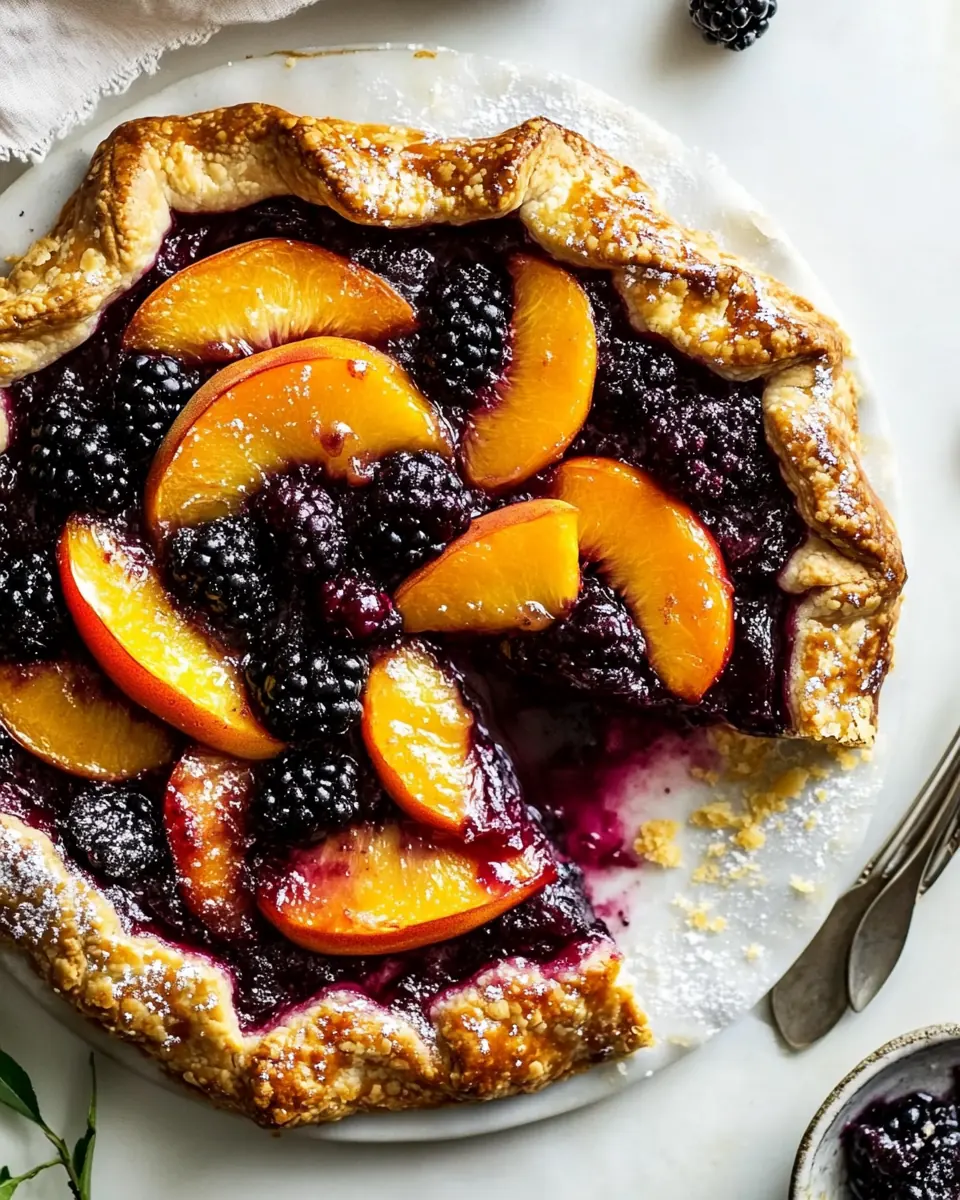
Preheat the oven to 375° F. In a medium bowl, combine the blackberries, brown sugar, cornstarch, and vanilla. On a lightly floured surface, roll the puff pastry out into a rectangle about 1/4 inch thick. Place the pastry on a parchment lined baking sheet and arrange the blackberries over the pastry, leaving a 1-inch border. Arrange the peaches on top. In a small saucepan melt together the honey and butter. Drizzle the mix over the peaches. Fold the edges of the pastry up and over the berries. Brush the edges of the pastry with egg and sprinkle with sugar. Bake for 25-30 minutes or until golden brown. It's OK if the edges get dark. Let cool slightly and serve with ice cream. Enjoy!: The moment the oven warms, the kitchen fills with a faint metallic heat that promises browning and caramelization. I preheat early so the pastry meets steady heat, enabling those flaky layers to puff and sprinkle into crisp shards. If you skip full preheating, the pastry may absorb extra fat and not develop the ideal lift and color. A common mistake is opening the oven during the first 15 minutes, which can interrupt the pastry rise.
In a medium bowl, combine the blackberries, brown sugar, cornstarch, and vanilla: As you stir, the brown sugar begins to dissolve into the berry juices and the vanilla releases a warm perfume. The cornstarch disperses into the mix, ready to thicken the juices once heat activates it. You should see a glossy sheen form and smell an early hint of baked fruit. Avoid mashing the blackberries too roughly, or the filling will become overly soupy rather than retaining some texture.
On a lightly floured surface, roll the puff pastry out into a rectangle about 1/4 inch thick: Rolling transforms the chilled sheet into a slightly thinner canvas that crisps evenly. When you roll, you should hear a faint scuff of the dough against the board and see faint layers appearing at the edges. Keep the pastry cool to prevent the butter layers from smearing; if it gets too soft, return it to the fridge for a few minutes. A frequent error is overworking the pastry, which diminishes flakiness.
Place the pastry on a parchment lined baking sheet and arrange the blackberries over the pastry, leaving a 1 inch border: The sound of berries settling is subtle, but you will notice the contrast between dark fruit and pale dough. Leaving an even border ensures you can fold and seal the edges while keeping a pretty central pool of fruit. If you crowd the center, juices may spill excessively during baking, so keep the margin consistent. One common slip is placing filling too close to the edge, which leads to a leaky galette.
Arrange the peaches on top: Layer the thin peach slices gently over the blackberries so they form overlapping ribbons that hold up to heat. You will see the peaches fan and catch the light, and as they warm in the oven they will soften and release fragrant steam. Try not to compress the slices as you place them, since trapped air pockets promote uneven cooking. Overlapping too thickly can prevent even caramelization.
In a small saucepan melt together the honey and butter: The moment the butter melts into the honey , the mixture takes on a glossy amber tone and a toasty aroma that suggests caramel. Warming helps the syrup coat the fruit and aids browning in the oven. Take care not to let it boil vigorously, which can darken its flavor unpleasantly. A typical mistake is overheating, which makes the drizzle overly thin or burnt.
Drizzle the mix over the peaches: When you pour the warm syrup, it beads across the peach surfaces and seeps into the gaps, amplifying sweetness and encouraging caramel edges. The sizzling is quiet but noticeable as the hot syrup meets cooler fruit, and it creates an attractive glossy finish. If the syrup is too hot it may make the pastry soggy where it pools, so allow it to cool briefly before drizzling.
Fold the edges of the pastry up and over the berries: As you fold, the pastry forms a rustic rim that frames the filling and traps juices. The edges should overlap slightly and press gently; you will feel the pastry hold shape while still being pliable. Folding creates a visual and textural contrast, a crisp frame to the yielding fruit. Be cautious about stretching the pastry, which can tear; if a tear happens, patch it by pressing a small piece of dough over the gap.
Brush the edges of the pastry with egg and sprinkle with sugar: The beaten egg lends a golden sheen and helps the coarse sugar adhere to the rim, which then caramelizes into a sparkling crust. I like to brush lightly to avoid pooling, and the sugar adds a satisfying crunch when baked. Overapplying egg can cause uneven browning or drips onto the filling, so use a gentle hand.
Bake for 25 to 30 minutes or until golden brown: During baking you will hear quiet bubbling from the center and notice an aroma of caramelizing fruit. The crust should turn a warm, deep gold, and the filling should be glossy and slightly thickened. It is okay if the edges darken a bit, those darker bits add toasty flavor. Resist checking too early, which can lower the oven temperature and extend bake time; instead, glance through the oven window to monitor progress.
Let cool slightly and serve with ice cream: Cooling lets the filling settle and makes slicing neater, while warm steam rises when you cut into it, releasing fruity perfume. Serving with a scoop of cold ice cream creates a lovely contrast between warm and cool and adds creamy notes to every bite. A mistake is slicing immediately while piping hot, which can cause the filling to run excessively. Let it rest for a few minutes to hold shape.