Place your cast-iron skillet over medium-high heat on the stove for 8 to 10 minutes while you prep the rub and fish. Preheat oven to 200°F.: As soon as the skillet starts to give off a faint dry heat, you will notice the metal warming visually and by touch from a safe distance. The pan should be very hot so that when the fish hits it, you hear an immediate, lively sizzle that signals the Maillard crust is forming. This sizzling sound is critical, it means the surface proteins are browning and locking in juices, producing aroma and complexity. A common mistake is not heating the skillet long enough, which leads to a pale sear and sticking. If your skillet smokes heavily right away, it may be too hot, reduce heat slightly and let it stabilize for a minute so you avoid burning the rub.
Add all of the blackening rub ingredients to a small bowl and stir together with a fork until fully combined. 1 tablespoon paprika, 2 teaspoon Kosher salt, 1 teaspoon onion powder, 1 teaspoon garlic powder, 1 teaspoon cayenne powder, 1 teaspoon black pepper, 1 teaspoon white pepper, 1/2 teaspoon thyme, 1/2 teaspoon oregano: Right away you will sense the paprika's color and the cayenne's sharp aroma as they mingle with the dried herbs. Mix until the spices look evenly distributed, with no clumps of paprika or pockets of salt, because even distribution ensures each bite tastes balanced. The visual cue of a uniformly colored blend is your confirmation. Avoid grinding aggressively or adding liquid, which would alter the intended dry texture of the rub and make it harder to press into the fish evenly.
Pour 8 tbsps (1 stick) of the melted butter into a 9 x 13" dish. Place the fish filets in the butter and turn them over until fully coated. 12 tablespoon unsalted butter, 4 8 oz redfish: As you lay the redfish into the shallow butter bath, the melted fat will coat the flesh, creating a glossy sheen and helping the spices adhere. The butter will pick up warmed aromas and make the surface pliable for pressing in the rub. You should see the flesh glisten, signaling it’s ready for seasoning. Do not let the butter pool cold on the fish, warm butter spreads and absorbs better. A frequent error is skipping this step, which makes the rub less likely to stick and reduces the crust development during searing.
Use your fingers to press the rub into the flesh of the fish. If the skin has been removed, add the rub all over. If the skin is in place, no need to add rub to it.: Pressing the dry rub into the flesh ensures the spices form a compact crust when seared. You will feel the texture transition from loose granules to a packed coating that stays in place when lifted. The pressure helps the flavors marry with the surface proteins for better adhesion and a more uniform char. If you skip firm pressure, the rub may simply fall off during cooking. Be careful to avoid pressing so hard that you compress the fillet excessively, which can alter the final texture.
Turn on your oven ventilation system and if possible, open a window or door to the outside (you may need to briefly disable your smoke alarm). Working in batches, add two of the filets, flesh-side down, on the very hot skillet.: As the filets meet the hot iron you will hear an assertive sizzle and smell the spices toasting into a deep, fragrant aroma. Doing this in batches prevents overcrowding, which would steam the fish instead of searing it and reduce crust formation. Keep a short distance between pieces so air circulates around each filet. A common oversight is crowding the pan, which causes uneven browning and a soggy surface. Ventilation mitigates smoke, and being mindful of smoke detectors keeps the kitchen calmer.
Use a metal spatula to press the fish into the hot skillet (the edges may curl up a little, just use your spatula to press them back down). After a couple of minutes, use a pair of tongs to lift up the end of one of the filets. The color should be charred and reddish in places. Flip onto the skin side. Drizzle 1 to 2 tablespoons of melted butter over the tops of the blackened filets.: When you press the filet, you will feel resistance then hear an intensified sizzle as the spice crust contacts the iron. After a short sear, lift an edge to inspect the color and look for a deep reddish black char, which is the hallmark of successful blackening. Flipping should be decisive to keep the crust intact. Adding a little melted butter on top boosts browning and keeps the fish moist, imparting a glossy finish. Beware of flipping too soon, which can tear the crust, or too late, which can overchar and become bitter.
Continue cooking until the internal temperature ranges from 140 to 150°F. Place on a baking sheet, loosely cover with foil, and place in the preheated oven. Continue cooking the remaining fish.: Now focus on the warming, controlled carry over of heat. The sizzling quiets as the surface sets, and the internal temperature climbs steadily, creating a tender interior beneath the crust. Use an instant-read thermometer inserted into the thickest part for accuracy, aiming for that sweet spot which keeps the fish juicy but fully cooked. Tent with foil to avoid drying while the other batches finish. A frequent mistake is overcooking past 150°F which yields dry, flakey fish; remove early and rest to let carry over bring it to perfect doneness.
Meanwhile, divide the remaining melted butter into small serving vessels.: Pouring melted butter into small ramekins while the fish rests is both practical and indulgent. The warm butter will be glossy and fragrant, and serving it on the side allows guests to add richness as they wish. This step lets the butter cool slightly so it does not scorch the palate when drizzled. Avoid letting the butter sit uncovered near high heat, where it can darken and develop burnt notes that would distract from the dish.
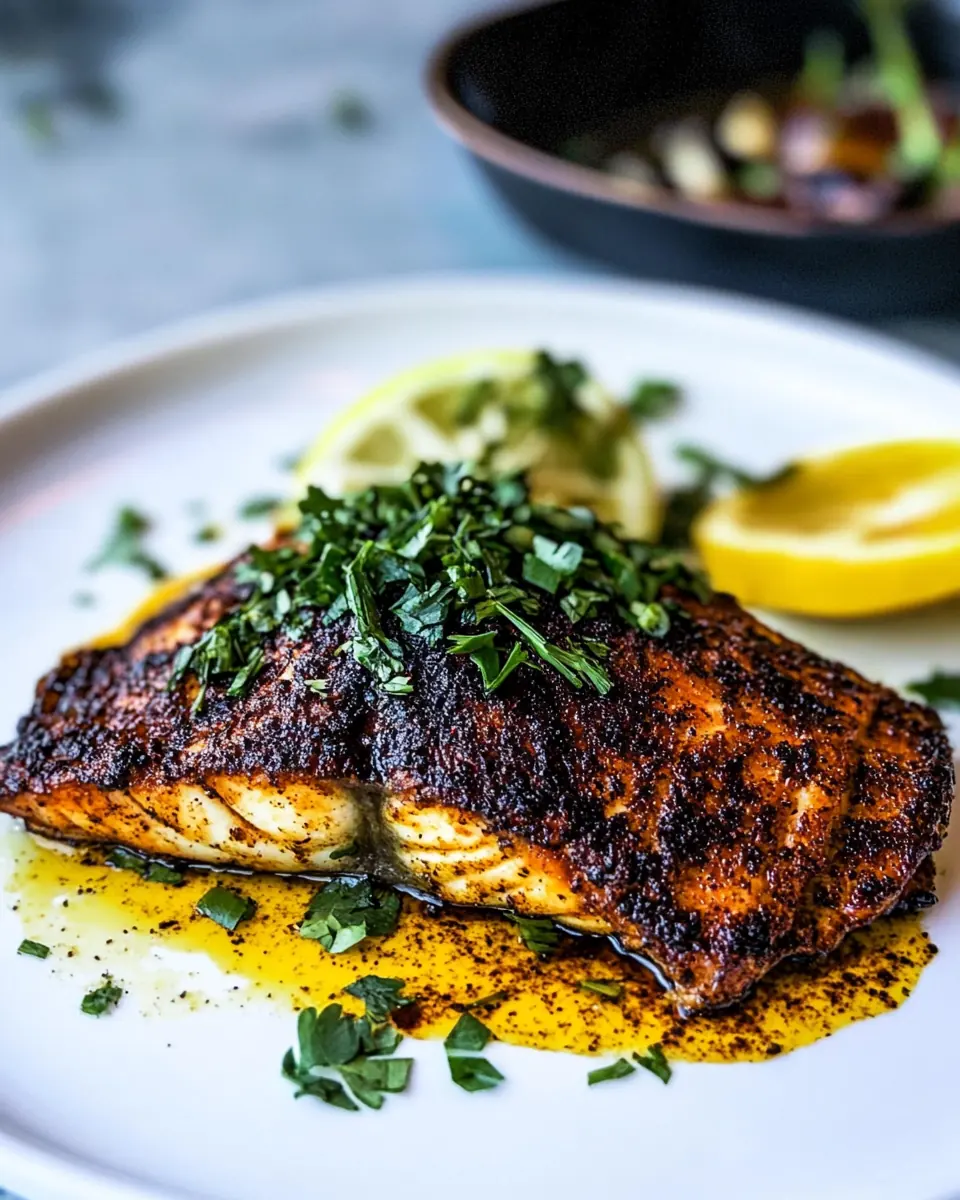
Plate the blackened fish along with the melted butter. If desired, drizzle a little more melted butter over the filets and then garnish with chopped parsley, if desired. Serve at once.: On the plate you will see a contrast of the darkened crust and the pale, tender interior. Drizzling a touch more warm butter heightens aroma and gives the fish a luxurious mouthfeel, while a sprinkle of chopped parsley adds a fresh green flash. Serve immediately to preserve the contrast between the crisp crust and moist center. A common error is letting the plated fish sit, which dulls textures and cools the butter, diminishing the overall impact.