Preheat the oven to 350°F. Line two (12-cup) standard muffin tins with cupcake liners. Set aside.: As the oven warms you will smell the faint dry warmth that signals readiness, and the liners help the cupcakes release cleanly. I always set racks in the center so heat circulates evenly. A common mistake is not letting the oven fully preheat, which can cause uneven rise; wait until the oven reaches temperature before baking.
In a small mixing bowl, stir together the all-purpose flour, baking powder, baking soda, and salt.: The dry mix should look uniform, with no streaks of leavening powder. Whisking aerates the mixture slightly, which encourages an even rise. If you skip sifting or whisking, you risk pockets of baking powder that create uneven texture.
Remove two tablespoons of the flour mixture and add to a small bowl with the fresh blueberries. Toss the berries in the flour mixture to coat them completely. Set aside.: Coating the blueberries creates a thin barrier that helps them stay suspended in the batter rather than sinking. You will notice the berries become slightly dusted and easier to fold in. If you forget this step, the berries can drop to the bottom, concentrating moisture and making the base soggy.
In a large mixing bowl, using a handheld mixer on medium speed, cream together the unsalted butter, canola oil, and granulated sugar for 1 to 2 minutes or until the mixture is light and fluffy.: You should see the mixture lighten in color and feel airy to the touch, with a gentle ribbon forming when lifted. This aeration creates small pockets that help the cupcakes rise. Undercreaming leads to a heavier cake, while overcreaming can heat the butter and cause separation.
To the butter mixture, add the eggs, one at a time, followed by the vanilla extract. Be sure to fully incorporate each egg into the batter before adding the next one.: The batter will look glossy and slightly looser as you add eggs, which improves structure and moisture. Mixing thoroughly prevents pockets of egg white that can steam and create holes. Rushing this step risks curdling, especially if ingredients are different temperatures.
Next, alternate adding the dry ingredients with the buttermilk to the butter mixture. Start by adding 1/3 of the dry ingredients to the bowl. Beat on low for 30 seconds or just until the dry ingredients are incorporated. Then, add 1/2 the buttermilk and beat on low for another 30 seconds or just until incorporated. Repeat by adding the second 1/3 of the dry ingredients, followed by the second half of the buttermilk, and ending with the last 1/3 of the dry ingredients. Make sure to mix each addition just until the ingredients are incorporated. You do not want to overmix this batter, or your cupcakes will be dense and tough. You may want to scrape down the sides and bottom of the bowl between additions to ensure that all the ingredients are evenly incorporated.: You will notice the batter shifting between thicker and creamier textures as you add dry then wet; this controlled incorporation prevents overworking gluten. Stop mixing as soon as streaks disappear; overmixing yields a tough crumb, while undermixing leaves flour pockets.
Switching to a rubber spatula, gently fold the coated blueberries into the cupcake batter, being very careful not to burst any of the berries when mixing.: The batter should become slightly thicker and you will hear a change in mixer sound as it drags more. This brief mixing prevents gluten from developing excessively. Mixing longer here creates a denser cupcake.
Fill each cupcake paper 2/3 to 3/4 full with batter. You can use a large ice cream scoop to distribute the batter evenly.: The batter will loosen and become silky; the buttermilk adds tang and tenderness. Keep the speed low to avoid splashing and aerating too much, which can affect rise. A common misstep is adding all liquid at once, which can cause uneven texture.
Bake for 24 to 26 minutes or until a toothpick inserted into the center comes out clean. Allow the cupcakes to cool in the pans for 5 to 10 minutes before transferring them to a wire rack to cool completely before frosting and serving.: Alternating maintains batter cohesion and gently integrates ingredients, giving a uniform crumb. I scrape the bowl between additions to ensure even incorporation. Failing to scrape can leave bands of flour in the batter.
While your cupcakes are baking, you can make your cream cheese frosting by adding the cream cheese and unsalted butter to a large mixing bowl.: The batter should be smooth with a few small lumps acceptable; overmixing develops gluten and makes cupcakes tough. Watch closely and stop as soon as the last streaks disappear to preserve tenderness.
Using a handheld mixer on medium speed, beat together the cream cheese and unsalted butter for 2 to 3 minutes or until the mixture is smooth and fluffy.: You want visible whole berries suspended in batter, and folding keeps them intact. The motion should be deliberate and gentle, scraping the bowl sides and bottom. Stirring aggressively will bruise the berries, releasing juice that can color and moisten the batter excessively.
Add the heavy cream, vanilla extract, and salt to the butter and cream cheese. Beat again until fully incorporated.: The batter will settle into a nice, domed shape while baking when portions are consistent. Using a scoop gives uniform size and bakes evenly. Overfilling causes spillover and underfilling leads to flat tops, so portion carefully.
Add the sifted powdered sugar, one cup at a time, to the cream cheese mixture and beat on low speed until all the powdered sugar has been added and your frosting is thick and smooth.: The cupcakes should be golden at the edges and spring back gently when touched. The aroma will become buttery and faintly sweet. If a toothpick comes out with wet batter, bake a few minutes longer; overbaking dries the crumb.
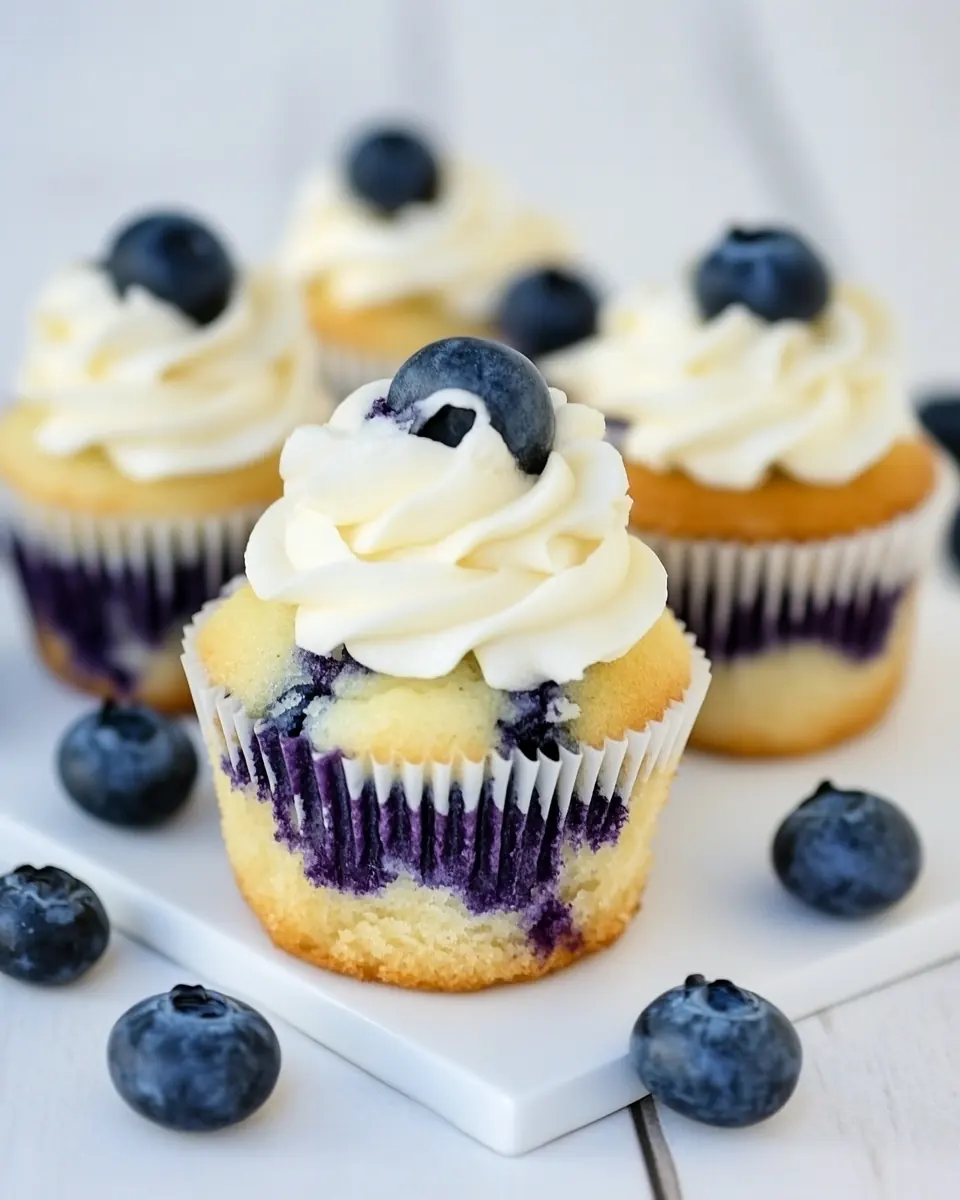
Cover your bowl of cream cheese frosting with a piece of plastic wrap and store it in the refrigerator while your cupcakes are baking and cooling. Frost the cooled blueberry cupcakes with the cream cheese frosting. You can use a large piping bag fitted with a large decorative tip to pipe out the cream cheese frosting if desired.: Cooling briefly in the pan helps them settle and prevents the tops from tearing when removed. Transfer to a rack to avoid steam making the bottoms soggy. Frosting warm cupcakes will cause the frosting to melt and slide off.
You can add a fresh blueberry to the tops of each of your frosted cupcakes as garnish.: The cool cream cheese and butter will soften into a creamy base that whips up light. Starting with room temperature ingredients ensures a smooth emulsion. If ingredients are too cold, you will get lumps; too warm and the frosting will be loose.
Using a handheld mixer on medium speed, beat together the cream cheese and unsalted butter for 2 to 3 minutes or until the mixture is smooth and fluffy.: You will see the texture go from dense to airy, and the sound of the mixer will change as it becomes lighter. This creates a stable base for adding liquid and sugar. Underbeating leaves firmness that resists piping, while overbeating can make the mixture too soft.
Add the heavy cream, vanilla extract, and salt to the butter and cream cheese. Beat again until fully incorporated.: The frosting will become silkier and slightly lighter; the salt sharpens flavor. Mixing fully ensures even sweetness and spreadability. Adding liquid too quickly can make the frosting runny.
Add the sifted powdered sugar, one cup at a time, to the cream cheese mixture and beat on low speed until all the powdered sugar has been added and your frosting is thick and smooth.: Sifting prevents lumps and helps the sugar integrate without dust clouds. The frosting will thicken with each addition and achieve a pipeable consistency at the end. If you add sugar too fast you may end up with gritty frosting.
Cover your bowl of cream cheese frosting with a piece of plastic wrap and store it in the refrigerator while your cupcakes are baking and cooling.: Chilling firms the frosting so it is easier to pipe and hold shape. I chill for at least 15 minutes, but not so long that the mixture becomes rock solid. If overchilled, let it sit at room temperature briefly and rewhip until smooth.
Frost the cooled blueberry cupcakes with the cream cheese frosting.: The finished look should be neat swirls that sit atop tender crowns; piping creates a professional finish. Work on completely cooled cupcakes so the frosting does not slide. Frosting warm cupcakes will melt the texture and ruin presentation.
You can add a fresh blueberry to the tops of each of your frosted cupcakes as garnish.: A single blueberry provides a pop of color and a hint of freshness, and it signals the flavor inside. Place garnishes just before serving for the best visual effect. If you add them too early, they can make the frosting moisten and weep.