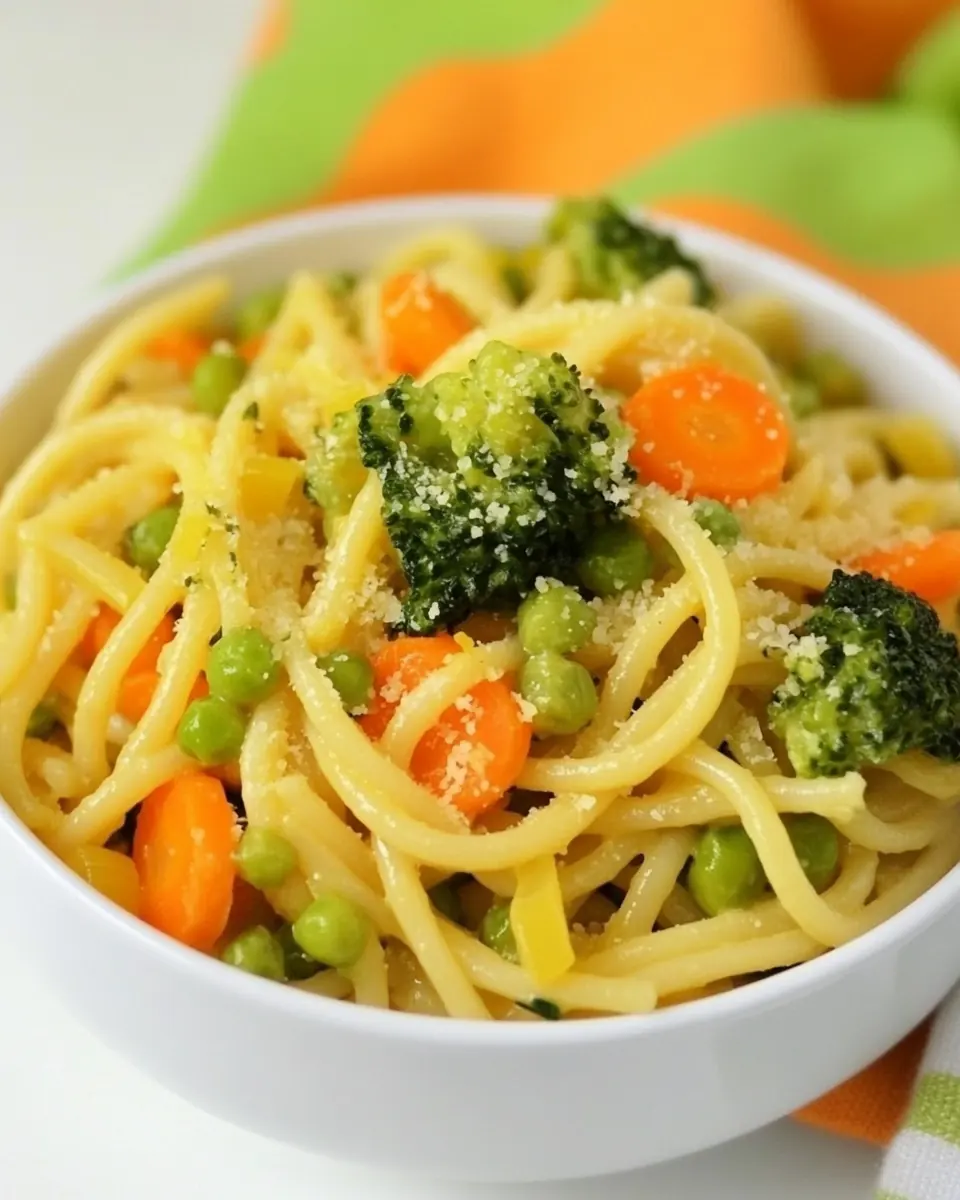
Cook the pasta according to package directions. Reserve 1 cup of the cooking liquid before draining.: The scent of boiling water and warm starch signals the foundation of the dish. As you stir the pasta , you'll hear a soft rolling sound as the shapes tumble, and the water will take on a slightly cloudy look from released starch. Reserving a cup of that liquid is crucial because it acts as a binder later, helping parmesan cheese and lemon cling to the noodles. If you skip saving this liquid, the final sauce can feel dry or grainy. A common mistake is draining and rinsing the pasta ; that washes away starch and prevents the sauce from emulsifying, so avoid rinsing unless you plan a cold salad.
While the pasta is cooking, heat the oil in a saute pan over medium heat. Add the onions and saute until soft, about 3 minutes. Add the garlic, carrots, broccoli, and peas and saute another 3-5 minutes. Add the spinach and cook for 1 minute more.: You'll notice aroma building as the onion hits the warm oil, releasing sweet, savory notes that create the dish's base. The sound is a gentle sizzle and the visual cue is translucence and soft edges. Softening rather than browning keeps the flavor mild and allows the other vegetables to shine; if the onion begins to brown too quickly, lower the heat to prevent bitterness. Many cooks make the mistake of rushing the heat, which leads to uneven texture, so watch for gentle softening rather than aggressive caramelization.
Add the vegetables to the cooked pasta, toss with the lemon juice, parmesan cheese and reserved pasta water to combine thoroughly.: As the garlic joins the pan, its fragrance becomes immediate and warm; keep it moving so it does not burn and turn bitter. The grated carrots will start to soften and sweeten, while the finely chopped broccoli will take on a bright green hue and tenderize. Frozen peas will release a burst of sweet perfume as they heat. Listen for a steady gentle sizzle and watch for vegetables becoming tender yet still vibrant. Overcooking here will lead to mushy texture, so aim for a tender but slightly firm bite to preserve textural contrast in the final plate.
Add the spinach and cook for 1 minute more.: When the spinach hits the pan it will immediately shrink and release a fresh green aroma, turning silkier as it wilts. This quick finish preserves its color and delicate texture, melding into the vegetables without dominating. If you leave it in too long, it can become limp and lose its bright presence, so one minute is usually enough. A frequent oversight is adding spinach too early, resulting in overwilted greens that fail to contribute freshness.
Add the vegetables to the cooked pasta, toss with the lemon juice, parmesan cheese and reserved pasta water to combine thoroughly.: At this point you will have a chorus of steam and lifted lemon fragrance as the warm pasta meets the skillet vegetables. Use the reserved starchy cooking liquid to coax the parmesan cheese into a smooth coating, stirring so the sauce glosses the noodles and clings to the vegetables. The lemon brightens and balances the salty richness of the parmesan cheese . If the mixture seems dry, add a splash more pasta water; if it becomes too loose, a touch more parmesan cheese will thicken and bind it. A common pitfall is adding too much water at once, which dilutes flavor, so add incrementally while observing the glossy sheen forming on the noodles.