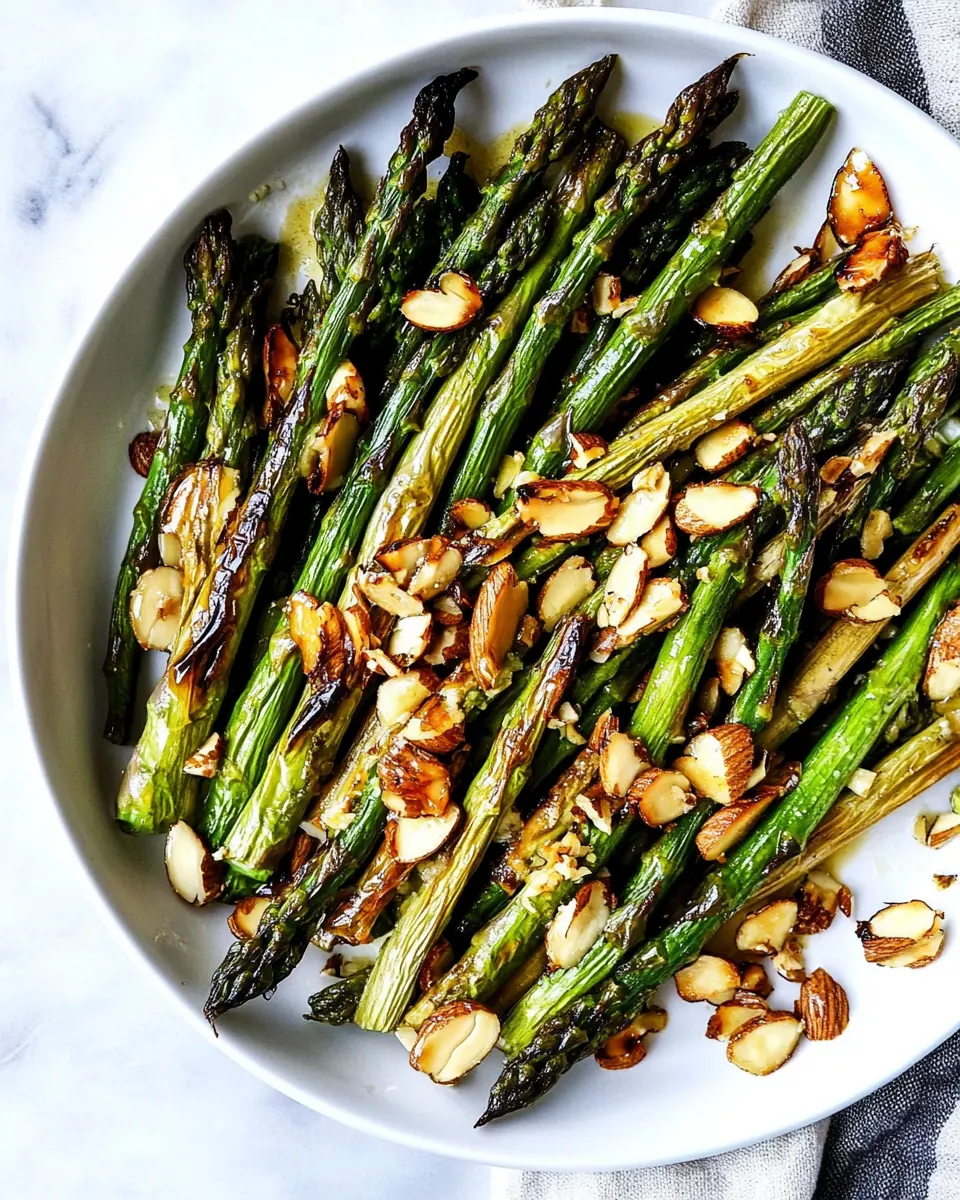
Preheat the oven to 450°F. Place asparagus in a single layer on a baking sheet lined with aluminum foil. Drizzle with olive oil, coating spears evenly, and sprinkle with salt and pepper. Toss to coat. Roast for 8-10 minutes—depending on thickness of spears—or until tender.: As you hear the oven hum, you should expect a rising dry heat that will brown the surface of the asparagus quickly. The smell of warm metal replaces the cool kitchen scent, and when the oven reaches temperature the pan will crisp the spears instead of stewing them. This high heat is crucial because it creates lightly charred tips and tender stalks; lower temperatures will leave the vegetable soft and pale. A common mistake is overcrowding the sheet pan, which causes steaming rather than roasting, so arrange the spears with space between them.
While the asparagus cooks, melt the butter in a skillet over medium heat. Add the almonds and stir frequently until the butter begins to turn light brown, about 3 minutes. Remove from the heat and add lemon juice and tarragon.: When you lay the asparagus in one layer, each spear meets direct heat and browns along its edges. The foil reflects heat and helps with cleanup, and the visual cue you want is small spots of golden color on the tips and sides. If the spears are piled up the ones underneath will steam, producing a limp texture instead of the desirable snap; avoid that by using an appropriately sized pan.
Toss the asparagus with butter and almonds and serve.: As you drizzle olive oil , watch the glossy sheen develop along each spear, which helps with browning and prevents sticking. The salt draws out a little moisture so caramelization happens faster, and the black pepper adds aromatic warmth. A common mistake is over seasoning too early; season lightly so you can adjust after roasting if needed.
Toss to coat: Tossing distributes the olive oil and seasoning so you get consistent color and flavor across all spears. Use tongs or gently shake the pan so oil and salt cling evenly, producing uniform sizzling in the oven. If some spears look dry after tossing, they will roast unevenly, so take a moment to ensure each spear is lightly glossy.
Roast for 8 to 10 minutes depending on thickness of spears or until tender: In the oven you will hear the subtle sizzle and then almost silence as moisture evaporates. Visually, the tips will darken and the stalks will shift from bright green to a slightly deeper hue, bending just a little when tested. This timing delivers tender but still slightly snappy asparagus; thicker spears need a touch more time, thinner ones less. Avoid leaving them until totally soft and floppy, which indicates overcooking and loss of sweet vegetable flavor.
While the asparagus cooks, melt the butter in a skillet over medium heat: As the butter melts, listen for a gentle foam forming, and watch it go from pale yellow to a deeper gold. That subtle color change signals that milk solids are toasting, and you will smell increasingly nutty notes. Keep the heat controlled because once the butter reaches the next stage it can turn from fragrant to burnt rapidly. A typical error is to crank the heat, which speeds through the browning and risks a bitter result.
Add the almonds and stir frequently until the butter begins to turn light brown about 3 minutes: When you add the chopped Marcona almonds , the skillet will sing with soft sizzling as the nuts release oils and soak up the toasty butter . Stirring constantly encourages even browning and prevents hot spots. You want to see small golden flecks form in the melted butter and smell a toasted, caramel like aroma. If you step away, the almonds can quickly go from golden to overly dark, so stay attentive.
Remove from the heat and add lemon juice and tarragon: Taking the skillet off the flame stops further browning and lets you add the bright, fresh elements without cooking them into dullness. When you pour in the lemon juice, you will hear a brief hiss and smell sharp citrus that cuts through the richness. Folding in the chopped tarragon releases herbal fragrance that complements the nutty notes. Adding these off heat preserves their vibrancy; if you left the pan on high the lemon could become muted and the herb wilted.
Toss the asparagus with butter and almonds and serve: Tossing the hot roasted asparagus with the browned butter and crunchy Marcona almonds creates a glossy coating that clings to each spear. You will notice the steam rise and the citrus scent mingle with toasted butter immediately. Serve warm so the contrast of textures is most pronounced. A frequent slip is letting it sit too long before serving, which softens the crunch and dulls the bright finish, so plate and present promptly.