Preheat oven to 325°F. Line a 9 x 13-inch baking pan with foil, leaving an inch or two of overhang on the short sides of the pan to use as "handles" to lift the brownies out of the pan once cooled. Spray the foil with nonstick cooking spray.: The kitchen will fill with a warm, slightly sweet aroma as the oven reaches temperature, signaling that the baking phase is about to begin. Setting the oven to 325°F ensures the brownies bake evenly from edge to center, avoiding an overcooked crust with an underbaked middle. You will hear faint clicks from the oven as it cycles, and the air near the oven will feel noticeably warmer. One reason this temperature works well is it allows the batter to set slowly, building fudgy texture rather than drying out. A common mistake is preheating too late, which shortens bake time and can leave the center too soft. To avoid that, set the dial early, and use an oven thermometer if your oven runs hot or cool.
Prepare brownie mixes according to package directions and pour batter into the prepared pan. Bake the brownies for 45 minutes and cool completely. Once the brownies are cool, cut into 1-inch squares.: The shiny foil creates a smooth, nonstick lining that makes lifting the cooled brownie slab effortless, and the slight overhang becomes practical handles for removal. Press the foil into the corners so the batter does not pool under folds, and spray lightly with nonstick cooking spray so the brownies release cleanly. Visually, the foil keeps edges tidy and ensures you end up with even squares. One reason I favor foil over parchment here is it molds neatly to the pan and supports the brownies when you lift them out. Avoid using very thin foil that can tear during lifting, which would make removal frustrating.
In a large bowl, combine pudding mix, whole milk and sweetened condensed milk. Mix until smooth, then fold in 8 ounces whipped topping until no streaks remain.: As you mix the batter, you will notice a glossy, thick ribbon as it comes together, and small streaks of flour should disappear with a few stirs. Pouring the batter evenly into the lined pan creates a uniform thickness so the brownies bake the same across the sheet. Tap the pan gently on the counter to release trapped air bubbles, which helps avoid large holes in the finished brownie . Mixing too vigorously can introduce extra air, resulting in a cakier texture; mix until combined but not foamy. Watch for lumps from unmixed pockets of dry mix, and scrape the bowl well to ensure an even batter.
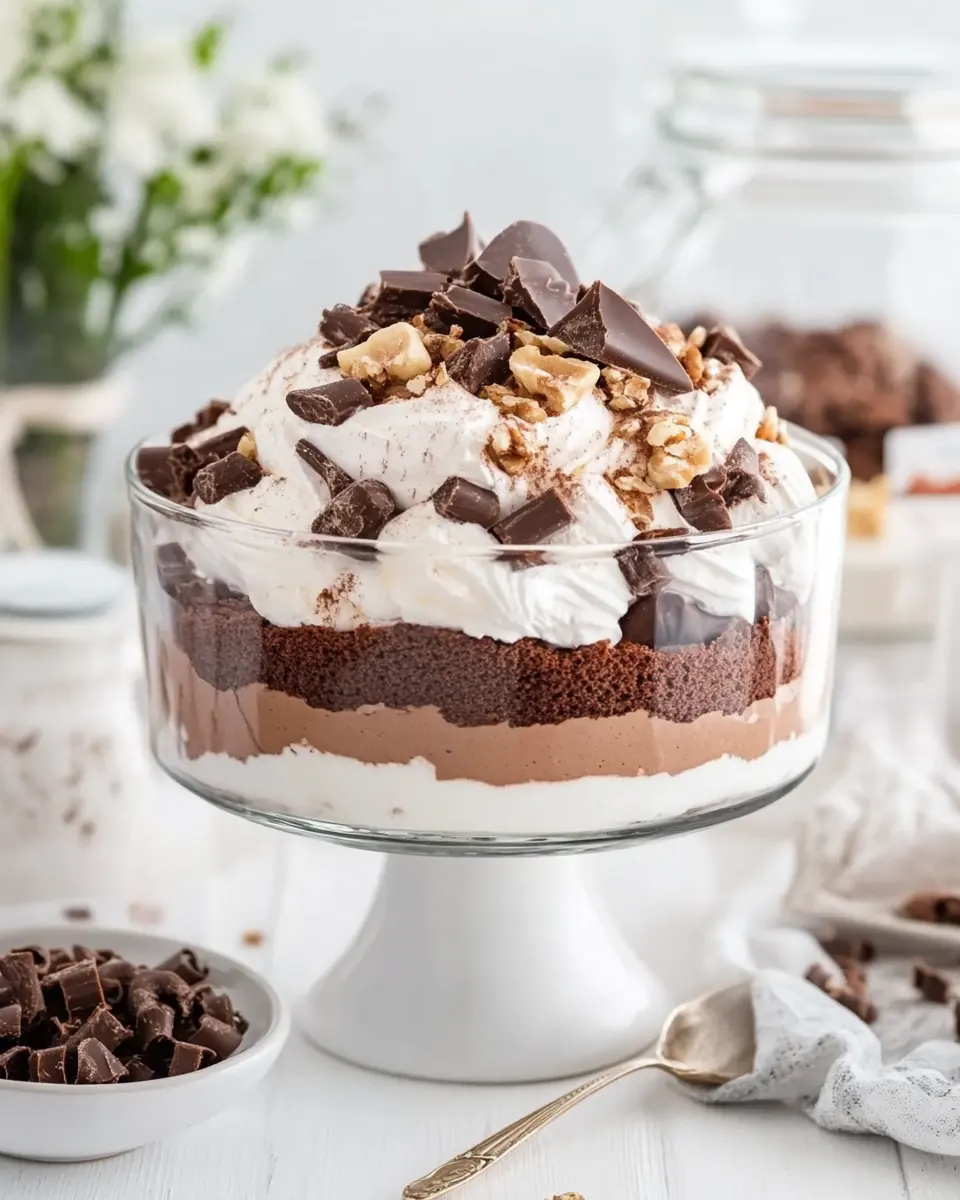
In a trifle bowl or large glass bowl, place half of the brownies into the bottom of the serving dish. Layer half of the pudding mixture directly onto the brownies and follow with 1/3 of the bag of toffee bits. Next, add half of the remaining container of whipped topping. Repeat layers. Top with remaining 1/3 of toffee bits. Cover and refrigerate 3-4 hours before serving.: During baking you will catch wafts of rich chocolate that hint at the fudgy interior. The top should become set and glossy without large cracks, and a toothpick inserted near the center should come out with a few moist crumbs, not wet batter. Cooling completely is essential because warm brownies will crumble when cut and will cause the layers to slide in the trifle. Cooling lets the crumb firm up so you can make neat 1 inch squares. A frequent error is rushing the cut while the brownies are still warm, which leads to a messy assembly. Allow full cooling on a wire rack to keep the bottom from steaming and becoming soggy.
Once the brownies are cool, cut into 1-inch squares: Cutting into uniform 1 inch pieces gives consistent layering and ensures each spoonful contains brownie in every bite. Use a sharp knife, and wipe it between passes if the edges become tacky, to keep the squares tidy. The squares should hold their shape but show a tender interior when pressed, indicating the right balance of fudgy moisture. Cutting smaller or larger can throw off proportions; smaller pieces can dissolve into the pudding while very large pieces dominate the mouthfeel. If you notice the brownies crumbling excessively, chilled briefly for 10 to 15 minutes will firm them up and make cutting easier.
In a large bowl, combine pudding mix, whole milk and sweetened condensed milk: Whisking these together creates a lusciously thick chocolate base, and you will see the mixture thicken as the instant pudding hydrates. The sweetened condensed milk adds silkiness and depth, while the whole milk balances texture so it is not overwhelmingly dense. Stir until completely smooth, scraping the bowl so no dry pockets remain, because lumps will remain noticeable in the finished trifle. Over whisking is rarely a problem here, but undermixing will leave grainy streaks of powder. If the mix seems too loose, refrigerate for a short while to let it firm before moving on.
Mix until smooth, then fold in 8 ounces whipped topping until no streaks remain: Folding in the whipped topping creates an airy, cloud like consistency that softens the pudding into a luscious mousse. Use a large spatula and gentle folding motions, lifting from the bottom and turning the bowl, so you preserve volume. The color will lighten and the texture will look pillowy, with no visible white streaks. Vigorous stirring will deflate the mixture, resulting in a dense filling, so resist the urge to overwork it. If the kitchen is warm and the topping starts to weep, chill the bowl briefly before folding to keep the structure intact.
In a trifle bowl or large glass bowl, place half of the brownies into the bottom of the serving dish: Arranging the brownie squares in an even layer forms a solid foundation that the pudding can rest on. The visual of dark squares peeking through is part of the charm, so space them slightly for a pretty pattern. Press them gently so they sit flat, which helps the subsequent pudding layer spread evenly. One common misstep is overcrowding the bottom layer, which prevents even distribution of pudding on top. If pieces are irregular, trim a bit or fill gaps with smaller squares so the layer looks intentional.
Layer half of the pudding mixture directly onto the brownies and follow with 1/3 of the bag of toffee bits: When you spoon the pudding over the brownies, you will notice it smooths into the cracks and begins to soften the edges, creating a melded texture. Sprinkling toffee bits adds immediate crunch and a buttery caramel note, and the contrast elevates the overall mouthfeel. Distribute the toffee evenly to avoid clumps, which can dominate a bite. A trap here is adding too much toffee in one spot; aim for a balanced scatter so every serving gets some crunch.
Next, add half of the remaining container of whipped topping: Dolloping the whipped topping gives a bright, cloud like whiteness and a light mouthfeel between richer layers. Smooth it gently with a spatula to maintain the airy texture while creating an even surface for the next set of layers. The whipped topping also helps protect the toffee from absorbing moisture during chilling. If you spread too roughly you can deflate the mixture, so use gentle sweeping motions instead.
Repeat layers: Building another set of brownie , pudding, toffee, and whipped topping layers repeats the same sensations, creating depth and balance. As you layer, notice how the colors band in the glass bowl, which makes for an appealing presentation. Each repetition marries the flavors further, and the chilled resting time will allow the layers to soften into one another. One mistake to avoid is rushing and smearing layers together, which hides the visual contrast that makes the trifle special.
Top with remaining 1/3 of toffee bits: The final sprinkle of toffee provides a crisp crown and a textural promise for the first scoop, and visually it signals the trifle is finished. Scatter the bits across the surface so they are visible from the side of the bowl for a pretty finish. Add them right before serving when possible, as the toffee will retain its crunch best that way. If you add them too early, they may soften from contact with the moist layers beneath.
Cover and refrigerate 3 to 4 hours before serving: Chilling allows the pudding to set further and for the brownie edges to take on a custard like tenderness from the surrounding layers, enhancing cohesion and flavor melding. The refrigerator will hum quietly as the bowl chills, and after a few hours the trifle will hold its shape while still being scoopable. A typical pitfall is serving too soon; without adequate chill time the pudding can be loose and the layers may slide when scooped. If you need to speed things up, refrigerate for at least 2 hours, but the recommended 3 to 4 hours is ideal for best texture.