For the peanut butter layer: Line an 8"x 8" pan with parchment paper or foil and set aside.: Line an 8"x 8" pan with parchment paper or foil and set aside : You will notice the crisp crinkle of parchment as you press it into the pan, which makes lifting the chilled slab later effortless. Lining the pan ensures neat edges and protects the fudge during cutting, so take a moment to press the paper into all corners, smoothing out any folds to avoid uneven layers. If the liner shifts when you pour, stop and re-smooth it, because an unlined or badly lined pan makes cutting and serving messy. A common mistake is skipping this step, which leads to difficult removal and uneven pieces.
Set a heavy bottomed saucepan over medium heat and add the butter, peanut butter, and peanut butter chips. Stir constantly until melted and completely smooth.: As these three ingredients start to warm, you will hear a faint soft bubbling and smell a rich, nutty aroma. The heavy bottomed pan distributes heat evenly, preventing hotspots that scorch peanut butter and butter . Stir constantly so the chips melt into the mixture uniformly; watch for a glossy, even texture. If you see any dark specks or smell burning, lower the heat immediately, because overheating will ruin the smoothness.
Reduce heat to low and stir in vanilla.: The mixture transforms visually from separated lumps to a velvety, cohesive mass, and you will feel its weight lighten as the chips dissolve. Constant stirring ensures heat is distributed and prevents graininess. Use a heat resistant spatula and scrape the bottom frequently to avoid sticking. A frequent error is intermittent stirring, which leads to uneven melting and small unmelted bits.
With a spatula, fold in the SIFTED powdered sugar and salt (still over low heat), incorporating it until the mixture is completely smooth. If you have any lumps or it looks especially grainy, work out the lumps by vigorously whisking. Or "smoosh" the mixture against the bottom and sides of the pan with a rubber spatula.: As you lower the heat, the pan will give off a gentle steam and the aroma of vanilla will bloom, rounding the nutty flavors. Adding vanilla at lower heat preserves its fragrance and integrates it smoothly. Stir just until incorporated to keep the temperature from rising. If you add it while the pan is too hot, the flavor can dissipate, reducing its impact.
Stir in marshmallow creme until incorporated, then spread mixture evenly into prepared pan.: When you fold in the sifted powdered sugar , you will see the mixture thicken and take on a matte, satin look. Sifting matters here because it eliminates lumps that can cause a gritty texture. Work steadily and press against the sides with the spatula to push out any stubborn pockets. If it appears grainy, whisk vigorously or press the mixture against the pan to break up lumps; using unmelted powdered sugar will leave a coarse mouthfeel.
For the chocolate layer: Set a heavy bottomed saucepan over medium heat and add the sweetened condensed milk, chocolate chips, and butter. Stir constantly until melted together and completely smooth.: By applying this technique, you will feel the mixture become smoother under the tool and hear a softer sound as it relaxes. This physical smoothing not only fixes texture but also warms the sugar slightly to integrate better. Avoid overworking to the point of thinning the mixture, and if steam builds, reduce heat to prevent overheating which can cause separation; a common pitfall is trying to force lumps out without reducing heat, which can scorch the mixture.
Spread chocolate mixture evenly over peanut butter mixture in the pan.: The marshmallow creme folds in and creates a slightly glossy, pillowy top to the peanut butter layer. As you spread, use even pressure to avoid air pockets and aim for a smooth surface for the chocolate to sit on. You should feel the mixture become more pliable and slightly tacky. If it is too stiff to spread, warm the pan briefly over the lowest heat, stirring just enough to loosen; overheating here will make the layer too soft and affect the setting.
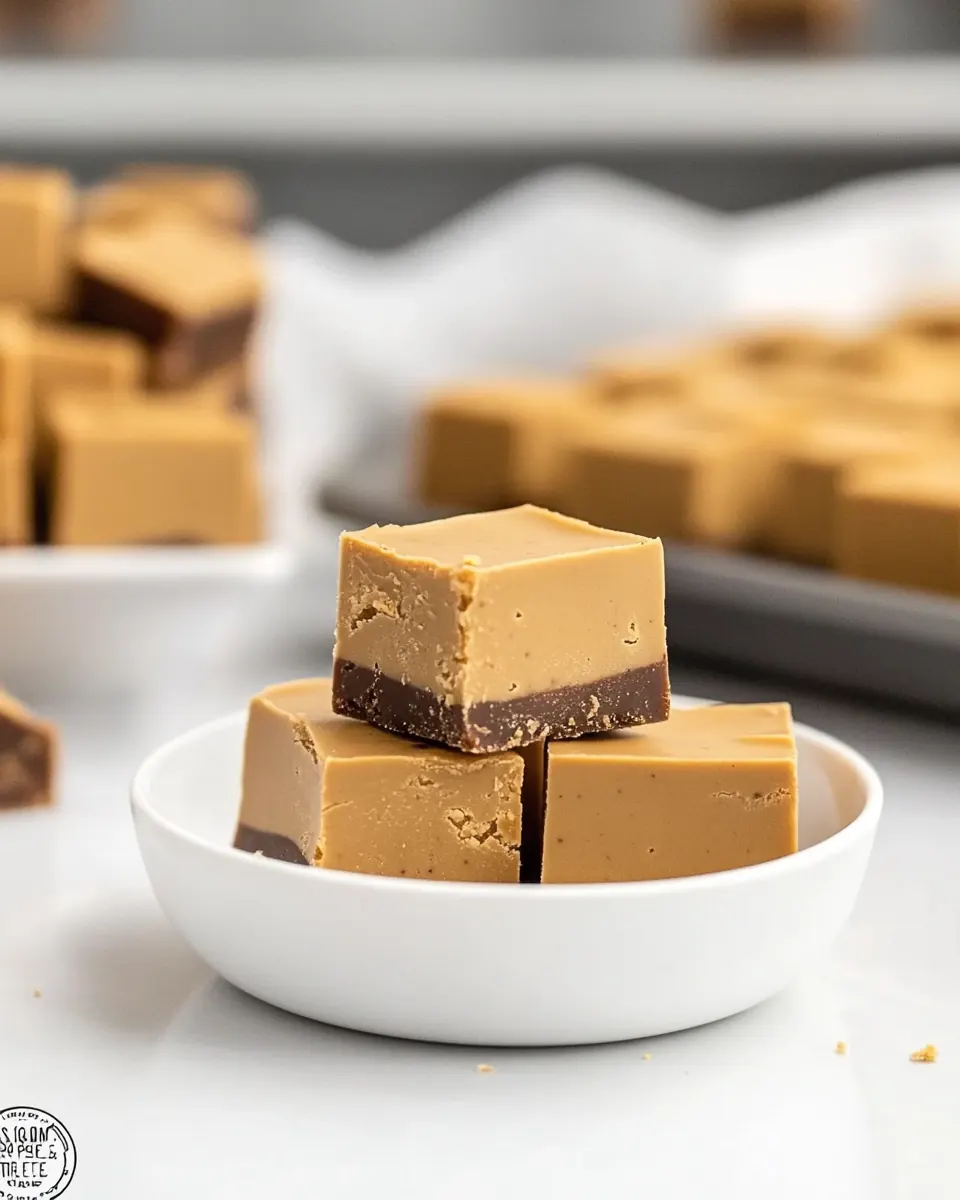
Let buckeye fudge cool completely on the counter for 3-4 hours, or place in refrigerator to chill for 2 hours, before cutting it into individual pieces. I cut the 8×8 pan into 64 pieces, 8 cuts in each direction. For easiest (neat & clean) cutting, gently lift the fudge out of the pan by the parchment paper edges and place it on a cutting board – then proceed with cutting it into pieces.: Set a heavy bottomed saucepan over medium heat and add the sweetened condensed milk, chocolate chips, and butter : The moment these three components meet the heat, a warm, caramel like dairy aroma appears and the chips begin to soften. The heavy pan keeps melting even and prevents the chocolate from catching on the bottom. Stir steadily to create an emulsified, glossy sauce. If you see the chocolate clinging in clumps, reduce the heat and stir until it relaxes into a shine; a common error is turning the heat too high which results in a dull, grainy finish.
Stir constantly until melted together and completely smooth: You will notice the texture go from speckled to a smooth, mirror like sheen, and the sound of stirring becomes gentler as the mixture becomes uniform. Constant stirring prevents separation and helps the sweetened condensed milk bind with the chocolate chips . If it seems overly thick, a splash of warm water can loosen it, but avoid adding liquid when possible because it can change set time. Overcooking here causes the topping to seize or grain, which is a common mistake.
Spread chocolate mixture evenly over peanut butter mixture in the pan: As you pour, the chocolate will sit glossy atop the peanut butter layer, and you should spread it with smooth strokes to achieve an even coat. The contrast between textures should be visible, with the chocolate forming a uniform shiny cap. If the chocolate sets too quickly and you see streaks, work faster or briefly warm the bowl to restore spreadability. A typical slip up is working too slowly, which can lead to an uneven top.
Let buckeye fudge cool completely on the counter for 3 to 4 hours, or place in refrigerator to chill for 2 hours, before cutting it into individual pieces: During cooling, the top will firm to a pleasant snap while the peanut butter layer remains tender, and you can feel the pan's temperature drop as the set finishes. Cooling at room temperature allows gradual crystallization for a creamier texture, whereas refrigeration speeds the set but can make the chocolate firmer. Avoid cutting too soon because the layers will smear; patience results in clean, neat squares. Many people try to rush this step and end up with ragged edges.
I cut the 8×8 pan into 64 pieces, 8 cuts in each direction: When you lift the chilled slab using the parchment, you will sense the solidity of the fudge under your hands and hear a quiet clean crack when your knife first touches the top. Use a sharp knife and wipe it between cuts to keep edges tidy, and score lightly first if you prefer perfect symmetry. Pressing down too hard or using a dull blade causes squashed squares, which is an avoidable error.
For easiest neat and clean cutting, gently lift the fudge out of the pan by the parchment paper edges and place it on a cutting board then proceed with cutting it into pieces: Lifting the slab gives you control and prevents the pan from flexing or denting while you slice. The tactile confidence of slicing on a stable board makes the pieces uniform and presentable. If the slab sticks to the parchment, run a warm knife under the paper edge to loosen it slightly, but do not heat the fudge directly or it will soften too much; forcing the slab out will ruin the clean lines.