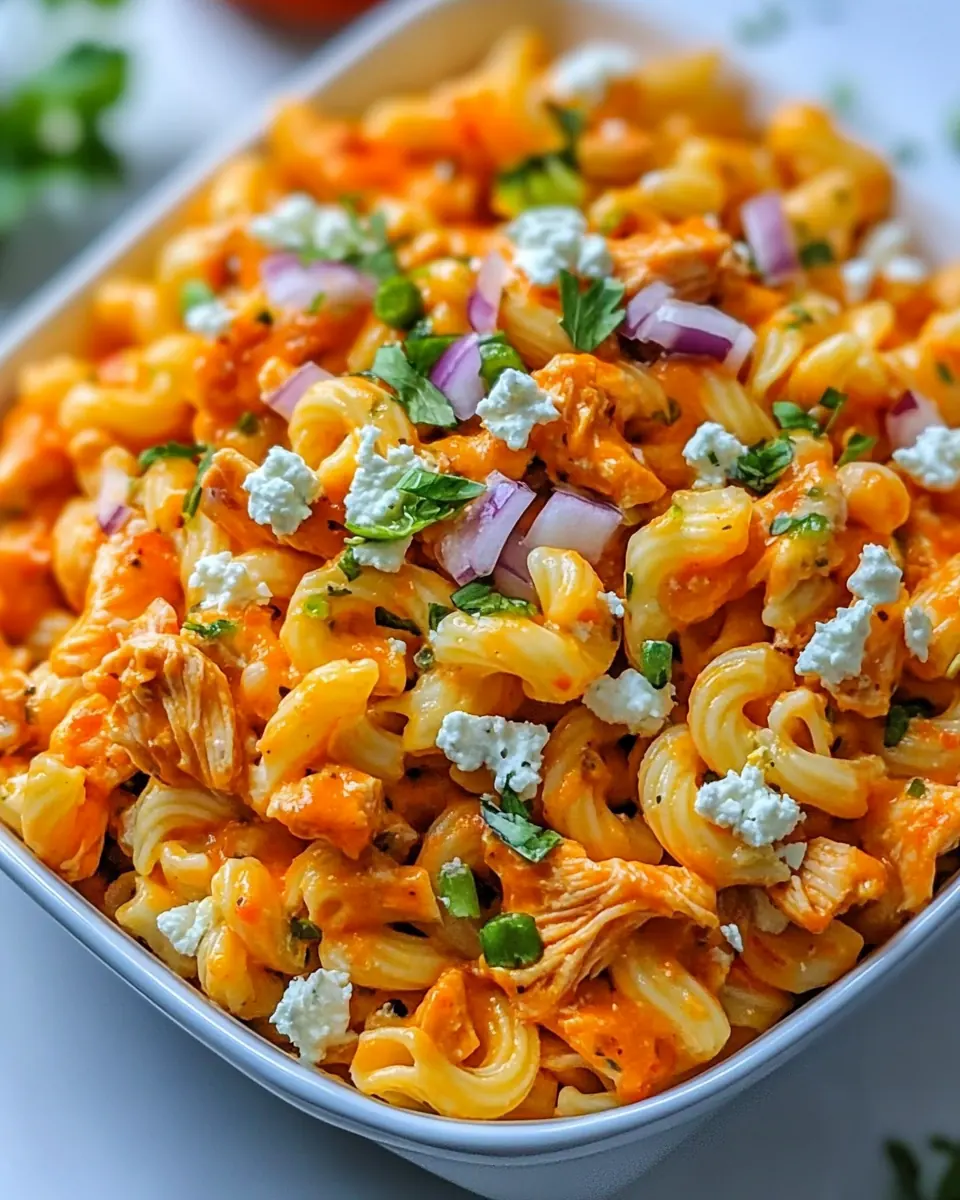
Cook pasta according to package directions to al dente in adequately salted water. Drain and rinse thoroughly with cold water (If serving hot don't use cold water).: The kitchen will smell faintly of starch and steam as the water reaches a rolling boil, and you should hear a lively simmer rather than a full roar. Tasting for al dente means the pasta yields slightly to pressure but still has a tiny resistance at the center, which ensures it does not become mushy once chilled. Salting the water seasons the pasta from within, which is critical because unseasoned pasta can result in a flat final salad. A common mistake is over boiling, which leads to a gummy texture; set a timer for the lower end of the package range and test early.
While pasta is cooking, whisk together hot sauce, ranch dressing, garlic powder, onion powder, and celery salt in small bowl until well combined.: Cold rinsing stops the cooking immediately and washes away excess starch so the pasta does not clump, giving the salad a clean, separated look. You will feel the pasta cool quickly, and the pieces will go from steamy and flexible to firm and slightly slick as the surface starches are rinsed. If you plan to serve the salad warm, skip the cold rinse to preserve the sauce adhesion; doing the opposite can lead to a gluey texture. A frequent oversight is inadequate draining, which can dilute the dressing, so let the pasta sit in a colander to remove extra water.
Place the pasta in large mixing bowl. Stir in chicken, blue cheese, carrots, celery, and onion (optional). Slowly mix in desired amount of dressing. You may not want to use all of the dressing.: As you whisk, the dressing will emulsify and thicken slightly, and the aroma of spices will bloom, offering a preview of the final flavor. Whisking blends the heat and cream into a cohesive sauce that clings to the pasta and other ingredients, ensuring each bite is flavored. The reason for mixing separately is to control the seasoning and adjust heat before it meets the chicken and vegetables. Be cautious not to over salt here, especially if your blue cheese is quite salty.
Can be served cold or hot. If serving cold, refrigerate until ready to serve.: When transferred into a roomy bowl, the pasta should appear glossy and separate, ready to accept the dressing. This stage is visually satisfying, as the pale pasta provides a canvas for the bright sauces and colorful vegetables. Use a bowl large enough to fold ingredients without crushing them, which preserves texture. A common error is using too small a bowl, which makes mixing messy and leads to uneven coating.
Stir in chicken, blue cheese, carrots, celery, and onion (optional): As you fold these ingredients in, notice the contrast between the soft chicken and the crunchy vegetables. The blue cheese will break into small pockets, offering bursts of tang. Folding gently prevents the pasta from breaking and keeps the components distinct, which is important for mouthfeel. One misstep to avoid is over mixing, which can crush the blue cheese into a uniform smear and lose those delightful flavor pops.
Slowly mix in desired amount of dressing: Add the dressing gradually so you can achieve the exact level of coating you prefer, watching as the sauce clings to the pasta and pools subtly in the crevices. Stirring slowly allows you to see how the salad comes together and prevents overdressing, which can make the dish heavy. If refrigerated, the pasta will absorb some dressing, so aim slightly lighter if you plan to chill it overnight. The usual pitfall is adding all the dressing at once, then ending up with a soggy salad that needs rescue.
You may not want to use all of the dressing: Leaving back some dressing is a smart move because it lets you adjust just before serving, especially after refrigeration when flavors concentrate and textures change. Reserve a small portion to refresh the salad if it looks dry after chilling, this keeps it from becoming claggy. Many cooks accidentally overdress and then cannot reverse the texture, so reserve some for later.
Can be served cold or hot: Chilled service highlights the refreshing crunch of the celery and carrots , while warm service amplifies the richness of the blue cheese and melds the flavors faster. If serving warm, toss the ingredients lightly while the pasta is still slightly warm so it absorbs the dressing; for cold service, cool the pasta quickly and then refrigerate to let the flavors develop. A common oversight is serving it too warm after refrigeration, which can flatten the texture.
If serving cold, refrigerate until ready to serve: Refrigeration deepens the marriage of flavors, and you will notice the heat from the Buffalo sauce mellow slightly while the creamy elements become more integrated. Chilling also firms the salad, making it easier to portion for picnics. Avoid leaving it at room temperature for extended periods to maintain freshness and food safety.