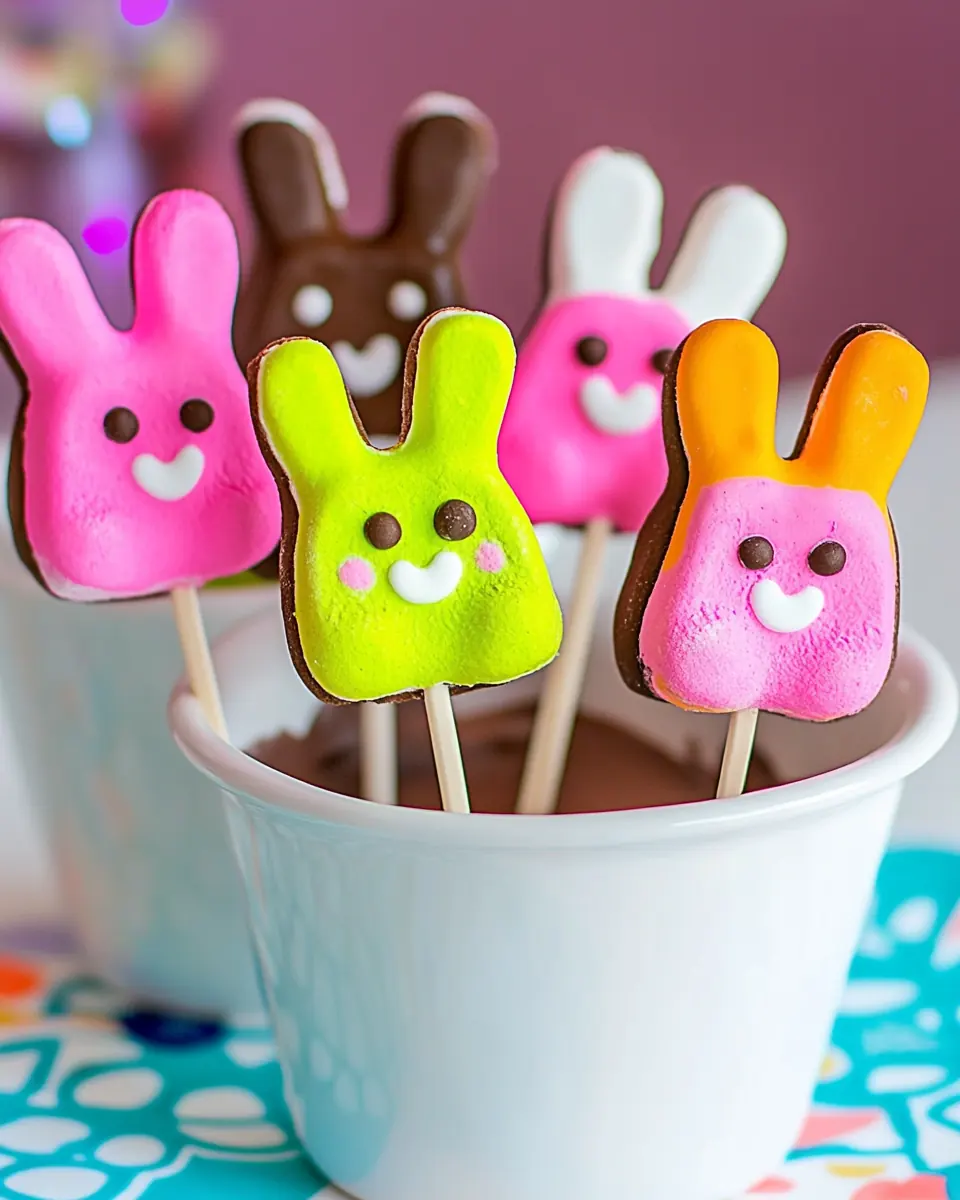
Insert lollipop stick halfway into the Peeps. Cut mini marshmallows in half. Set aside.: As you push the stick in you should feel slight resistance from the marshmallow body, which helps the stick hold; if it slides through too easily the Peep may be too soft or stale, and the pop can wobble, so choose fresh Peeps. The sound is minimal, but you will notice the texture change as the stick compresses the center, and proper placement centers weight so the pop does not tip once coated. If you insert the stick off center you risk imbalance during dipping, so take a moment to steady the Peep on a flat surface before inserting. Troubleshooting tip, if a Peep tears, discard it and use a new one, as taped repairs will not hold through the melting and cooling process. Aim for halfway depth to provide a firm grip without poking through the other side.
Melt almond bark/candy coating according to package directions.: As you slice the mini marshmallows , the fresh interior will look fluffy and slightly glossy, and halving them ensures they conform to the curve of the coated Peep. I use a sharp kitchen scissors or a serrated knife, cleaning the tool periodically to prevent sticky buildup that drags on the cut. The halves should be compact so they sit flush; if they are too tall they will topple the pop, so press gently to flatten just enough to sit securely. A common mistake is cutting unevenly which makes placement awkward, so aim for consistent halves so they match across the batch.
Dip Peep into candy coating, roll around to coat. Shake off excess. Immediately dip one side of the coated marshmallow into graham cracker crumbs (or sprinkles). Place coated peeps, graham cracker side down, on parchment or wax paper and place marshmallow on peep.: You will notice the solid chocolate almond bark transform into a glossy, viscous liquid, releasing a warm cocoa aroma that tells you it is ready for dipping. Gently stirring during melting promotes smoothness and prevents hot spots that can burn, and if using a microwave, heat in short increments while stirring in between to avoid overheating. The coating should be fluid enough to flow but thick enough to cling; if it seems grainy, it may have overheated, so cool slightly and stir until smooth. A common pitfall is rushing the melt, which leads to seizing and grainy texture, so be patient and maintain gentle, even heat.
Allow to set up and then place clear treat bag over Peep and tie with curling ribbon.: When you dip the Bunny Peeps the warm coating should coat the surface evenly, creating a shiny shell; lift slowly and let excess drip back into the bowl so you avoid thick globules. Rolling the Peep or using a spoon to pour coating ensures full coverage, and watching the coating settle gives you a sense of when it is set to move to the next step. The smell will be richer now with the chocolate aroma mingling with the sweet marshmallow scent, and the visual shine indicates good coverage. If the coating pools unevenly, gently tap the stick on the bowl edge to encourage even flow; avoid harsh shakes which can dislodge the Peep from the stick.
Shake off excess: As excess coating drips, the sound is a soft plop into the bowl and the visual cue is a uniform, smooth shell without thick drips. This step prevents large drips from hardening into unsightly blobs, which can affect how well crumbs or sprinkles stick. Hold the Peep over the bowl briefly so gravity does its work, then give a gentle wrist rotation to even out the layer. A common issue is leaving too much coating, which increases set time and can make the pop top heavy, so aim for a modest, even layer that still shows the Peep shape beneath.
Immediately dip one side of the coated marshmallow into graham cracker crumbs or sprinkles: Right after you remove excess, press one side into a shallow dish of graham cracker crumbs or sprinkles so they adhere to the still tacky coating; the contrast of crunchy crumbs against the smooth chocolate creates the s'mores profile. The textures marry as the coating cools, and you will see crumbs stick visibly, offering a toasty look. If you wait too long the coating will set and the crumbs will not adhere, so timing is essential. Avoid pressing too hard which can deform the coating; a gentle press is enough to secure the crumbs.
Place coated Peeps graham cracker side down on parchment or wax paper: The surface should feel slightly warm at first and become cool to the touch as the coating sets. Setting them graham cracker side down helps level the decoration and ensures the crumb side makes firm contact with the table, preventing smudging. Keep a little distance between pops because the coating can expand slightly as it settles; if they touch, decorations may transfer. A frequent mistake is placing them on a cold, wet surface which can make condensation form, so use clean, dry parchment or wax for best results.
Place marshmallow on Peep: Nestle the halved mini marshmallows onto the still tacky side so they adhere and mimic the marshmallow layer of a s'more. You should press just enough for contact, not force, so the marshmallow retains its puff and chew. The tactile sensation is satisfying as the marshmallow settles into the coating, and visually you get the classic s'mores stack in miniature. If the coating has already set, use a tiny dab of melted coating as glue; otherwise the marshmallow may not stick well and could slide off during packaging.
Allow to set up: As the pops cool the coating will firm and the scent will shift from warm chocolate to a settled aroma, signaling readiness. Setting time depends on room temperature, but you will know they are done when the coating is matte and firm to the touch. Rushing this step by placing them in a damp or humid environment can cause sticky spots, so cool at room temperature on parchment or in a cool, dry area. A usual mistake is handling them too soon, which can leave fingerprints or cause decorations to shift.
Place clear treat bag over Peep and tie with curling ribbon: Slide each set pop into a clear treat bag carefully so the coating is not smudged, then secure the opening with curling ribbon . The bag protects the finish and makes the pop portable, and tying the ribbon neatly gives a polished presentation. Use gentle handling to avoid pressing the coating against the plastic, and trim ribbon tails for a tidy look. If the bag is too small the pop may rub the coating, so select an appropriately sized bag to preserve the pops during transport.