Preheat oven to 350°F (180°C). Spray an 8-inch square baking pan with baking spray with flour. Line pan with parchment paper, letting excess extend over all sides of pan.: You should sense the warm, dry blast of the oven as it reaches temperature, and it helps create even rise and browning. Preparing the pan with spray and parchment ensures the cake releases cleanly, preserving the edges and preventing tearing. If you skip lining, the cake may stick and break when you remove it, so always leave the parchment overhang for easy lifting. Watch that the oven actually reads the right temperature; an oven thermometer is helpful to avoid an underbaked center or overbrowned edges. A common mistake is not letting the oven fully preheat, which leads to uneven texture and poor lift.
In the bowl of a stand mixer, whisk together flour, sugar, baking powder, salt, and baking soda by hand. Add butter; using the paddle attachment, beat at medium-low speed until butter is incorporated and mixture resembles coarse crumbs, about 2 minutes.: You will notice a shift from powdery to slightly clumpy, with little butter pieces coating the dry mix, and this texture encourages tender flakiness. The sound is a gentle, steady hum as the paddle moves through the dry mixture, and visually you want small pea sized bits rather than a homogeneous paste. This step matters because the pieces of butter melt in the oven, creating tiny pockets that yield a light crumb. Avoid overbeating, which can warm the butter too much and make the batter greasy. If your mixture looks too greasy, chill briefly before adding liquids to restore body.
In a medium bowl, whisk together milk, oil, egg whites, sour cream, and vanilla. With mixer on low speed, add one-third of milk mixture (about ? cup or 180 grams) to flour mixture. Increase mixer speed to medium, and beat until light and fluffy, 1 to 2 minutes. Gradually add remaining milk mixture, beating until well combined and stopping to scrape sides of bowl. Spread batter into prepared pan.: The wet mixture should look glossy and homogenous, smelling faintly of vanilla, and the addition in stages prevents overworking the batter while promoting even hydration. As you beat, listen for a softer, lighter sound, and see the batter aerate and gain volume. Scraping the bowl ensures no dry pockets remain, which would cause dense spots. This technique keeps the crumb tender, and adding liquids gradually prevents separation or curdling. A frequent error is rushing the additions, which leads to lumps or uneven texture; patience here pays off.
Bake until a wooden pick inserted in center comes out with a few moist crumbs, 50 minutes to 1 hour. Let cool in pan on a wire rack for 10 minutes. Remove from pan, and let cool completely on wire rack.: During baking you will notice the aroma deepen into warm, baked notes that hint at caramelization, and the edges will pull slightly away from the pan. The surface should be a light golden color, not overly dark, and a gentle spring back signals doneness. Cooling in the pan prevents the cake from collapsing from a sudden temperature change, while transferring to a wire rack lets air circulate and avoids sogginess. Cutting into the cake too soon traps steam and causes a gummy interior, so let it fully cool before slicing. A common oversight is leaving the cake in the pan too long, which can cause moisture buildup and a soggy bottom.
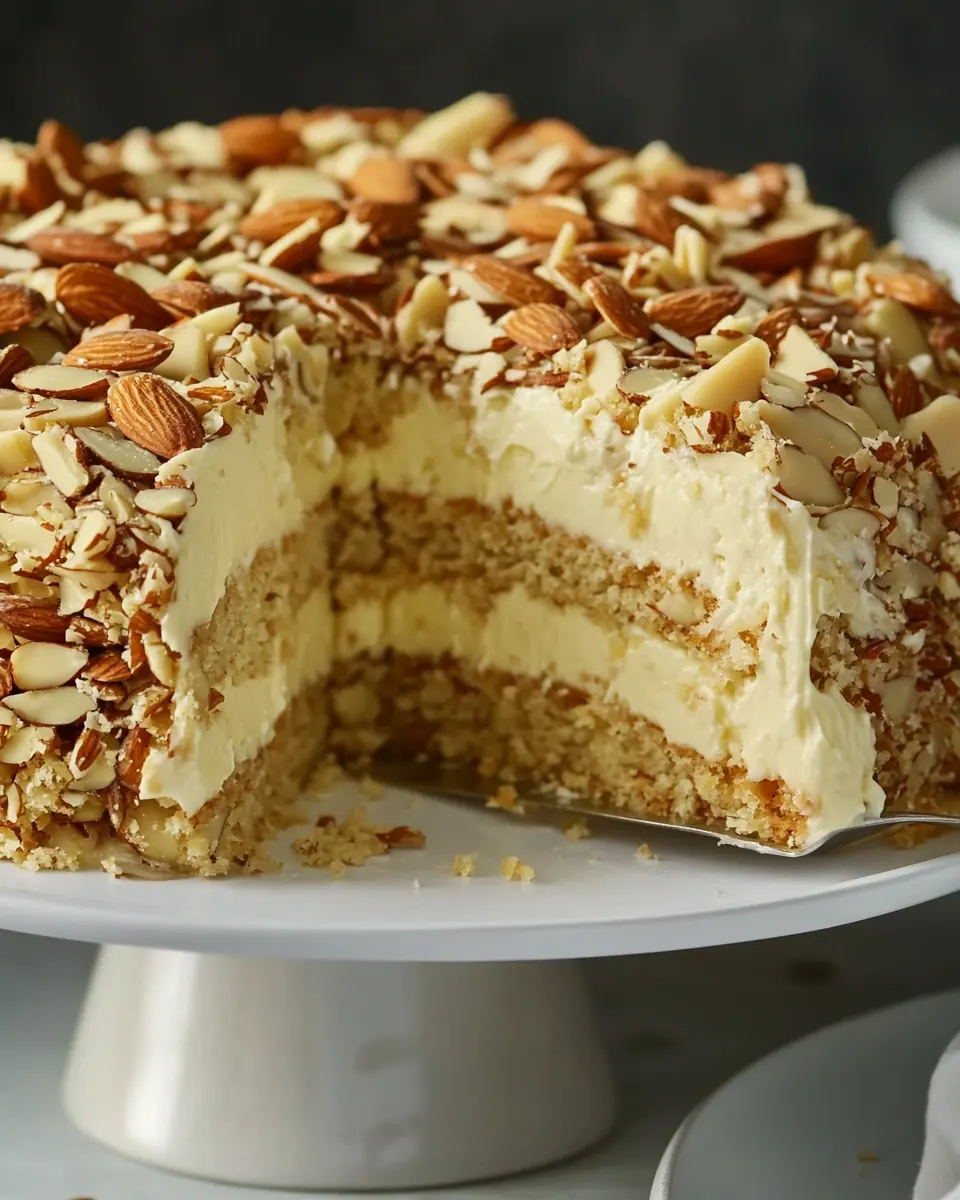
Cut cake in half horizontally. Place bottom layer on a serving plate or cake board. Spread Vanilla Pastry Cream on top, leaving a 1/4-inch border around edges. Top with remaining cake layer. Spread Vanilla Buttercream on top and sides of cake. Press Candied Almonds into buttercream. Best served same day.: As you slice, you should hear a soft, clean cut, and the layers will reveal a tender, even crumb. The pastry cream should be cool, thick, and glossy, smelling of vanilla, and spreading it creates a creamy contrast to the cake. Leaving that quarter inch border prevents the cream from overflowing when the top layer is set in place, and helps keep clean edges. If the pastry cream is too warm, it will flatten the cake layers and ooze, so always chill it to the right consistency. A common mistake is uneven layering, which makes the finished cake look lopsided; use a turntable or steady hands to center each layer.
Spread Vanilla Buttercream on top and sides of cake.: The buttercream should be smooth and silky, spreading with a soft drag and leaving a glossy finish. As you work, the buttercream will warm slightly, becoming easier to smooth; if it gets too soft, chill briefly to regain structure. Coating the sides and top creates a cohesive canvas for the candied almonds, and a crumb coat can be helpful to trap stray crumbs before the final layer. Overworking the buttercream can introduce air bubbles, which show as small pits, so apply with steady, even strokes. A common pitfall is using buttercream that is too firm, which will tear the cake; let it soften a touch at room temperature for better handling.
Press Candied Almonds into buttercream.: The candied almonds should be crisp and glossy, offering a satisfying crunch when pressed into the frosting. Press them gently but firmly so they adhere without smashing the nut brittle into powder, and arrange for even coverage or in a decorative band, depending on your preference. The contrast between glossy buttercream and the caramel shards adds both texture and visual drama. If the almonds slide off, the buttercream may be too soft, so chill briefly and then press again. One mistake to avoid is adding the nuts too early when the buttercream is warm, which causes them to sink or clump.
Best served same day.: The flavors and textures are at their peak shortly after assembly when the candied almonds retain maximum crispness and the cake is fresh. If you need to store the torte, a short refrigeration is acceptable, but note that moisture can soften the crunchy coating. When serving, allow chilled cake to sit at room temperature for a short period so the buttercream regains a glossy, palatable texture. Avoid long storage uncovered, which leads to drying, and slice with a clean, hot knife for neat portions.