Roll out your pie crust, crimp the edges and transfer to the freezer to chill.: Warm pastry is often sticky and difficult to shape, so you'll notice the dough firms as it chills, and the surface becomes matte rather than glossy, which is a good visual cue. The cold crust keeps its shape in the oven and prevents the edges from slumping; when you crimp, listen for a slight tackiness rather than sogginess, which indicates proper hydration. Common mistake to avoid is overworking the dough, which makes it tough rather than tender, so rest briefly if it feels elastic and resisting your roll.
In a large skillet, set over medium heat, add the butter and melt. When the butter has melted, add the vanilla bean seeds and pods, along with the pecans; toss until combined. And then toast until fragrant, about 5 to 7 minutes, tossing them every minute or so to ensure even browning and toasting.: Right away you'll smell a warm dairy note as the butter liquefies and begins to foam slightly, that tiny sizzle signals the pan is hot enough. Melt until the foaming subsides and the butter turns a light golden hue; this prevents burning the butter solids when you add the vanilla and pecans . A common mistake is heating too high, which will quickly brown and scorch the butter , leaving a bitter taste, so keep the heat moderate and stir gently.
Meanwhile, in a bowl whisk together the corn syrup, eggs, brown sugar and salt.: As you stir the scraped vanilla bean into the melted butter the kitchen fills with a heady perfume, and coating the pecans in fat helps them toast evenly and gain a glossy sheen. Keep moving them in the pan so they brown uniformly, use a wooden spoon to scrape up any vanilla flecks that cling to the pan, and aim for an even, warm brown color. Avoid overcrowding the skillet, which can steam rather than toast the nuts, yielding a muted flavor.
Allow the pecans to cool for about 10 minutes. We’re doing this so they won’t be hot when we add them to the pie crust. When the pecans have cooled, remove them, using a slotted spoon and place them in the chilled pie crust shell. There will be some leftover melted butter. Pour that leftover melted butter into the bowl with the egg mixture and whisk it until smooth and combined.: You will first hear a gentle crackle as the nuts release oils, then the scent will deepen to a rich, toasty note; visually they should deepen in color but not blacken. The transformation is subtle so use both smell and sight, and remove them promptly when they hit a golden brown to avoid bitterness. A typical pitfall is leaving them unattended, which can cause localized burning, so keep a steady rhythm of tossing every minute.
Pour the egg mixture over the pecans. Brush the edges of the pie crust with egg wash and place on a baking sheet. This pie has a tendency to overflow with a bit of butter so I always place it on a lined baking sheet to avoid a mess in my oven.: As you whisk, the mixture will become glossy and homogenous, with the sugar beginning to dissolve into the syrup creating a slightly thickened texture; you should not see dry granules. This step matters because a smooth emulsion ensures the filling bakes evenly and sets uniformly, delivering a custard that slices cleanly. Avoid underwhisking which can leave pockets of sugar that affect texture, so whisk until silky and cohesive.
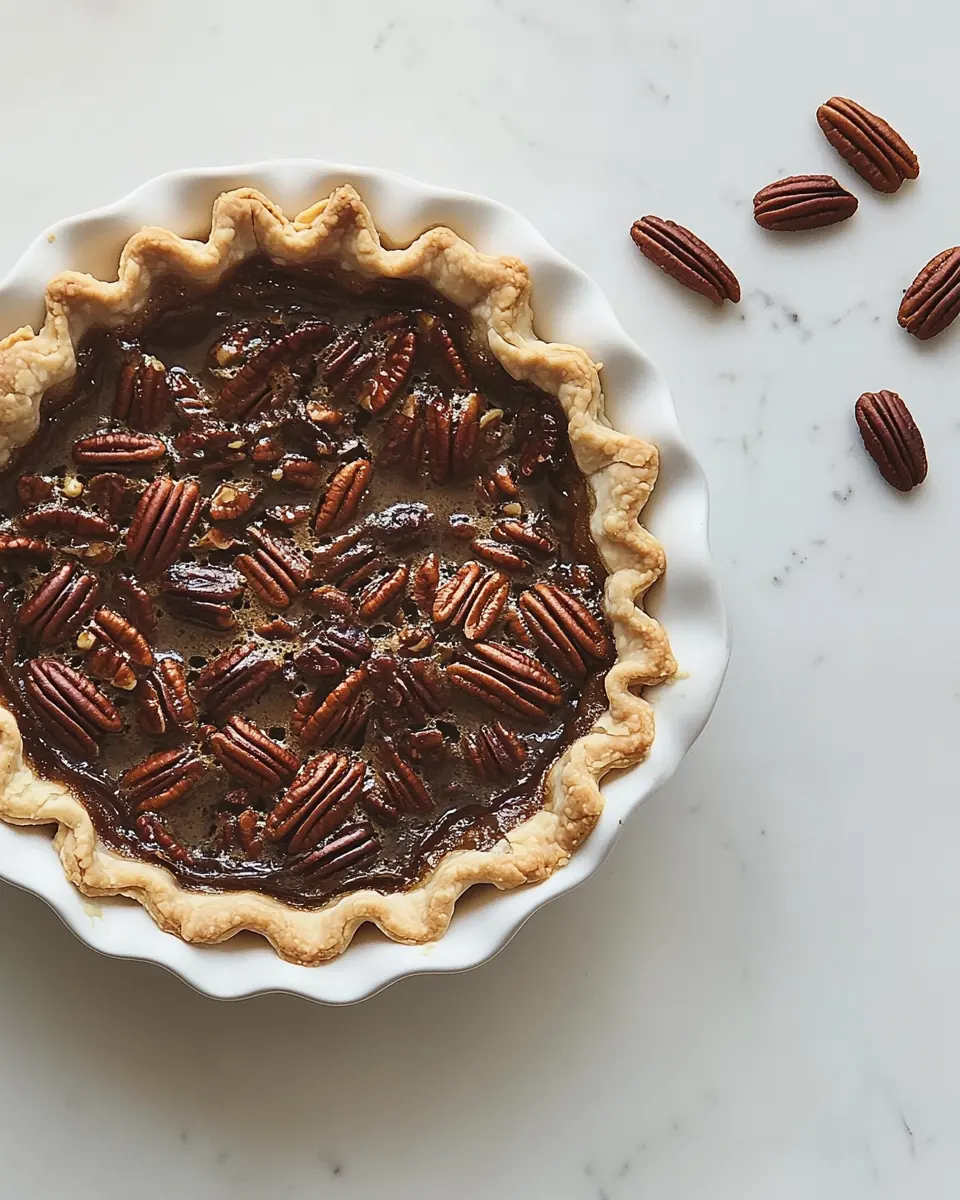
Preheat the oven to 350 degrees F. Transfer to the oven to bake for 50 to 55 minutes, until the edges of the pie crust are golden brown and the center is mostly set. It will jiggle and that is ok!: Cooling brings the pecans to a temperature that will not melt the filling or over soften the crust when combined, and you will feel the pan cool as the oils settle back into the nuts. If you add them hot they can continue releasing heat and create a loose filling, so this pause is important for structure. A common mistake is skipping the wait, which often leads to a runnier filling and a compromised set.
Allow to cool to room temperature and set for about 3 to 4 hours. Serve with whipped cream or ice cream for full butter pecan vibes.: The sensible pause also prevents trapped steam from making the crust soggy; when you drop the warm nuts into the chilled shell you'll see them nestle and maintain crisp outlines. The tactile cue is the nuts feeling warm rather than hot to touch, and visually they'll glisten without steam escaping. Avoid placing them while still steaming, which can create pockets of moisture beneath the nuts.
When the pecans have cooled, remove them, using a slotted spoon and place them in the chilled pie crust shell: Using a slotted spoon leaves behind excess butter in the pan, preventing an overly greasy filling, and when you arrange the pecans you will hear a light clink as they settle into place, creating a pleasing mosaic. A key visual cue is an even layer of nuts without large gaps, helping the filling distribute uniformly. A common misstep is packing them too densely, which can inhibit even baking of the custard between the nuts.
There will be some leftover melted butter: That residual butter is concentrated with vanilla and toasty flavor, so pour it into the bowl with the egg mixture rather than discarding it; you will see the liquid shimmer as it hits the bowl and emulsify into the custard base. This step enhances mouthfeel and ties the nut flavor into the filling, creating a cohesive flavor profile. Avoid leaving the butter behind in the pan, which wastes that toasty richness.
Pour that leftover melted butter into the bowl with the egg mixture and whisk it until smooth and combined: As you whisk the warm butter into the cooler egg mixture it will temper the eggs slightly and create a velvety, homogeneous filling; the surface becomes glossy and slightly thicker. This technique helps incorporate fat uniformly and prevents curdling, producing a silky set. A mistake to avoid is adding very hot fat too quickly, which can scramble the eggs; add gradually while whisking to keep the texture smooth.
Pour the egg mixture over the pecans: When the custard hits the nuts you may hear a soft settling sound and see the liquid seep into gaps among the pecans , coating them without washing them away; the contrast of glossy filling and textured nuts is pleasing to the eye. This step matters because even coating ensures consistent sweetness and texture in every bite. Avoid overpouring from too great a height which can splash and create uneven distribution.
Brush the edges of the pie crust with egg wash and place on a baking sheet: The egg wash gives the crust a luminous, golden finish and brushing produces a uniform sheen; visually the edges should look wet and glistening before baking. Placing the pie on a lined baking sheet catches any overflow, keeping your oven clean when the filling bubbles. A common oversight is skipping the lined sheet, which leads to a messy oven and stubborn burned drips.
Preheat the oven to 350 degrees F: You will notice the kitchen warming as the oven reaches temperature, and preheating ensures the pie starts baking immediately and the crust begins to set, creating that desirable crisp barrier between filling and crust. Accurate oven temperature helps the center set without overbaking the edges. Avoid putting an unpreheated pie in a cold oven, which can cause the filling to bubble irregularly and the crust to be underdone.
Transfer to the oven to bake for 50 to 55 minutes, until the edges of the pie crust are golden brown and the center is mostly set: During baking you will hear a quiet set of small pops as the filling consolidates, and the aroma will become deeply caramel like; visually the edges should be a clear golden brown while the center retains a slight jiggle. That wobble ensures a creamy center rather than a dry one, and testing by a gentle nudge is a reliable cue. A common mistake is overbaking until completely firm, which yields a stiff, dry filling instead of smooth custard.
It will jiggle and that is ok: Embrace the gentle movement, because residual heat will finish the set as it cools; the texture will transition from glossy and wobbly to sliceable and luscious as the pie rests. Cutting too early risks a loose, runny slice, so patience is rewarded. Avoid slicing while it is still actively bubbling or piping hot, which makes a mess and ruins presentation.
Allow to cool to room temperature and set for about 3 to 4 hours: Cooling transforms the pie, and over hours the center firms and the flavors meld; you will notice the filling tightening gradually and the surface losing its initial shine. This rest period is crucial for clean slices and a fully developed texture, and I often leave it undisturbed on the counter covered lightly. A common error is rushing this rest, which yields sloppy slices and a less harmonious mouthfeel.
Serve with whipped cream or ice cream for full butter pecan vibes: When plated, the contrast of the warm nutty crust and the cool topping elevates the experience, and the interplay of temperatures accentuates the pie's richness. I like a modest spoon of whipped cream to let the pie sing rather than mask it. Avoid heavy sauces that overpower the delicate toasty notes of the pecans and butter .