Preheat oven to 400°F.: Warmth radiates from the oven and you should notice it fill the kitchen, a dry, toasty heat that will help the butternut squash develop caramelized edges. Position the rack in the middle for even browning. A common misstep is placing the pan too close to the heating element, which can cause uneven charring, so center the pan and check the squash halfway through roasting.
Cut and chop vegetables as noted in ingredient list.: As you chop, listen for the familiar scraping sound of the knife and observe the bright colors of the carrots and celery . Uniform pieces cook at similar rates, so aim for consistency. Take care when working with the squash; a stable cutting board and a sharp knife help avoid slips. Rushing this step often leads to uneven roasting and variable textures.
In a medium bowl, toss the squash with 1 T olive oil to coat evenly. You can do this on the baking pan if desired. Arrange in a single layer on a parchment lined baking pan.: When the cubes glisten with olive oil , they are ready for the oven; this thin coating helps sugars caramelize and prevents sticking. A single layer ensures heat reaches each piece evenly, giving you those toasted edges you want. Crowding the pan steams the squash instead of roasting it, so avoid overlapping pieces.
Roast for about 20-30 minutes or until tender.: As the squash roasts you will smell a sweet, nutty aroma and see edges turning golden to deep amber. Test tenderness with a fork, it should slide through without resistance. If you find some pieces still firm, rotate the pan and check again in 5 to 10 minutes. Overroasting can make the squash too soft and dry out the pieces.
In a large pot, heat 1 T olive oil over medium high heat.: The oil should shimmer but not smoke, releasing a faint, warm scent that signals it is ready. This step sets the stage for the aromatics and builds the savory foundation. Too high heat will scorch the oil, imparting bitter notes, so adjust the flame if necessary.
Add in onion and minced garlic and heat until translucent and fragrant.: The onion will soften and become glossy while tiny fragrant bubbles form around the garlic, releasing its aromatic oils. These scents should be inviting and slightly sweet once the onion is translucent. Avoid browning or burning, because burnt garlic turns bitter and will negatively affect the soup's balance.
Add in carrots and celery and sauté for about 4-5 minutes.: You will hear a gentle sizzle as the vegetables touch the pan and the smell will deepen into a savory, slightly sweet bouquet. The carrots and celery will start to soften and the edges may pick up a faint caramelization. Stir frequently to promote even cooking; leaving them unattended can cause sticking and uneven doneness.
Add in 3 1/2 c of broth, thyme, parsley, sea salt and pepper to taste and heat at a low boil until carrots and celery are tender, about 10-20 minutes.: The liquid should shimmer and then settle into a gentle rolling boil, releasing herb aromas as it simmers. The simmer helps concentrate flavors and soften the vegetables, creating a flavorful base. If the pot boils too hard, reduce the heat; aggressive boiling can break down ingredients and make the broth cloudy.
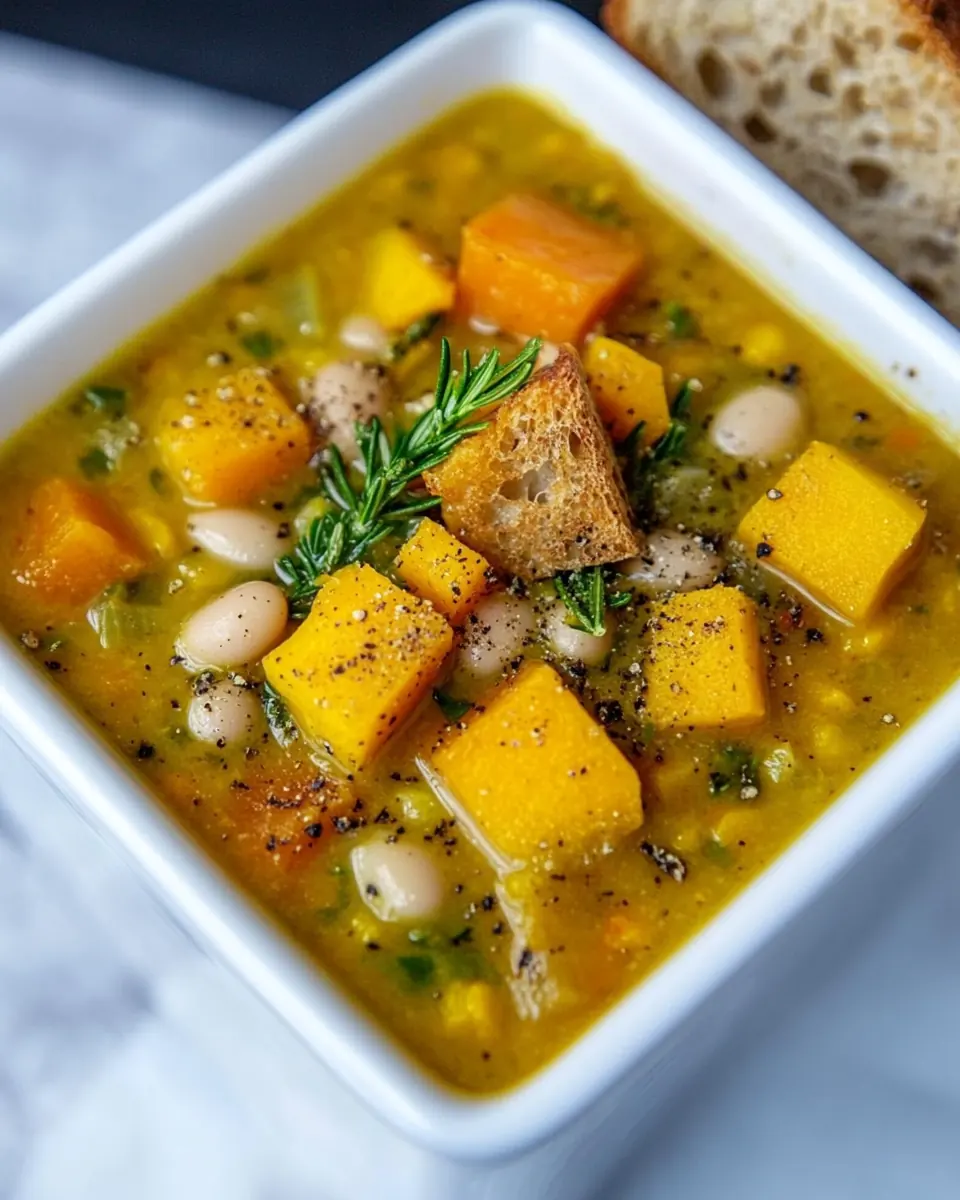
When carrots are tender, add in squash.: The roasted butternut squash will mingle with the simmering broth, releasing its caramelized notes and slightly thickening the liquid. You will see the soup gain a richer color and a sweet scent. Stir to combine gently, and if the squash falls apart immediately, the texture will be fine once blended, so do not worry about some disintegration.
Heat for another 5 minutes.: This short simmer lets the flavors knit together and warms the roasted pieces through. The aroma should deepen, and the pot will steam gently. Watch the simmer so it does not drop to a full boil, which can over-reduce the liquid and change texture.
Remove about 2 c of the soup and transfer to a high powered blender along with 1/2 c vegetable broth. Blend at high speed until smooth.: Pouring the hot liquid into the blender produces a warm steam that carries the squash perfume; hold the lid slightly ajar or use a towel to release pressure safely. The puree should be impeccably smooth, with a glossy surface and no large chunks. A blender with insufficient power may leave fibrous bits, so strain if needed. Be cautious with hot blending to avoid splashes.
Transfer creamy mixture back to pot and stir well to combine.: The pot will gain a creamy, velvety texture and a uniform color as you fold the puree back in, with steam rising in gentle waves. Stirring distributes the concentrated roasted flavors across the whole pot. If the mixture seems too thick, loosen with a splash of broth until you reach the desired consistency.
Add in beans and kale and simmer on low for about 10 minutes or until ready to serve!: The cannelloni beans will warm through and contribute a tender bite, while the kale will wilt to a vibrant green and add a slight chew. Simmering gently lets flavors meld without breaking down the beans. Overcooking the kale will make it dull and limp, so add it toward the end and check its texture as you go.