Line an 8 in square pan with foil and butter foil. You need to do this first because the fudge requires your constant attention and there isn't time to do this step later.: The kitchen will smell faintly sweet and buttery as you press the foil into the pan, creating a smooth cradle that helps the fudge release cleanly. This step avoids frustration later, because a well lined pan lets you lift the whole slab out and slice neat squares. Avoid skipping this, or the fudge will stick and tear when you try to remove it. Make sure the foil is creased to fit the corners snugly, but smooth the top surface so the final layer will be even.
Combine marshmallow creme, evaporated milk, butter, and sugar in a large, heavy pan.: As these ingredients meet in the pan you will notice a glossy, thick slurry forming, and the aroma becomes rich and dairy forward. Using a heavy pan distributes heat evenly, preventing hot spots that cause scorching. Stir gently at first to dissolve the sugar into the evaporated milk , and keep the marshmallow creme integrated to avoid lumps. A common mistake here is using a thin pan which can lead to burning, so choose sturdy cookware and keep the ingredients moving.
Bring to a boil over medium-high heat stirring constantly.: The mixture should steam and then start to roll into a gentle boil, releasing a caramel like scent as the sugars heat. Constant stirring prevents sticking and ensures even temperature rise. If you let it sit it will scorch and develop bitter notes, so maintain movement with a heat resistant spatula. Listen for a steady bubbling and watch the color deepen gradually; that visual cue tells you you are progressing.
Continue cooking until mixture reaches 235 degrees on a candy thermometer. This should take around 10-15 minutes. It's important that you stir constantly so that it doesn't burn. You will see the color turn caramel and then you'll know you're getting close.: When the thermometer reads around 235 degrees you will notice the aroma shift toward rich caramel, and the texture on the spoon will be thicker and syrupy. This precise temperature is critical to set the fudge properly, giving a firm yet creamy bite. Avoid overshooting the temperature which yields a dry, crumbly result, and do not undercook or the center will remain too soft. Stir consistently while monitoring the thermometer and watch for a uniform color change to caramel tones as an extra signal.
Remove the mixture from heat and stir in the chocolate and candy corn. I added the chocolate first and stirred a few times before adding the candy corn so that the candy corn wouldn't melt. You don't want to wait too long though or it will be hard to stir in.: After removing from heat, the pan will still radiate warmth and the act of stirring in the semisweet chocolate chips will create a glossy, rich blend while the chocolate melts into silky ribbons. I prefer adding chocolate first so it melts evenly without the candy corn dissolving completely. If you wait too long the base will firm and become difficult to mix, but adding the candy corn too early will make it lose definition. Stir gently until the chocolate is smooth and the candy corn pieces are distributed, watching for any melted bits that signal overmixing.
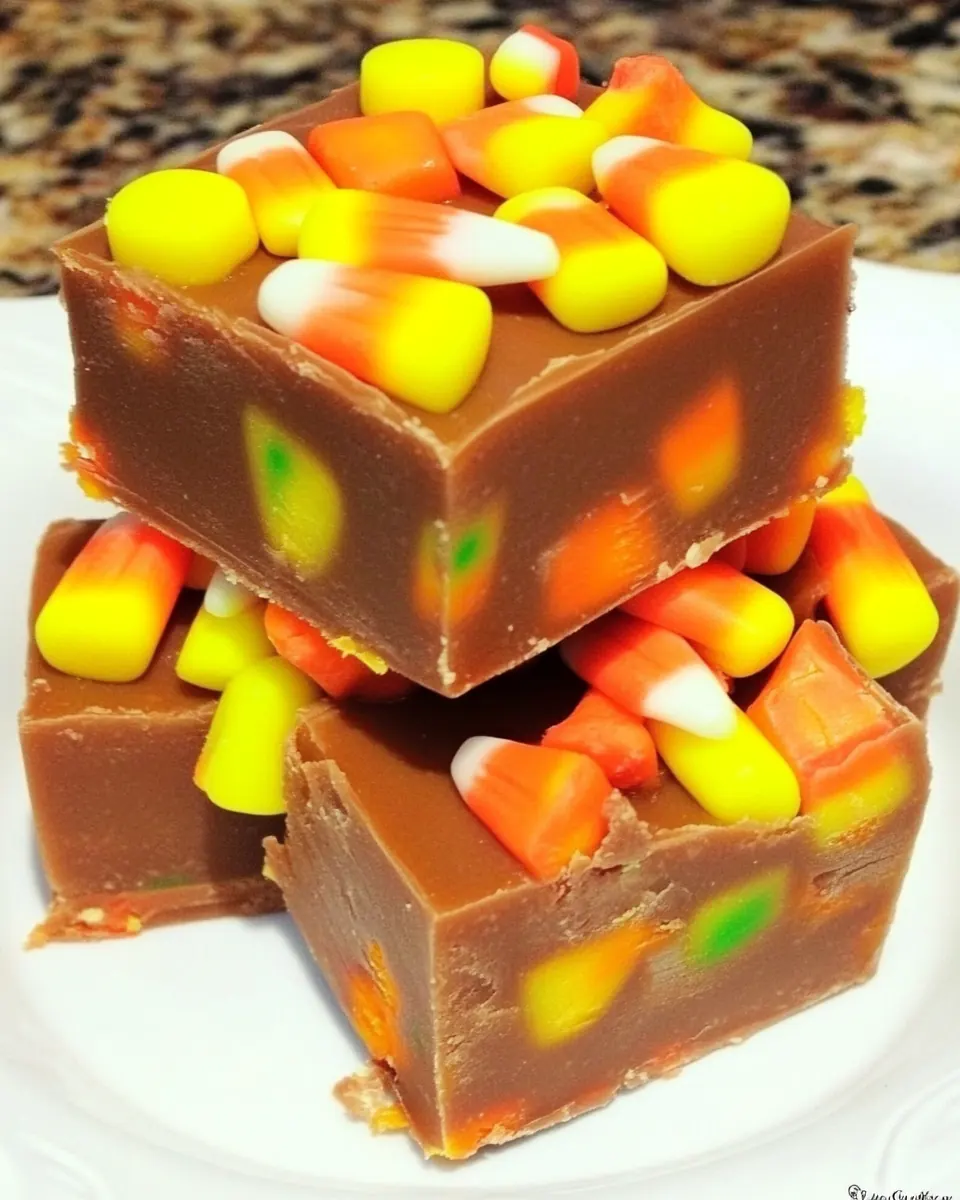
Transfer to the foil-lined pan and smooth the top. This is when I added the candy corn. I tried to space it about where I would cut the pieces so that each piece of fudge would have a candy corn on it.: Pouring the warm fudge into the prepared pan releases a warm, chocolate aroma, and smoothing with an offset spatula creates an even surface that chills uniformly. This is the moment to press extra candy corn on top for presentation, spacing pieces where you plan to cut so each square looks inviting. A common slip is leaving peaks or air pockets, which can lead to uneven slices, so press gently and tamp out bubbles before chilling.
Chill until set - at least two hours, or overnight.: As the pan cools in the refrigerator the texture shifts from soft to firm, and the fudge takes on a sliceable density while retaining a tender chew. Overnight chilling enhances flavor melding and makes cleaner cuts. Do not rush this step by freezing, which can cause condensation when thawed and a watery surface; slow cooling yields the best mouthfeel.
Take it out of the pan, remove the foil (it should peel right off), and cut into squares. Enjoy!: When you lift the foil out the kitchen will smell concentrated and comforting, and the clean edges reveal the candy corn embedded within. Use a sharp knife, wiping it between cuts for neat slices, and arrange pieces on a platter. Cutting too soon can smear the surface, so ensure firm set before slicing to keep shapes tidy and presentation appealing.