Preheat oven to 425 degrees. Place pie crust into pie plate and bake for 8 minutes. Remove pie crust from oven and set aside.: The kitchen fills with a warm, toasty aroma as the shell starts to firm up, and you should see the edges take on a faint golden hue, a visual cue that the structure is forming. This brief high temperature bakes the crust enough to resist sogginess once the filling is added, creating a crisp rim and base. A common mistake is underbaking the shell, which leads to a soggy bottom, so keep an eye on the color and avoid opening the oven repeatedly which cools it down. Use a weight or dock the dough beforehand if you tend to get bubbles, that keeps the base even. When you remove it, set it on a cooling rack so air can circulate and the bottom stays crisp.
To prepare the caramel pie filling, add brown sugar, flour, salt, milk, half and half, and egg yolks to a heavy bottomed, 3-4 quart saucepan over medium heat. Whisk together to combine. Continue to whisk until thick and creamy. Remove from the heat, add vanilla extract.: As you whisk, the mixture slowly loosens and then begins to thicken, releasing a sweet, warm scent that hints at toffee. The heavy bottomed pan is essential because it spreads heat consistently, preventing hot spots that can scramble the yolks. The moment the custard becomes thick and coats the back of a spoon, you know the proteins and starch have set, creating that silky body. A typical pitfall is turning the heat too high; if you see sudden bubbling or hear aggressive simmering, lower the flame to maintain a gentle steam. After removing from heat, the vanilla will bloom on contact, lifting the aroma, so add it off the heat to preserve its fragrance.
Add granulated sugar and butter to a small skillet over medium heat. Stir constantly until the sugar has melted and caramelized. Slowly pour, whisking as you do, into the warm cream mixture until well combined.: The sugar will first clump, then melt into a clear liquid, and finally take on an amber tone that smells of toasted nuts and molasses, that is the cue to move quickly. Stirring constantly helps the sugar melt evenly, and adding the butter introduces gloss and richness to the caramel, smoothing any graininess. When you pour into the warm custard, whisk steadily so the hot caramel disperses and does not seize. A common error is waiting too long and allowing the sugar to burn, which leaves a bitter taste, so remove it from heat the instant it reaches a deep golden amber. As you combine, listen for a faint hiss and watch for a uniform texture, the final mixture should be glossy and cohesive.
Pour into prepared pie crust and allow to cool for about 10 minutes. Place a piece of plastic wrap onto the caramel portion of the pie and place into the refrigerator for 1-3 hours to overnight to allow the pie to firm.: Pouring the filling, you will see it level out and settle into the shell, reflecting light with a buttery sheen. Letting it rest briefly at room temperature helps the heat dissipate and prevents a rapid chill that might create condensation. Laying plastic wrap directly on the surface keeps a skin from forming and ensures an even set. The refrigerator slow firms the filling so its texture becomes sliceable; impatience here leads to a runny pie, so allow at least an hour and ideally several for the best texture. If you find the surface sticky after chilling, that is normal, and the whipped cream will help balance it when served.
When ready to serve, remove the pie from the refrigerator and carefully remove the plastic wrap from the top of the caramel.: As you lift the plastic, you may notice a faint glossy sheen return to the surface, and the aroma of caramel will freshen. Remove the wrap slowly to avoid pulling the filling, and check the edges for clean separation which signals a proper set. A mistake to avoid is leaving the pie at room temperature too long after removing the wrap because the filling softens quickly; serve within a short window for the best slices. If a slight stickiness remains, a thin spatula warmed in hot water helps to remove the wrap without marring the surface.
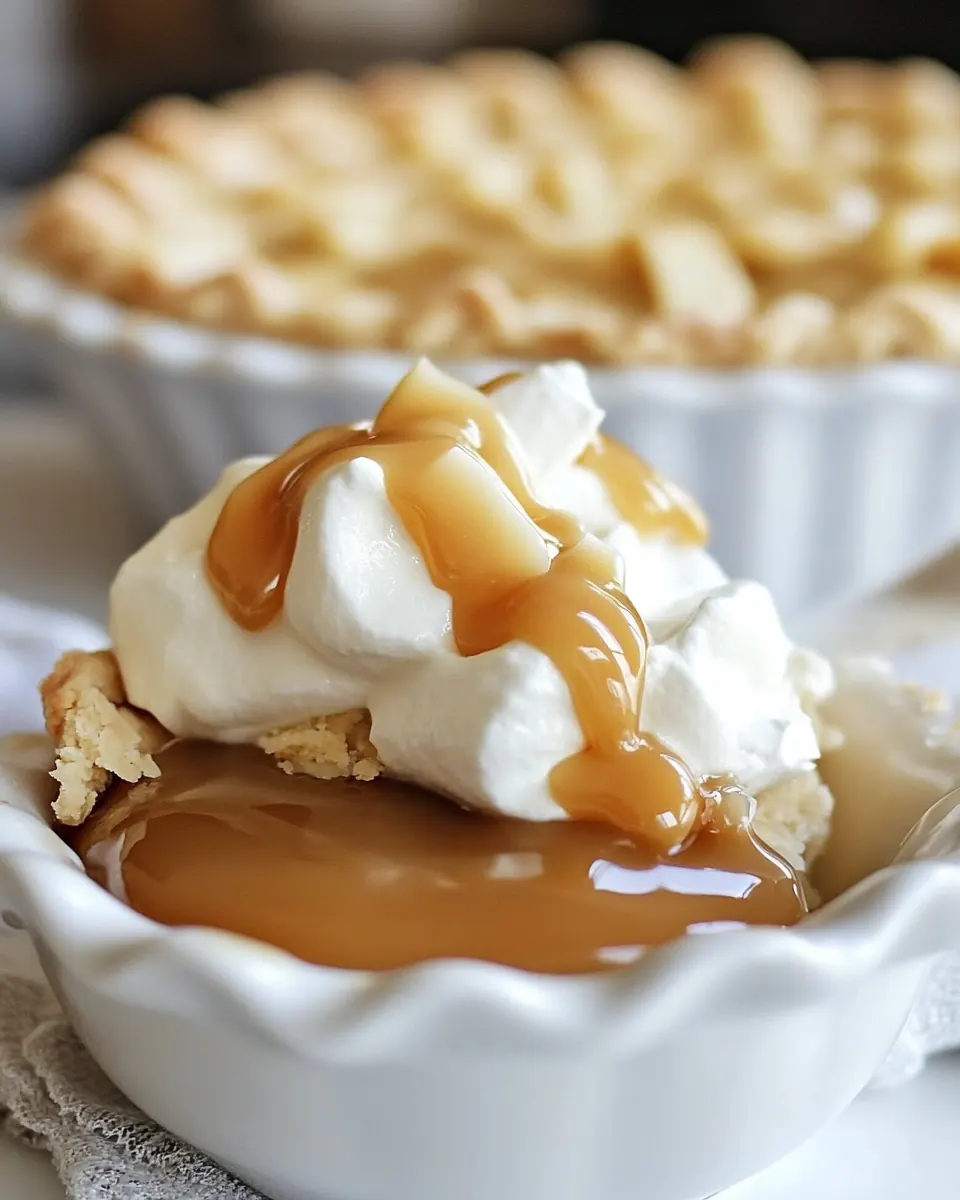
As the pie is resting, pour whipping cream and granulated sugar into a medium glass bowl. Whip until stiff peaks have formed in the whipping cream. Use to top the caramel pie.: The cream will start softly, then thicken, and finally hold peaks that stand up when the whisk is lifted, giving a pillowy texture that contrasts beautifully with the dense filling. The sound changes as air is incorporated, moving from liquid slosh to a more muffled rhythm, and the bowl will feel cool and slightly heavier as it aerates. Overwhipping leads to grainy butter, so stop when firm peaks form but before it begins to separate. Spoon or pipe the whipped cream right before serving so it keeps its lift and adds a fresh coolness to each bite.
Store pie in the refrigerator to keep the caramel firm.: Chilling preserves texture and prevents the caramel from becoming too soft at room temperature, and it also slows any weeping from the whipped cream. The pie will maintain its best quality for several days if covered well, though the crust may gradually soften over time. A common oversight is leaving it uncovered, which dries the surface, so keep it wrapped or in a sealed container. When ready to enjoy later, trim any edges that have lost crispness and serve slightly chilled for ideal contrast.