Preheat your broiler to high, and align the oven rack so it's about 3 inches below the broiler. Rub a small baking dish with coconut oil, as well as a small baking sheet.: Hot, focused heat from the broiler creates rapid caramelization on the top of the salmon . When you set the oven rack about 3 inches below the broiler, you ensure intense top heat without burning the fish's interior. The kitchen will begin to smell faintly warm and toasty as the broiler heats, and you may hear a tiny hum from the oven as it reaches temperature. Pre-oiling the baking dish and sheet prevents sticking and helps the edges brown evenly, giving you clean release and attractive roasted surfaces. A typical mistake is leaving the pan cold which can cause the food to start steaming rather than browning. If you are nervous about flare ups, line the sheet with foil for easier cleanup but still oil it lightly so the cauliflower can brown properly.
While it preheats, place your cumin seeds into a small pan set over medium heat and cook, stirring constantly, until golden brown and they smell toasted, about 1-2 minutes. Place onto a cutting board and crush using the bottom of a glass (or use a spice grinder).: Toasting the whole cumin seeds releases their essential oils, giving a warm, nutty aroma that hits your nose as soon as they begin to darken. Stir constantly so they toast evenly and do not burn, the sound is a soft popping and the scent goes from mild to richly aromatic. Crushing the seeds after toasting creates tiny pieces that sprinkle and cling to the salmon and cauliflower , offering bursts of spice rather than a flat powdery taste. Avoid toasting too long as burnt cumin tastes bitter and will spoil the bowl's balance.
Rub the salmon with the pineapple juice. Mix half of the crushed cumin seeds with the coconut sugar, and then divide the mixture between each fillet and rub in. Place into the prepared baking dish and season with salt and pepper.: The tangy pineapple juice adds a light acidity that helps the surface caramelize while imparting tropical brightness. When you rub the cumin and coconut sugar mixture into the flesh, you will feel the grains adhering to the fish, and under the broiler they will begin to melt and form a glossy crust. Seasoning with salt and pepper at this stage ensures the fish is flavored throughout. A common misstep is over seasoning early, which can draw moisture; season just enough and adjust after cooking if needed.
Place the cauliflower into a small bowl and toss with 2 teaspoons of melted coconut oil, the cayenne pepper, and remaining half of the crushed cumin seeds. Spread out evenly onto the prepared baking sheet and season with salt.: Tossing the florets in warm coconut oil helps them develop brown, nutty edges while the cumin seeds and cayenne pepper cling to the surface. Spread them in a single layer so air circulates and each floret browns rather than steams, and when they hit the hot sheet you should hear a soft sizzle. The cauliflower will smell lightly sweet and roasted as it cooks. Crowding the pan leads to soggy pieces, so use a second pan if needed.
Place both dishes onto a rack set 3 inches from the broiler and cook until the salmon is tender and flaky and the sugar begins to caramelize, about 6-8 minutes. Cook the cauliflower for a few additional minutes if it hasn't turned brown and crispy yet. Mine took about 10 minutes.: The broiler's intense heat will quickly transform the sugar on the salmon into an amber crust while the interior turns opaque and flakes when prodded with a fork. You will see bubbling where the sugar meets the fish and smell a toasty, sweet perfume. For the cauliflower , watch for golden brown tips and tiny browned edges, they should be crisp outside and tender inside. A common issue is leaving both under the broiler too long; check early because broilers vary and you can always return for more color.
While the fish and cauliflower cook, heat the remaining 1/2 tablespoon of coconut oil in a large pan on medium heat.: Warming the pan and oil prepares the surface so the plantain noodles crisp quickly on contact, producing a faint sizzling sound that signals good caramelization. The oil should shimmer but not smoke, giving a faint coconut scent that complements the bowls. If the pan is too hot the plantain can char before crisping properly, and if it is too cool they will absorb oil and become greasy. Aim for a moderate medium heat so the noodles brown evenly.
Place the plantain noodles into the pan and toss to coat evenly with the oil. Cover with a tight-fitting lid and cook until the noodles are crispy, about 5-10 minutes. Make sure to stir them frequently so they don't burn. Season with salt.: When the plantain noodles hit the hot oil you will hear a lively sizzle, and as they cook they will darken at the edges and develop a satisfying chew. Covering them helps steam and soften the inner strands briefly, then uncovering and stirring encourages browning. Frequent stirring prevents any one area from burning and ensures even texture. Overcooking will make them hard, so test early and aim for golden edges with tender centers.
While everything cooks, combine the avocado, coconut milk, garlic, and ginger in a small blender or food processor (mine is 3 cups) and blend until smooth and creamy. Season to taste with salt and pepper.: Blending the avocado with coconut milk creates a lush, velvety sauce that is cool and silky against the warm components. The aroma of fresh ginger and garlic will brighten as you blend, and the texture should pour easily but still coat a spoon. If the sauce seems too thick add a splash more coconut milk , too thin and it will not cling to the plantain noodles. A common error is under seasoning; taste and adjust before serving.
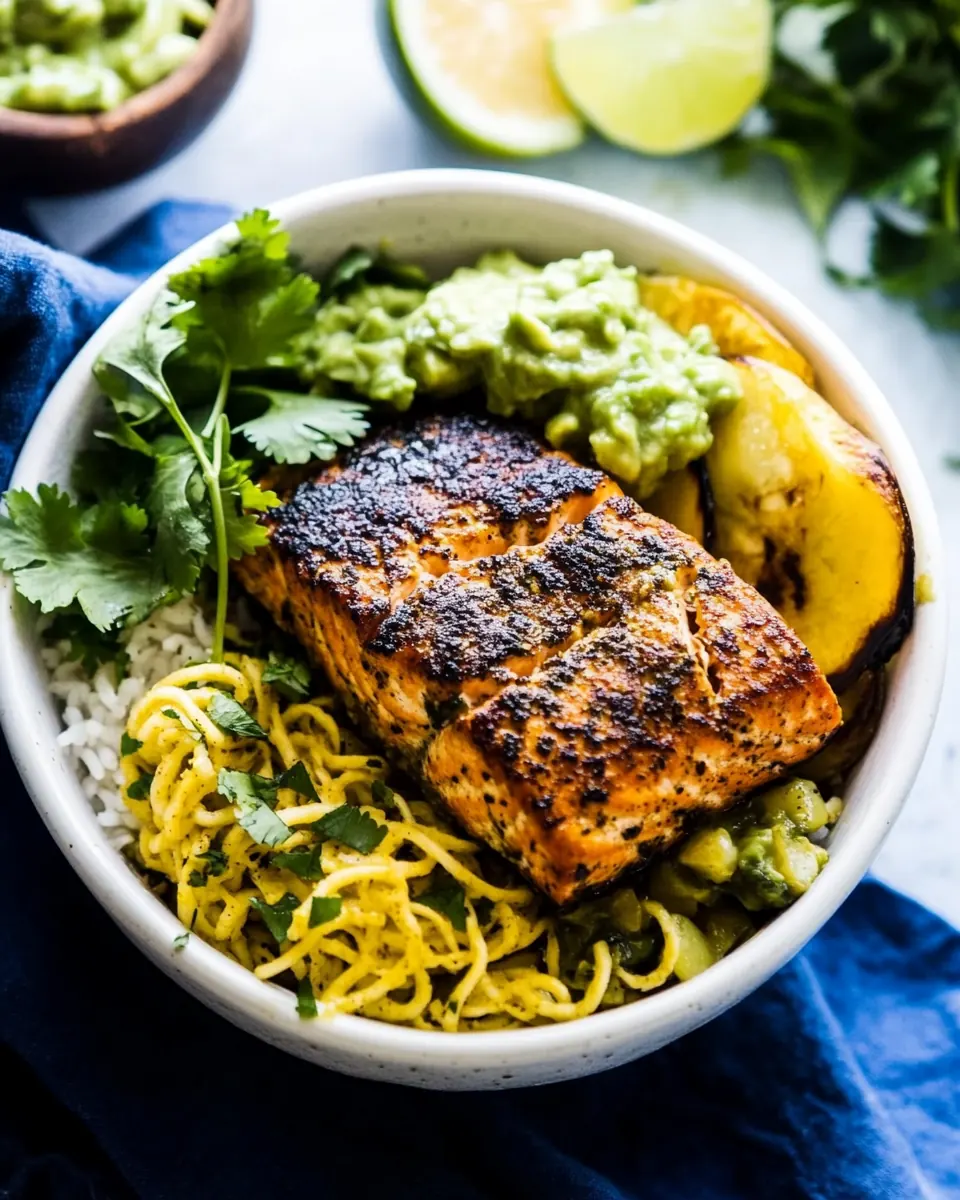
Divide the salmon, plantain noodles, and cauliflower, and crushed pineapple between two bowls. Divide the toasted coconut on top, followed by the sauce. Garnish with cilantro and enjoy.: As you assemble the bowls you will notice an inviting contrast of colors and aromas, the golden salmon , browned plantain strands, and flecks of green from the cilantro . Spoon the creamy sauce so it slightly pools and clings to the noodles, then sprinkle toasted coconut flakes for crunch and top with crushed pineapple for bursts of sweetness. Serve immediately so the textures remain distinct; letting the components sit too long can soften the crisp plantain noodles. If plating ahead, hold the sauce separately until ready to serve.