For the cupcakes: Preheat oven to 350 degrees. In a mixing bowl, whisk together flour, baking soda, baking powder, salt, cinnamon, and nutmeg, set aside.: Preheat oven to 350 degrees : When you put the oven to 350 degrees , you should hear the fan or feel the gentle hum as it stabilizes, and the air warms to a consistent temperature for even baking. A properly preheated oven ensures the cupcakes rise predictably and form a delicate dome. If the oven is not fully preheated, you may get uneven rise and dense centers, so allow ample time for the heat to settle. A common mistake is opening the oven too early, which drops temperature and can lead to collapsed tops; avoid frequent peeking while the cupcakes bake.
In a separate large mixing bowl, whisk together granulated sugar and brown sugar, then add eggs and using an electric hand mixer, blend mixture on low speed 30 seconds, until slightly pale.: As you whisk, the dry mixture should smell aromatic with cinnamon and nutmeg , and you will see even distribution of leaveners throughout the all-purpose flour . This step ensures each bite rises uniformly and tastes balanced. If the dry ingredients are not well combined, you might encounter pockets of baking powder or soda that create uneven texture, so take a moment to whisk thoroughly. A common oversight is measuring flour incorrectly, which can make the batter too dense; spoon and level flour for accuracy.
Mix in applesauce and vanilla extract. With mixer running on low speed, slowly pour in vegetable oil and mix until combined, then mix 20 seconds longer.: As you beat the granulated sugar , light-brown sugar , and eggs , you will notice the mixture lighten in color and become slightly thicker, showing signs of aeration that help with tenderness. The low speed prevents overbeating, which could lead to a tougher crumb. If you skip this gentle mixing, the batter may not incorporate air properly, giving denser cupcakes. Watch for slight paleing and a ribbon-like texture as indicators you’ve mixed enough.
Mix in half of the dry ingredients, then pour the shredded carrots into the bowl with the remaining flour mixture and toss in flour mixture to coat carrots (they'll clump together a bit but that's fine). Pour carrot mixture into the batter and blend until evenly combined.: When you stir in the unsweetened applesauce and vanilla extract , the aroma of sweet warmth will intensify and the batter will loosen slightly, signaling added moisture. Applesauce contributes natural sweetness and tenderness while reducing the need for extra oil, keeping the crumb moist but not greasy. Overmixing here can break down structure, so gently incorporate until unified. A common error is adding cold wet ingredients, which can hinder emulsification, so room temperature components work best.
Pour batter into paper-lined muffin cups, filling each cup about 3/4 full. Bake in preheated oven until toothpick inserted into center of cupcake comes out clean, about 19 - 21 minutes. Cool in muffin tin several minutes then transfer to a wire rack and cool completely.: As you drizzle in the vegetable oil , the batter should become glossy and smooth, feeling slightly viscous on the beaters. Oil helps the cupcakes stay soft day after day because it coats flour proteins differently than butter. Mixing a short additional 20 seconds ensures even distribution without developing gluten, which would make the cupcakes tough. Avoid pouring the oil too quickly, which can cause separation and an uneven texture.
For the frosting: Using an electric mixer whip together butter and cream cheese on medium-high speed until smooth and fluffy. Mix in vanilla extract.: First, folding half the dry mix into the wet batter helps the flour hydrate evenly, and the batter will begin to thicken slightly to a ribbon-like state. Tossing the finely shredded carrots in the remaining flour prevents them from sinking to the bottom during baking, and you will notice small clumps of coated carrot that will disperse when combined with the batter. This coating keeps moisture in the carrots from making the batter too wet in localized spots. A frequent slip is adding all dry ingredients at once, which can lead to overmixing as you scramble to combine everything; staged addition keeps the process controlled.
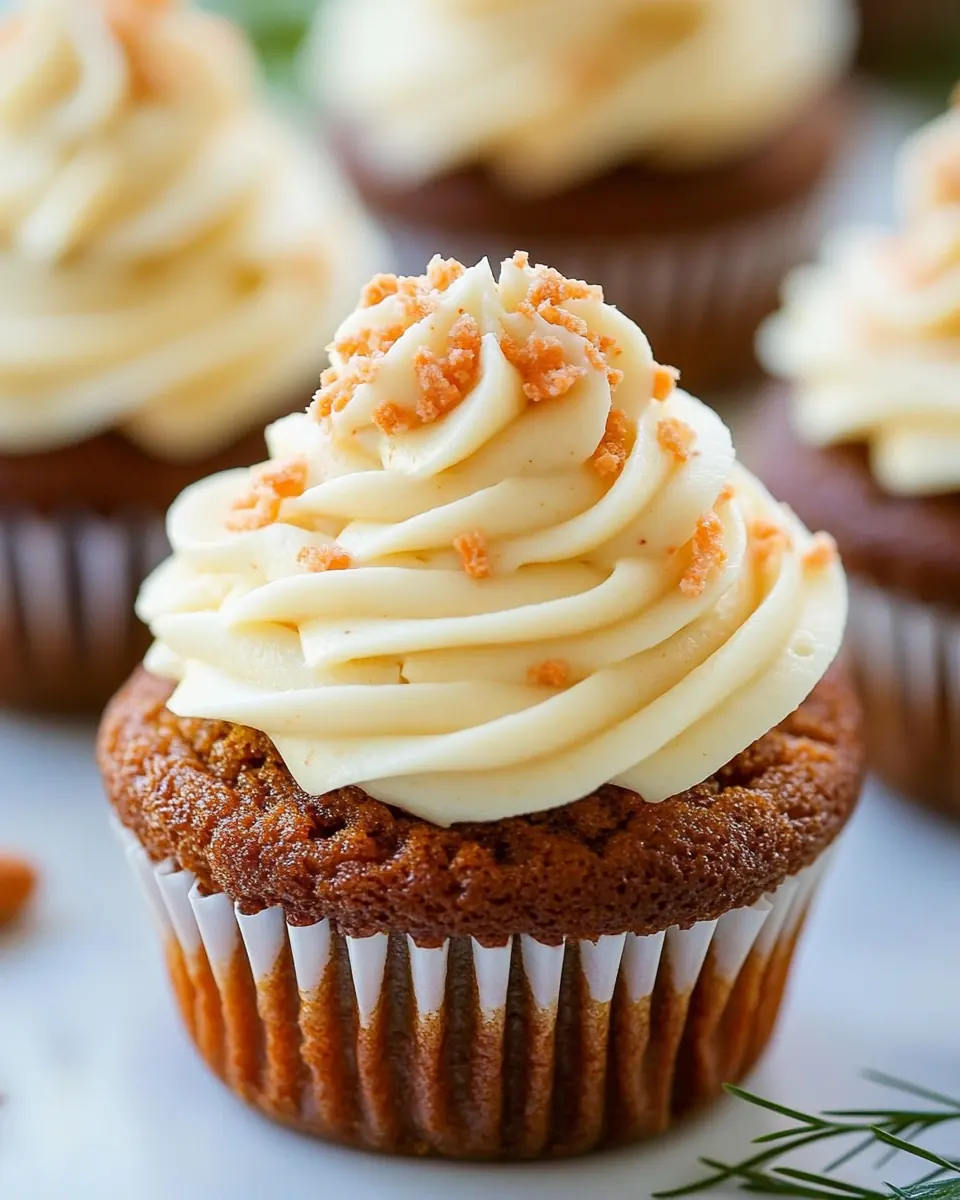
With mixer running on low speed, slowly add powdered sugar and beat until well blended and smooth. Frost cupcakes with cream cheese frosting then immediately roll edges of frosting in chopped pecans.: When you fold the carrot mixture into the batter, expect an attractive, speckled appearance with flecks of orange evenly distributed throughout. The batter should be cohesive with no large pockets of dry flour or clumps of carrot, and it will smell beautifully spiced. Uniform blending is essential for even crumb and flavor in every cupcake. Beware of overmixing, which yields a tough crumb; stop once the ingredients are homogenous.
For the optional carrot decoration: Tint marzipan with orange gel coloring and knead to evenly incorporate color. Separate small pieces at a time (I did 4 g carrots) then roll into carrot shapes (roll a tapered log shape).: Filling the liners about 3/4 full gives cupcakes room to rise into a gentle dome while avoiding overflow. The batter will glisten slightly and feel thick but scoopable. If you underfill, the cupcakes will be too small and dry; overfilling leads to spillover and irregular shapes. Use a scoop to keep portions consistent so baking time is uniform across the tray.
Dip a toothpick lightly in cocoa powder, shaking off excess then gently roll carrot across toothpick (in random places) while slightly rotating to make slight indentations (to give it that natural look).: As the cupcakes bake, the kitchen fills with the warm scent of cinnamon and nutmeg , and you may hear a gentle settling as they rise. Look for light golden edges and a springy top that returns when touched lightly. Insert a toothpick into the center to check doneness; it should come out clean or with a few moist crumbs, not wet batter. Underbaking yields gummy centers, while overbaking dries them out, so monitor closely around the 19 minute mark.
Poke a small hole in the top of each carrot and insert parsley. Gently press carrots into frosting on tops of cupcakes.: Letting cupcakes rest briefly in the tin allows them to firm up so they transfer cleanly to the wire rack . Moving them too soon can tear the tops. Once on the rack, the air circulation around each cupcake helps them cool evenly, preventing condensation under the frosting. Patience here avoids melted frosting and ensures a neat finish. A common mistake is frosting warm cupcakes, which leads to runny frosting that slides off.
Store in an airtight container in refrigerator. Allow to rest at room temperature until no longer cold before serving.: Using an electric mixer whip together butter and cream cheese on medium-high speed until smooth and fluffy : Whipping nearly room temperature unsalted butter and cream cheese on medium-high creates an airy, silky base, and you will notice the color lighten as air incorporates. Properly whipped dairy yields a frosting that pipes beautifully and holds its shape. If your butter or cream cheese is too cold, lumps will remain and the texture will be uneven, so allow them to soften slightly but not melt.
Mix in vanilla extract: Adding vanilla extract brightens the frosting, and you will smell the sweet floral notes immediately. This small addition rounds the dairy tang and integrates flavor so it does not taste one dimensional. Skipping or reducing vanilla can make frosting taste flat, so a measured amount matters.
With mixer running on low speed, slowly add powdered sugar and beat until well blended and smooth: Gradually introducing the powdered sugar prevents a cloud of dust, and beating on low keeps the frosting glossy and lump free. The mixture should become thick, yet pliable for spreading or piping. If you add the sugar too quickly, the frosting can become grainy or overly stiff; if it gets too runny, chill briefly and rebeat in short bursts.
Frost cupcakes with cream cheese frosting then immediately roll edges of frosting in chopped pecans: When you spread or pipe frosting onto completely cooled cupcakes, it should feel creamy and hold the gentle peaks from your spatula or piping tip. Rolling the edges in chopped pecans adds a toasty crunch and visual contrast. If the frosting is warm, the pecans won’t adhere properly, so ensure the frosting is set enough to handle. A common oversight is applying nuts before the frosting has slightly crusted, which leads to messy transfer.
For the optional carrot decoration: Tint marzipan with orange gel coloring and knead to evenly incorporate color : When you tint the marzipan , use gel coloring in tiny amounts and knead until uniform, so the texture stays pliable. The marzipan should feel soft and slightly tacky but not sticky. Overcoloring or adding too much liquid will change the marzipan’s consistency and make shaping difficult. A frequent mistake is not kneading long enough, which results in streaky color.
Separate small pieces at a time then roll into carrot shapes: Rolling small tapered logs yields tiny carrots that look charming on each cupcake; aim for consistent small sizes so they sit proportionately on the frosting. The surface should be smooth and slightly matte. If pieces are too large, they overwhelm the cupcake; too small, and they become fiddly to handle.
Dip a toothpick lightly in cocoa powder, shaking off excess then gently roll carrot across toothpick while slightly rotating to make slight indentations: This technique creates subtle texture on the marzipan carrot surface, giving it a natural look. The cocoa powder should only touch the surface to create light shading, not saturate the marzipan. Overdoing it can make the carrots look dusty rather than realistic.
Poke a small hole in the top of each carrot and insert parsley: The small curly parsley stems simulate carrot tops and add a fresh visual flourish. Insert gently so the marzipan does not tear. If the hole is too large, the parsley will not stay upright; if too small, it may split the marzipan. A careful, steady hand yields the best result.
Gently press carrots into frosting on tops of cupcakes: Press each decoration into the frosting until secure, and admire how the little carrots give a whimsical finishing touch. The frosting should cradle the marzipan without sinking. If the frosting is too soft, chill the cupcakes briefly so the carrots sit neatly.
Store in an airtight container in refrigerator: Keeping the cupcakes in an airtight container in the fridge preserves freshness and prevents the frosting from absorbing odors. The texture will remain moist for several days. Allow them to rest at room temperature until no longer cold before serving so the frosting softens and flavors open up. A common misstep is transporting them warm, which risks smudged frosting and broken decorations.