Heat oven to 350 degrees F. Grease 12 muffin tins or line with cupcake liners and set aside. In a large bowl beat the eggs for a few seconds. Gently stir in the grated carrots and oil. Add the rest of the ingredients and stir to combine, about 10 stirs (be careful not to over mix!).: The kitchen fills with a faint warmth as the oven comes to temperature, and you want even, consistent heat for uniform rise. Greasing or lining the tins prevents sticking and helps the bases release cleanly. A common misstep is skipping liners for delicate cupcakes, which can tear when removed. Make sure the oven thermometer reads steady 350 degrees F so the bake time translates properly.
Fill cupcake tins about 2/3 full. Bake for no more than 18-20 minutes or until golden brown. Remove from oven and allow to cool for at least 10 minutes before frosting.: You'll hear a soft whisking sound as the eggs aerate slightly, giving a lift to the batter. Brief beating helps them incorporate more smoothly with other wet ingredients, creating a cohesive blend. Avoid overbeating, which can introduce too much air and cause a coarse crumb once baked. If the eggs look frothy, that short duration is perfect.
In a blender or by hand, beat the butter, cream cheese, and vanilla until fluffy combined. Gradually add the powdered sugar and cream until light and fluffy. Once the cupcakes have cooled frost with cream cheese frosting using a piping bag, zip-lock bag or spread with a spoon.: As you fold in the grated carrots and oil , the batter will look glossy and speckled with orange. The carrots provide moisture and flecks of texture, while the oil ensures tenderness. Stirring gently prevents developing gluten in the flour later, which would tighten the crumb. A typical error is vigorous mixing now, which can lead to dense cupcakes; use gentle motions until evenly combined.
Add the rest of the ingredients and stir to combine, about 10 stirs (be careful not to over mix!): The batter comes together into a slightly thick, cohesive mass dotted with carrot strands and a warm cinnamon hue. Aim for uniform distribution of flour , leavening, sugar , and spices without overworking. Over mixing develops gluten, producing chewy cupcakes, so stop as soon as the dry streaks disappear. If you see lumps of flour, fold until they just vanish; that indicates readiness.
Fill cupcake tins about 2/3 full: The batter should mound gently in the cups, creating domes as they rise and bake. Filling to two thirds leaves room for expansion, avoiding spillover or flat tops. Using an ice cream scoop helps portion evenly for consistent baking. A common mistake is overfilling, which results in uneven baking and potential collapsed centers.
Bake for no more than 18-20 minutes or until golden brown: During baking you'll notice the tops take on a gentle golden color and a delicate aroma of baked carrot and cinnamon drifts from the oven. The cupcakes should spring back slightly when touched and a toothpick inserted into the center should come out clean or with a few moist crumbs. Avoid opening the oven repeatedly, that can cause sinking; check near the end of the window for best results.
Remove from oven and allow to cool for at least 10 minutes before frosting: After pulling the tray out, the residual heat will continue to set the crumb. Letting them rest for at least 10 minutes prevents the frosting from melting and sliding off. If you try to frost too soon, the topping will weep and lose shape. I place the pans on a rack to cool evenly and avoid soggy bottoms.
In a blender or by hand, beat the butter, cream cheese, and vanilla until fluffy combined: As you whip the butter and cream cheese , the mixture transforms into a pale, aerated cream with a light, tangy scent. This stage is crucial for a smooth frosting base. If either ingredient is too cold, lumps remain and the texture suffers. Avoid overheating by running the mixer on high for extended periods, which can warm the mixture too much and make it soft.
Gradually add the powdered sugar and cream until light and fluffy: Pouring in the powdered sugar slowly and adding heavy cream a tablespoon at a time yields a frosting that is silky and pipeable. The sound changes from a dull thud to a higher pitched whisking as the sugar dissolves and air is incorporated. If you add the sugar too quickly you risk a gritty texture, so patience is rewarded with a smooth finish.
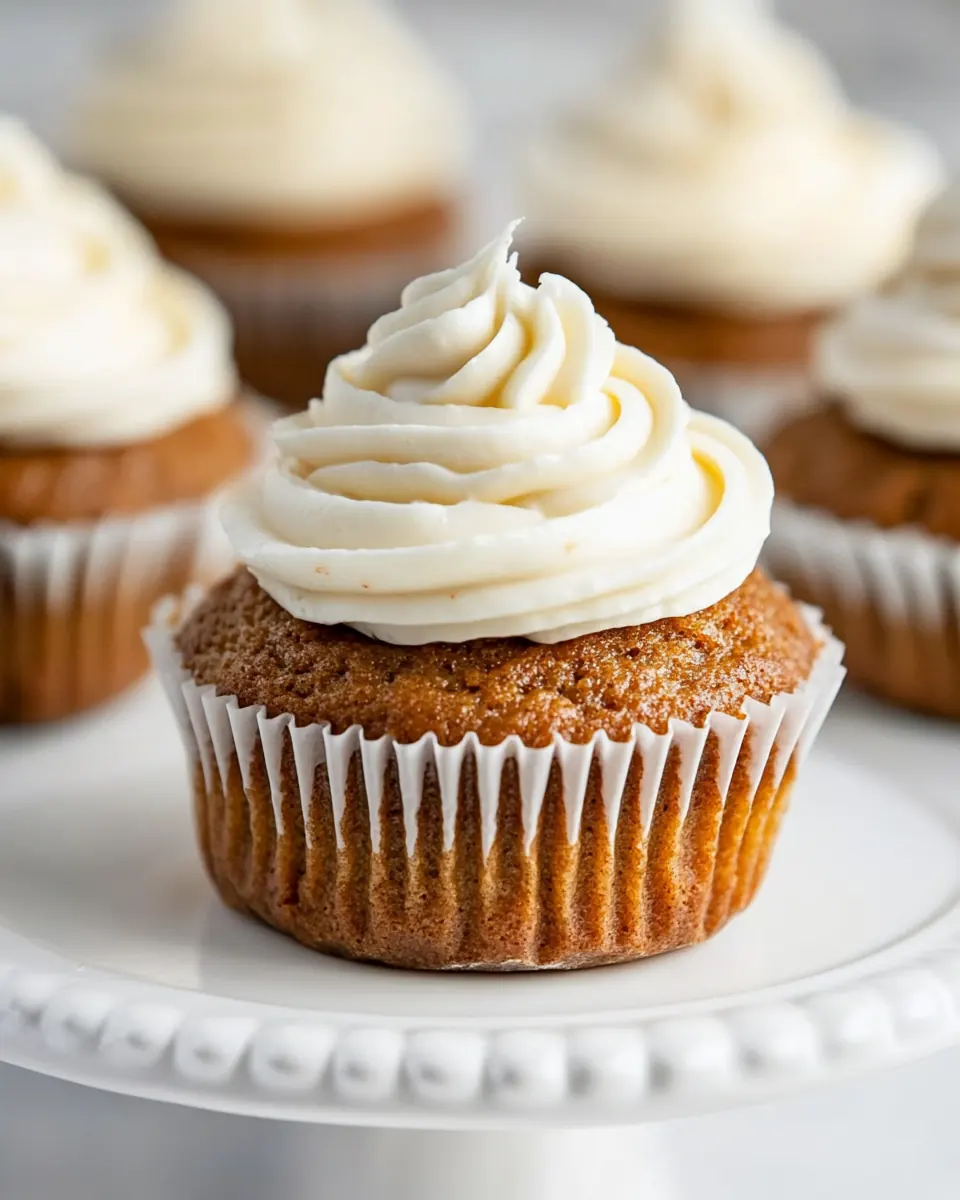
Once the cupcakes have cooled frost with cream cheese frosting using a piping bag, zip-lock bag or spread with a spoon: The final act is visually satisfying as you pipe or spread the pale frosting onto the warm golden tops, creating swirls or simple domes. The contrast between the tangy cream cheese and the sweet, spiced cake is delightful on the palate. Common mistakes include frosting warm cupcakes and ending up with melted decoration, so confirm they are fully cool before proceeding.