Make the dukkah: grind the shelled pistachios in either a mortar and pestle, a food processor, or a dry-blade blender pitcher. You want a chunky/chopped consistency with a few large bits of pistachio in the mix. Transfer the ground pistachios to a medium bowl. Grind the coriander and cumin seeds in a spice grinder and add them to the bowl with the pistachios. Add the sesame seeds, nigella seeds and chili flakes to the bowl as well. Stir to combine. Store dukkah in a sealable jar and set aside.: grind the shelled pistachios in either a mortar and pestle, a food processor, or a dry-blade blender pitcher : You will smell a deep, toasty aroma as the pistachios break down, with small chunks still visible to give the dukkah its signature crunch. Use short pulses in a food processor to avoid turning everything into paste, and stop when you have a mix of coarse and medium bits. The reason you keep it chunky is to preserve textural contrast; overprocessing will produce a paste that loses the delightful crunch. A common mistake is running the motor too long which heats the nuts and makes the oil release, causing a pasty result, so pulse and check frequently. If using a mortar and pestle, you'll feel the seeds and nuts break apart under the rhythm of the pestle, which is satisfying and gives excellent control over the texture.
Make the cauliflower salad: heat a large cast iron skillet over medium-high heat. Add the oil to the skillet. Add the cauliflower florets and spread them out in an even layer. Let the cauliflower florets sear for a good two minutes. Stir the cauliflower up and season it with salt and pepper. Cook until the cauliflower is just tender and evenly browned, about another 4-5 minutes. Turn off the heat and stir in the lemon juice.: At this point you will notice the roasted, rich green-brown tones of the chopped pistachios and a fragrant nuttiness that signals the base is ready. Moving them to a bowl keeps the processing area tidy and prevents the warm nut oils from affecting anything else you might be doing. This step also lets you visually inspect the texture to decide if you want a few larger pieces for extra crunch. Avoid leaving the nuts in a hot bowl or next to the stove for long periods, as the residual heat can make them oily; instead, keep them at room temperature until you finish the mix.
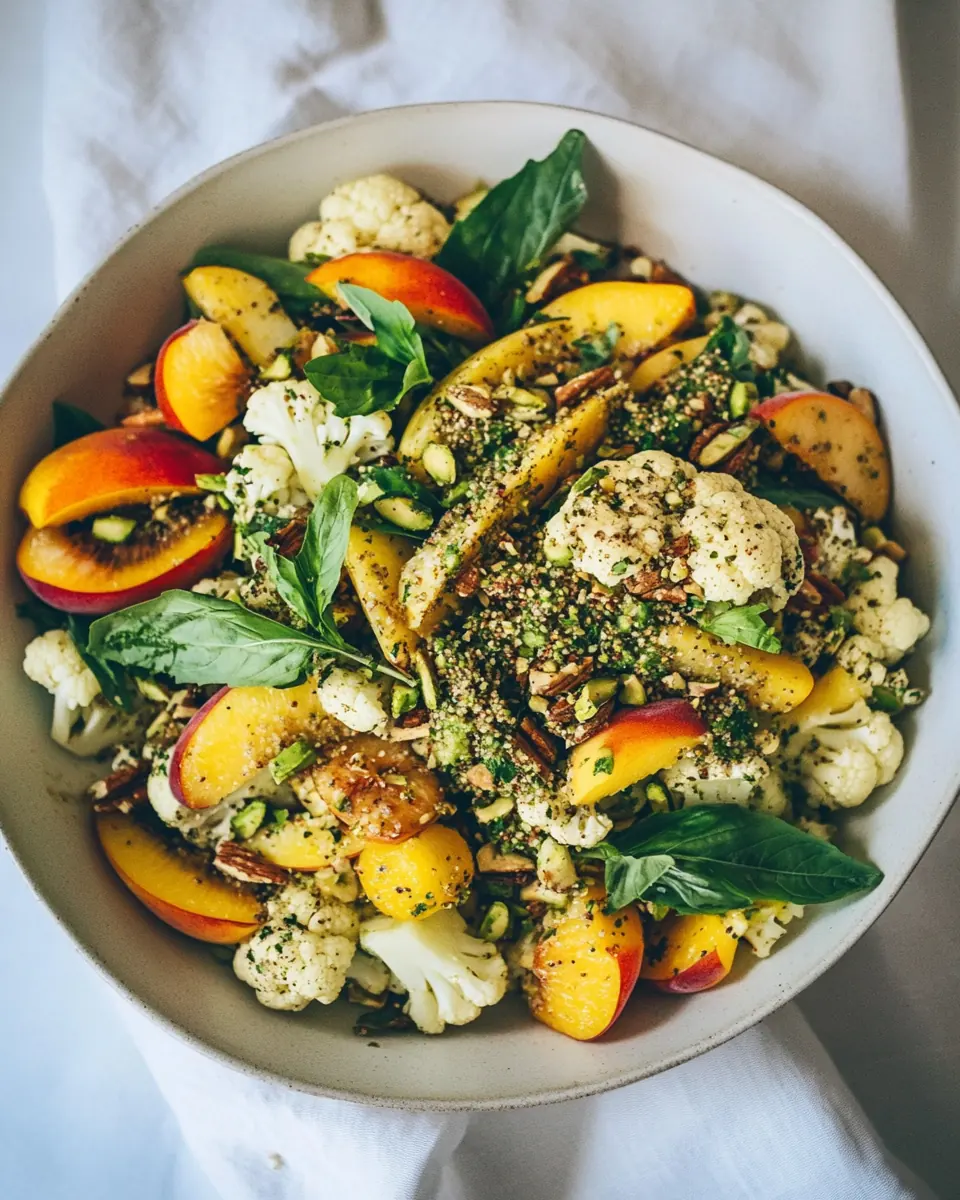
Transfer the cauliflower to a serving platter. Top the cauliflower with the sliced nectarines, avocado, mint, and a hearty handful of the dukkah. Serve the cauliflower salad immediately.: Toasted coriander and cumin release bright, aromatic oils when ground, producing scents that hint at citrus and earth. Grinding these seeds fresh gives a livelier flavor than preground spices. The 'why' is simple: freshly ground spices have volatile compounds that lift the whole dukkah, creating dimension. Avoid overgrinding to dust, you want small granules to retain some textural interest, and be careful that the grinder is clean to prevent cross-flavors from previous spices.
Add the sesame seeds, nigella seeds and chili flakes to the bowl as well: When you fold in the toasted sesame seeds , optional nigella seeds , and optional chili flakes , the mixture will become visually speckled and aromatic. The sesame seeds provide tiny pops, nigella adds subtle savory notes, and chili flakes introduce warmth. Stirring them in by hand helps preserve the integrity of the seeds and ensures even distribution. A frequent oversight is adding too much chili which can overshadow the nuts, so taste cautiously if you decide to include it.
Stir to combine: As you fold the components together you will hear the gentle clink of seeds and see the dukkah take on a unified, rustic texture. This tactile mixing ensures the flavors meld without losing the distinct pieces that make each bite interesting. The 'why' here is to build an even flavor profile so every spoonful has a balanced spice to nut ratio. If the mixture seems dry, a tiny drizzle of olive oil can help bind it, but do so sparingly to avoid sogginess.
Store dukkah in a sealable jar and set aside: Transferring the dukkah to a sealed container preserves its crunch and keeps the aroma fresh. Stored in a cool, dry place it will remain lively for several weeks, and I often double the batch so I have extras on hand. A mistake people make is leaving it exposed to humidity which softens the seeds and dulls the crisp texture, so sealing is important.
Make the cauliflower salad: heat a large cast iron skillet over medium-high heat : You should feel the warmth radiating from the skillet before adding oil, and a properly heated cast iron will create a satisfying sizzle when the olive oil hits the surface. That initial heat is crucial for building good color on the cauliflower , because color correlates with flavor from caramelization. Don't rush this step with a cold pan, as the cauliflower will steam rather than sear, losing desirable browning.
Add the oil to the skillet: As the olive oil warms you will notice it shimmer slightly, indicating it is ready. The oil acts as the medium for heat transfer and helps develop those golden edges on the cauliflower . If using an infused oil, its aroma will bloom now and scent the kitchen. Overheating the oil can cause smoke and bitter flavors, so keep an eye on temperature and reduce heat if it begins to smoke.
Add the cauliflower florets and spread them out in an even layer: When the cauliflower hits the hot oil you will hear a clear sizzle, and laying the florets in a single layer ensures they have contact with the pan to brown evenly. Visual cues to watch for are golden edges and a slight translucence in the stems, which indicate they are cooking through. Overcrowding the pan will trap steam and prevent browning, so work in batches if needed.
Let the cauliflower florets sear for a good two minutes: During these initial two minutes you will smell the sugars in the cauliflower caramelizing, and the edges will take on a toasty aroma. This short sear forms the flavor foundation, so resist the urge to stir immediately. A common pitfall is constant stirring which prevents the development of those deeply flavored browned bits.
Stir the cauliflower up and season it with salt and pepper: After the initial sear, stirring helps cook the interior while preserving some char. Adding sea salt and ground black pepper now seasons the florets directly and enhances the caramelized flavors. Season lightly and adjust later, because the dukkah may add more salt to the final dish.
Cook until the cauliflower is just tender and evenly browned, about another 4 to 5 minutes: As you cook the cauliflower further, watch for even browning and a tender bite when pierced with a fork. The smell will deepen into nutty, roasted notes, and visually you will see a mix of golden edges and tender centers. Overcooking results in a mushy texture and lost sweetness, so aim for a balance of tenderness and bite.
Turn off the heat and stir in the lemon juice: Adding the lemon juice off the heat preserves its bright acid fragrance without cooking off the volatile citrus oils. The juice lifts the flavors and gives the cauliflower a light, lively finish. A mistake here is using too much lemon which can dominate the delicate fruit notes later, so add modestly and taste.
Transfer the cauliflower to a serving platter: When you move the warm cauliflower to a platter the residual heat will continue to release aromas, creating a welcoming steam that smells of roasted vegetable and citrus. Arrange it so there is space for the fruit and avocado to sit on top without getting lost in the heat. Serving from a flat platter also makes it easy to distribute the crunchy dukkah evenly.
Top the cauliflower with the sliced nectarines, avocado, mint, and a hearty handful of the dukkah: The contrast is immediate and sensory; the warm, slightly caramelized cauliflower meets cool, juicy nectarines , creamy avocado , and bright mint , while the dukkah delivers a satisfying crunch and spice. Adding the mint last protects its delicate aroma, and scattering the dukkah by hand ensures irregular, enticing clusters of texture. A common misstep is mixing everything too vigorously which bruises the fruit and softens the avocado, so gently nest the toppings on the warm base.
Serve the cauliflower salad immediately: Serve while the cauliflower is still warm so the contrast with the cool toppings is most pronounced. Each bite should offer hot and cold elements, creamy and crunchy contrasts, and a balance of savory and sweet. If you wait too long to serve, the textures can homogenize and lose the lively tension that makes this dish delightful.