Place the milk and water in a medium pot and bring to a boil. Add the scallions, salt and pepper and cook for 3 minutes.: As the liquid warms you will notice a thin veil of steam rising and a soft milky scent filling the kitchen, signaling the beginnings of the soup. Bring the mixture up gradually over medium heat so the milk does not scorch, stirring occasionally to ensure even heating. You want small bubbles forming around the edge before it reaches a boil, that visual cue prevents a sudden boil over. A common mistake is raising the heat too high which can cause the milk to foam and spill, so keep it controlled and watch the pot.
Reduce the heat to medium and carefully add the eggs, without breaking the yolks.: Once the liquid is hot, the aroma of softened scallions will bloom, providing a subtle oniony backbone. Simmer gently for about three minutes so the scallions release their flavor into the broth without browning, which keeps the soup bright. Taste and adjust with a pinch of kosher salt and some fresh cracked pepper , because seasoning early helps layer the flavors. Avoid overcooking the scallions , as they can become mushy and lose their fresh note.
Poach the eggs for 3 minutes or longer if you like it cooked well in the center; add the cilantro.: Lowering the heat creates a gentle simmer, perfect for poaching. Crack each egg into a small bowl first to check for shells and to make placement easier, then slide them into the broth close to the surface. You will hear a soft settling sound as the whites begin to firm, and the visual should be delicate white clouds forming around intact yolks. If the heat is too high the whites will overcook and break apart, so maintain that gentle simmer to achieve tender texture.
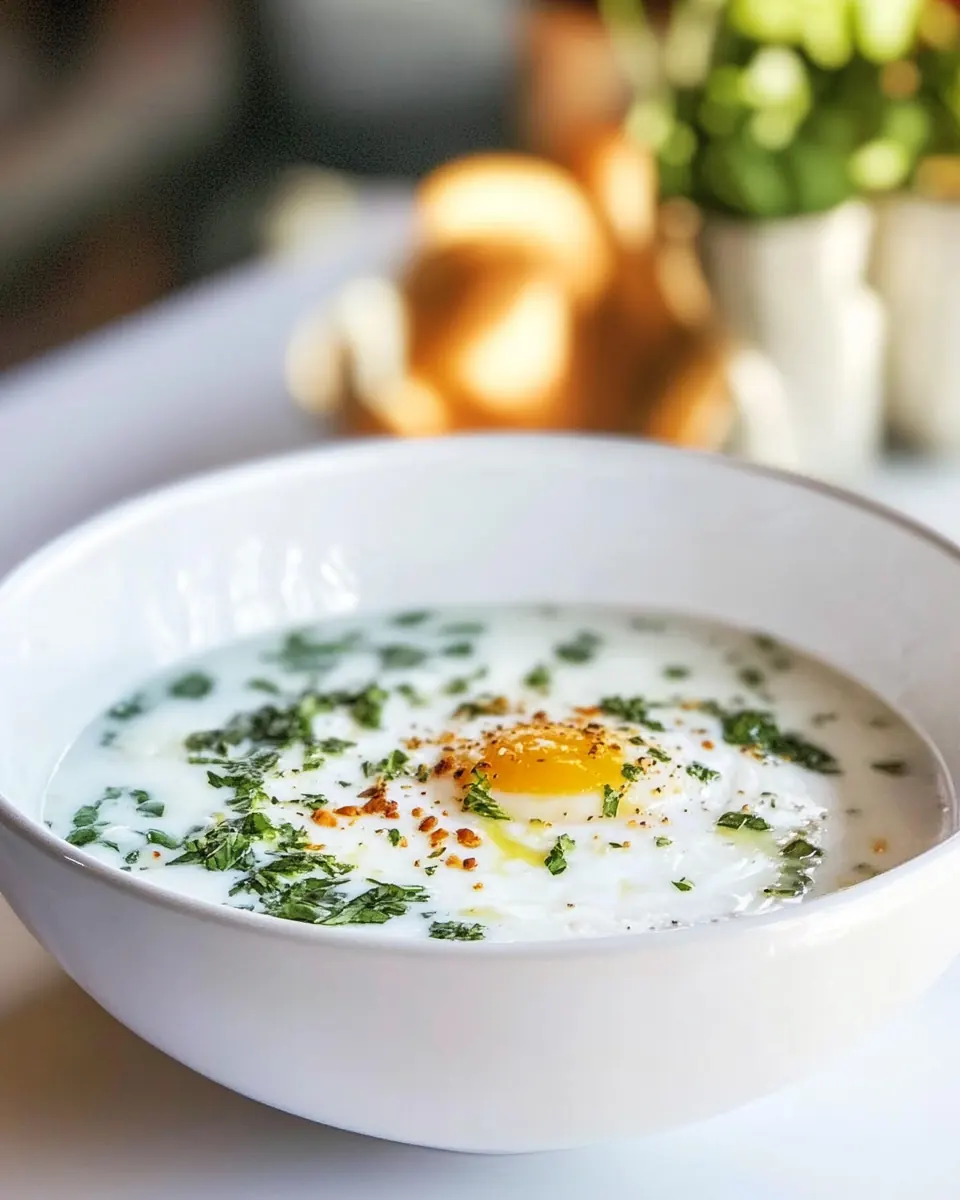
To serve, gently place an egg in four shallow bowls, then ladle in the soup, about 1 1/2 cups each. Serve warm with toasted bread on the side and garnish with more fresh cilantro.: During cooking, watch the whites transition from translucent to opaque, and you can occasionally tilt the pot to check the firmness. At about three minutes the yolks will still be runny, and the aroma of the warmed cilantro added at this stage will lift the broth with fresh herbal notes. Stir the cilantro in gently so it mingles with the soup, not so roughly that the eggs break. A frequent error is leaving the eggs too long which yields fully set yolks, so time them based on your preferred doneness.
To serve, gently place an egg in four shallow bowls, then ladle in the soup, about 1 1/2 cups each: As you assemble, you will notice the glossy sheen of the broth and the soft mound of the poached egg in each bowl. Ladling from the pot, aim for a balance between broth and egg so each serving feels complete. The sound of the soup as it pours is a small, satisfying cue, and finishing with a sprig of chopped cilantro brightens the presentation. Be careful while ladling to avoid breaking the yolk prematurely; maintain a steady hand for best results.
Serve warm with toasted bread on the side and garnish with more fresh cilantro: Presenting the bowls warm enhances the aromas and textures, and the toasted bread adds a crunchy counterpoint to the soft soup. The garnish of additional cilantro provides a fresh finish and a pop of color. One misstep to avoid is serving the soup too hot, which can mask subtle flavors and make the yolk more likely to break when cut, so allow it a brief moment to cool before eating.