In a small bowl, combine 2 teaspoons cornstarch with 1 tablespoon milk and set aside.: The moment you whisk the cornstarch into the milk , notice how it transforms from gritty to a smooth slurry, which is crucial because any stale lumps would show up once introduced to heat. As you mix, you should see a glossy, homogenous liquid with no visible granules; that visual cue tells you it is ready. This slurry will thicken gently when it hits the warm broth, so making it perfectly smooth avoids clumps in the final fondue. One common error here is adding the starch directly to hot liquid, which causes instant gelatinous chunks, so always dissolve first in cold liquid. If lumps appear later, push the mixture through a fine mesh sieve and rewarm slowly while whisking.
In a medium bowl add the cheeses and remaining cornstarch, toss and set aside.: Tossing the shredded Gruyere cheese and shredded white cheddar cheese with the remaining cornstarch creates a thin protective coating that keeps the shreds separate and helps them melt evenly, which you can see as a dusting that prevents clumps. When you stir these cheeses into the warm liquid they should slip apart rather than clump together, producing an even melt. The cornstarch absorbs small amounts of moisture and reduces the risk of oiling out as the cheese heats. A frequent mistake is skipping this toss, which often leads to a grainy texture, so be patient while coating each shred. If the cheese feels too cold and clumpy, let it sit at room temperature briefly to take the chill off before adding.
Add the 2/3 cup chicken broth to a skillet. Over medium heat, cook until bubbles form around the sides of pan. Stir in the lemon juice.: When the chicken broth warms you will notice gentle teardrop bubbles forming at the edge, and that is your cue to add the lemon juice so it emulsifies into the liquid rather than evaporating under high heat. The scent will brighten immediately, cutting through the savory broth and preparing the base to receive the cheese. Keeping the heat at medium prevents a vigorous boil that could shock the cheese and cause separation later. A common misstep is overheating so the broth is rolling, which creates steam and evaporates too much liquid, making it harder to achieve the desired texture; reduce the heat if bubbles become aggressive.
Reduce heat to medium-low. Add only a handful of cheese mixture and stir in a figure-eight pattern until the cheese has melted. Add another handful of cheese and stir in the same manner. Repeat until all of the cheese has been added.: As you add that first handful of cheese the pan should show a gentle thickening and glossy sheen within seconds, and the figure eight stirring pattern encourages even melting and helps stretch the proteins, creating that pleasing viscosity. Work slowly, letting each addition fully integrate, and you will see the mixture go from thin and milky to viscous and ropey. This staged addition prevents the temperature from dropping too fast or spiking, both of which can break the emulsion. A typical blunder is dumping all the cheese at once, which overwhelms the liquid and yields clumps and oil separation; if separation starts, lower the heat and whisk vigorously while adding a splash of broth.
Stir in the garlic powder, oregano, and Worcestershire sauce. Gradually stir in the cornstarch mixture.: Adding the seasonings now lets their aromas bloom into the hot cheese without becoming raw or assertive. When you fold in the slurry of cornstarch and milk , do it slowly and watch the fondue thicken; the sound will shift from gentle simmering to a soft, sustained bubble and the texture will become noticeably smoother and more cohesive. That little pop of umami from the Worcestershire Sauce often arrives as a rounded background note rather than a forward flavor. One thing to watch is over thickening, which can happen if you add the slurry too fast or keep the heat too high; pull the pan off the heat and stir in a tablespoon of warm broth if it gets too dense.
Continue cooking and stirring until the mixture has thickened and is smooth. Keep warm.: As you stir, the fondue should develop a uniform gloss and a weighty ribbon when the spatula is lifted; you want it thick enough to coat dippers without being gluey. The smell will be richer, with toasted cheese aromas and the herbal notes mellowing into the background. Maintain a gentle warmth rather than a simmer, because residual heat will keep it fluid for dipping without risking curdling. A common error is overheating while trying to keep it hot; use a low flame or an electric fondue pot to maintain a steady temperature and stir occasionally to preserve texture.
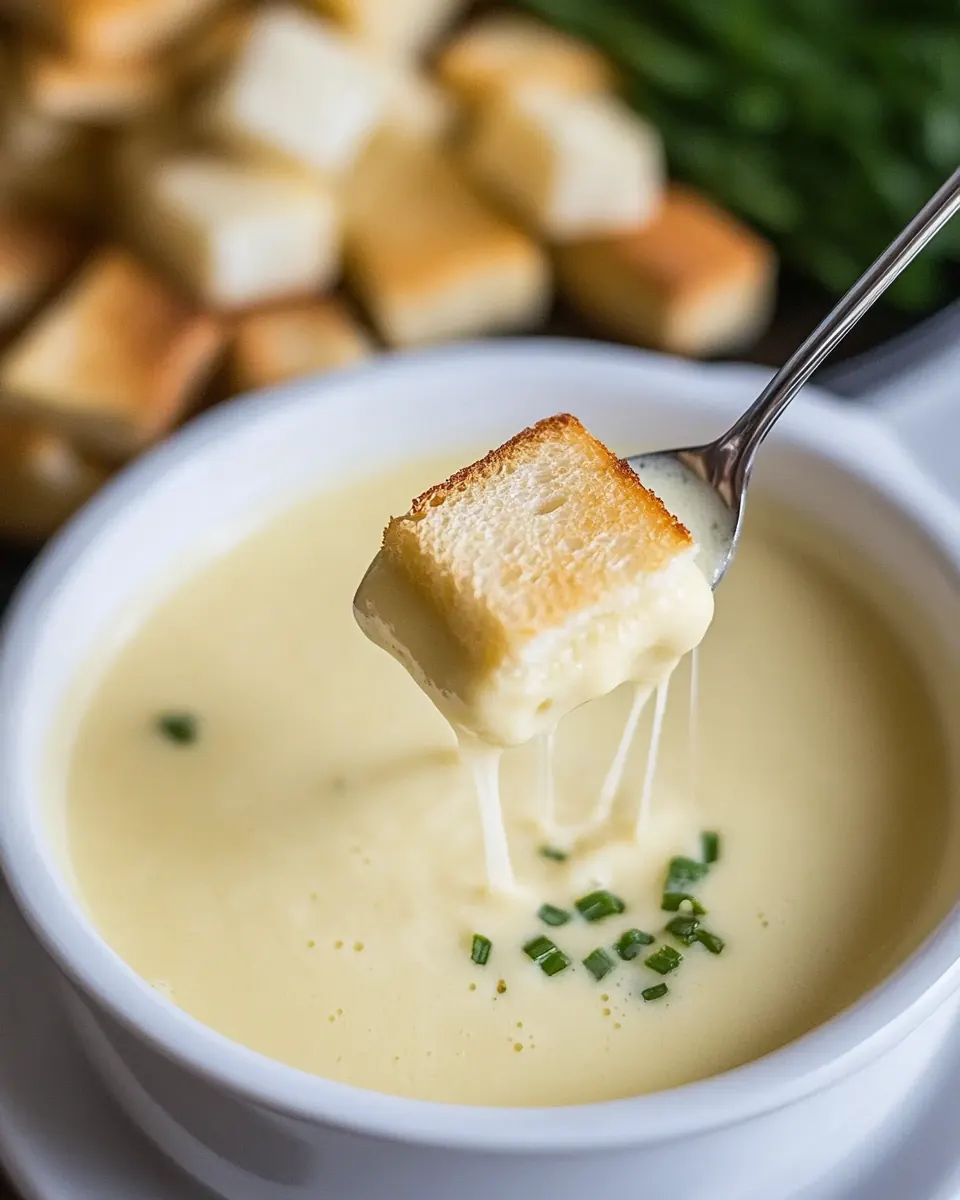
Serve with cubed french bread. Miniature smoked sausages, dill pickles, and pretzels all taste great as well.: When you present the pot, the fondue should be glossy and inviting, and the warm aroma will encourage immediate dipping. French bread cubes soak up the cheese beautifully while retaining a slight crust contrast, and the listed accompaniments give texture and flavor variety that keeps every bite interesting. Arrange the dippers so guests can alternate between soft and crunchy bites, which enhances the communal experience. Avoid leaving dipped pieces in the pot too long, because they can become soggy and drag cooled cheese into the mixture, chilling it prematurely; encourage guests to transfer to individual plates between dips.