Preheat oven to 350ºF. Spray a 9×13-inch baking dish with nonstick cooking spray. Set aside.: The room fills with a gentle warmth and the oven's steady hum assures you it is ready, which is important for even baking. I like to place the empty baking dish on the counter so it's within reach, and spraying it prevents sticking, preserving the crunchy topping's release. If you skip preheating, the casserole may bake unevenly and the topping might not brown properly, so always wait until the oven reaches temperature. A common mistake is using too low a heat which yields a pale, soft crust instead of a golden, crisp finish. Ensure your oven rack sits in the center so heat circulates evenly around the dish. Visually, you want the oven to feel consistently hot, and tactilely the dish should feel room temperature when filled to avoid thermal shock with glass bakeware.
Bring a large pot of water to a boil over medium-high heat. Add egg noodles and cook according to the package instructions for al dente. Drain and set aside.: You will hear the water roar then calm slightly as the noodles tumble and release steam, and the kitchen will smell faintly of starchy pasta. Cooking to al dente preserves toothsome texture so the noodles do not break down in the oven. Drain in a colander and shake gently to remove excess water so the filling stays creamy, not watery. A frequent error is overcooking the noodles which makes the casserole mushy, so start checking a minute or two before package timing. Rinsing is optional, but if you rinse briefly under warm water it stops cooking and removes surface starch that can glue the noodles together.
Remove the meat from the chicken, discard skin, and chop meat.: When you pull meat from the rotisserie, it should be warm and fragrant with seasoned juices, and the texture will be tender. Chop the meat into uniform pieces to distribute protein throughout the casserole, which helps every forkful have a balanced ratio of noodle to chicken. If the chicken is very cold, bring it closer to room temperature so it blends smoothly into the filling. A common misstep is leaving large chunks which yield uneven bites, so aim for bite sized pieces. Smell and taste a small piece to check seasoning, since store bought birds can vary in salt level, and adjust the mixture accordingly.
In a large bowl, mix together chicken, cooked noodles, sour cream, cream of chicken soup, onion powder, garlic powder, cheddar cheese, and mozzarella cheese. Season with salt and black pepper.: As you stir, you will see the sauce coat the noodles and meat in a glossy, creamy sheen, and the cheese starts to string into ribbons. This blending step matters because it ensures even seasoning and prevents dry pockets; I use a large bowl so folding is easy and nothing spills. Taste as you go because the canned soup and rotisserie bird may already be salted. A frequent mistake is under mixing which leaves clumps of soup or cheese, so fold gently until everything looks cohesive. The texture should be uniformly creamy and not runny, so if it seems too loose double check your noodle drain and the proportion of sour cream.
Pour the chicken mixture into the prepared dish.: The filling should spread into the dish in a thick, glossy layer that sits slightly mounded. Use an offset spatula or the back of a large spoon to level it, which helps the topping sit evenly. Visual cues to watch for are uniform distribution of chicken and noodles, with no large dry spots. If you notice soggy areas, pace the pouring and press gently to settle the filling. One common error is overfilling the dish, so leave a little room at the top for bubbling as it heats.
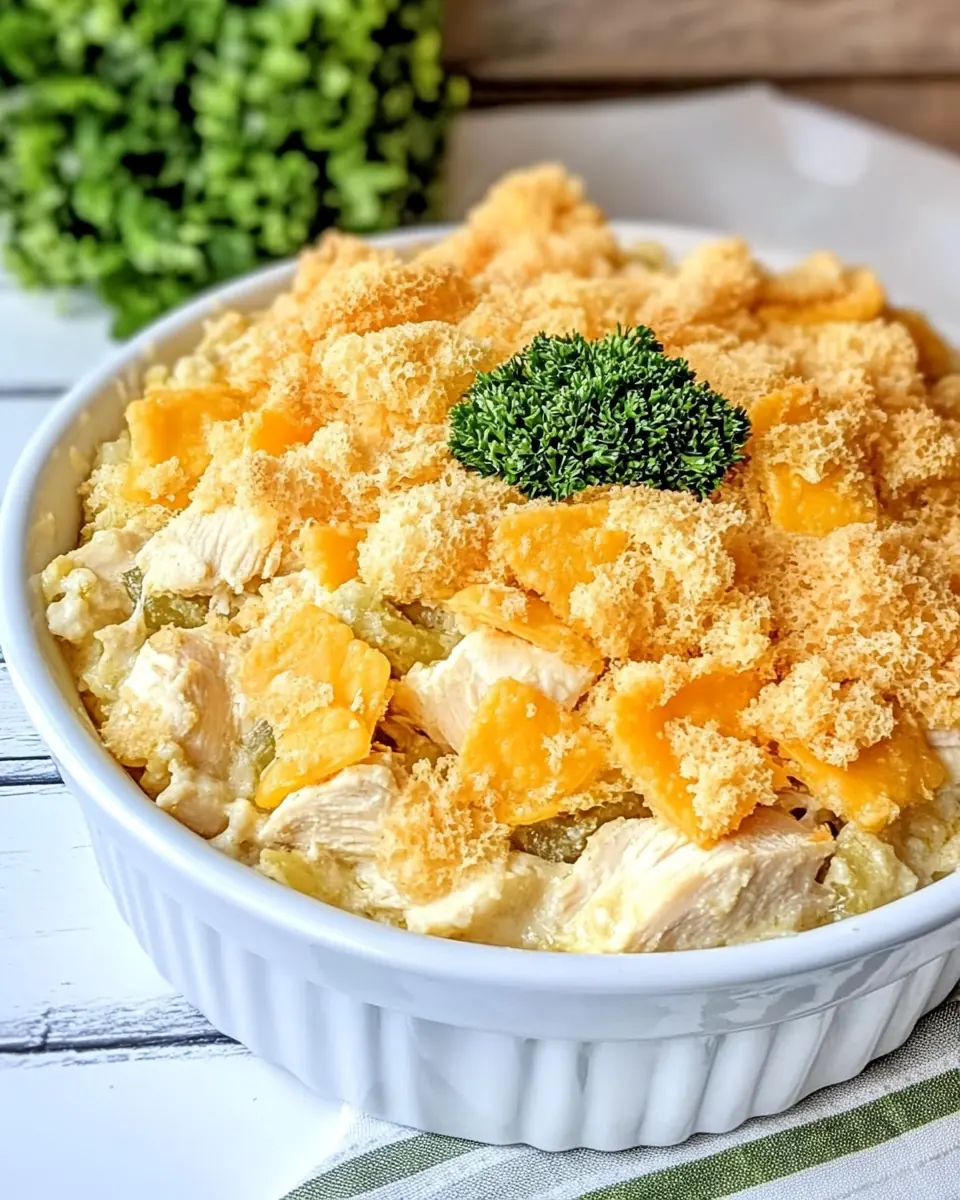
In a small bowl, mix together cracker crumbs, melted butter, and poppy seeds; sprinkle over the top of the casserole.: The cracker crumbs will absorb the warm melted butter and form a paste like mixture you can scatter. As you sprinkle, you will see the topping clump slightly and then level out, creating an even layer that will toast in the oven. This topping is crucial for textural contrast, so be sure it covers the surface uniformly. A common mistake is adding too much butter, which can leave the topping greasy; aim for a crumbly, lightly moistened texture. Press down gently so the crumbs adhere to the filling, which helps them toast rather than slide off.
Bake uncovered for 25 to 30 minutes or until bubbly.: The first sign will be the sauce at the edges starting to shimmer, followed by gentle bubbling across the surface and eventual browning of the cracker topping. The kitchen will fill with a toasted, cheesy aroma and you may hear tiny pops as steam escapes. Baking uncovered encourages the topping to brown and the sauce to thicken, resulting in a cohesive scoopable casserole. Avoid underbaking which leaves the center cool and loose, and also avoid overbaking which can dry the filling. If the topping browns too quickly, tent a sheet of foil loosely to prevent burning. Let the casserole sit 5 to 10 minutes after removing it from the oven so it firms up and slices cleanly.