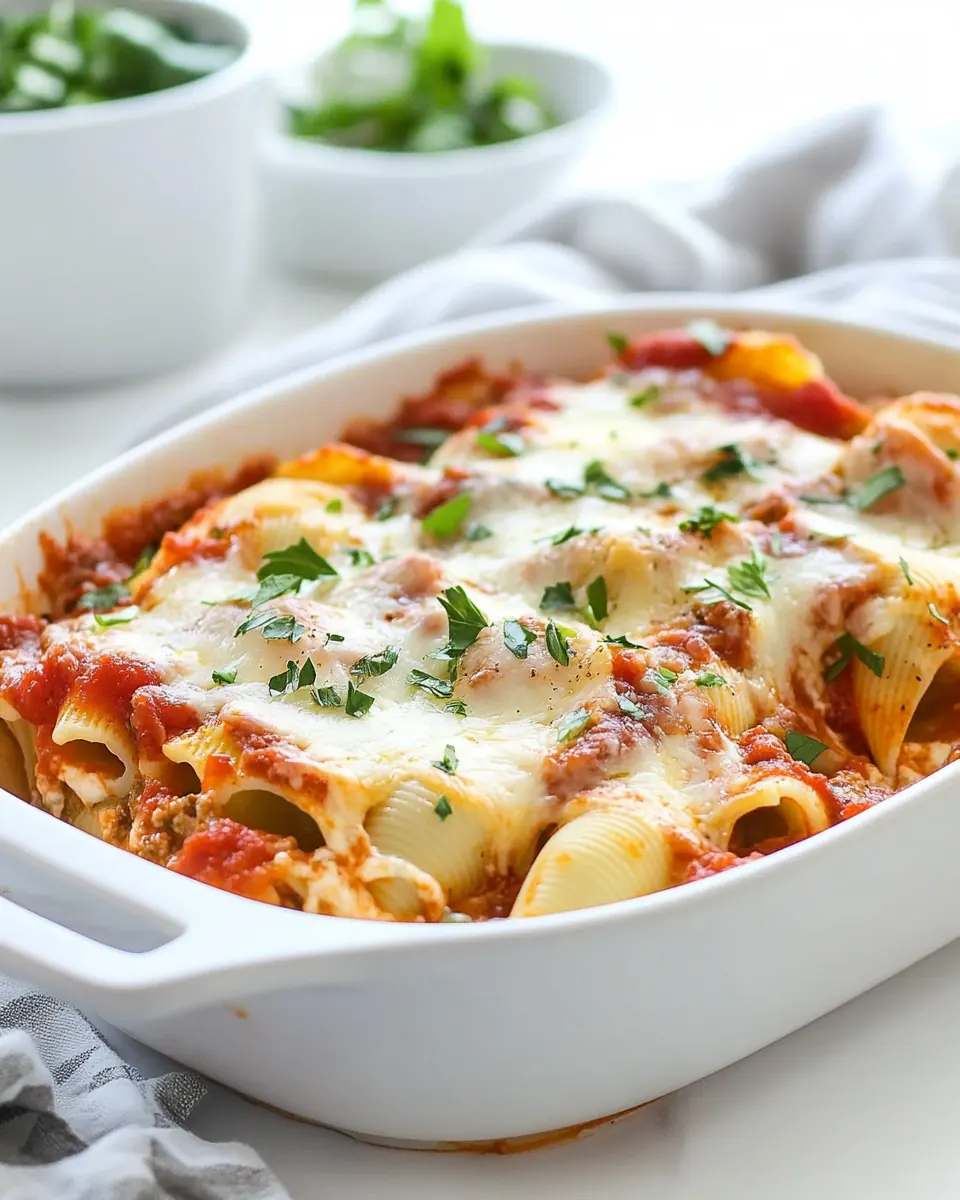
Preheat oven to 350 degrees F. Cook jumbo shells according to package directions. Using a large slotted spoon, transfer shells to a colander. Rinse with cold water; drain well and set aside.: When you preheat to 350 degrees F , the oven becomes a reliable environment for the sauce to bubble and the cheeses to melt. You should feel the kitchen warm as the oven approaches temperature, and you may hear the faint hum as it cycles. Preheating ensures even cooking throughout the 30 to 45 minute bake time. A common mistake is skipping preheat, which leads to uneven melting and longer bake times.
Meanwhile in a medium bowl whisk together the ricotta cheese, garlic, Italian Seasoning, salt, pepper, 1 cup mozzarella cheese, parmesan cheese and egg.: As the pasta simmers, you will see the shells expand and become tender yet slightly firm to the bite. The cooking water should bubble steadily, and the shells will float when nearly done. We aim for al dente so they hold their shape during stuffing; overcooked shells become too fragile and tear when filled. Test a shell early to avoid this.
Spread about 1/2 cup of the pasta sauce in the bottom of a 3-quart rectangular baking dish. Spoon cheese mixture into drained jumbo shells; place stuffed shells in prepared baking dish. Top with remaining pasta sauce.: Rinsing stops the cooking immediately and prevents sticking by cooling the pasta, giving you manageable shells for filling. Cold water also firms the exterior so the shells do not continue to soften. Drain thoroughly to avoid excess water diluting the filling or sauce; excess moisture is the usual culprit behind a soggy bake.
Bake, covered, for 30 minutes. Uncover and sprinkle with remaining mozzarella cheese. Bake, uncovered, about 15 minutes more or until heated through. Let stand 10 minutes before serving. Top with fresh basil. Enjoy!: As you whisk, the filling will become uniform and slightly glossy, with flecks of herbs and pepper visible. This step builds the flavor base and binds the filling. Mixing well ensures each shell gets the same balance of cheese and seasoning. Under-mixing can yield inconsistent pockets of flavor.
Spread about 1/2 cup of the pasta sauce in the bottom of a 3 quart rectangular baking dish: The sauce layer acts as a protective base so shells do not stick to the dish and so moisture is distributed during baking. You should see an even red layer that will bubble up around the shells as they bake. Skipping this can cause the bottom shells to dry and adhere to the pan.
Spoon cheese mixture into drained jumbo shells: Filling the shells is tactile work, you will feel the slight give of the pasta and the cool, creamy texture of the filling. Use a small spoon to mound the filling just to the shell rim so each bite balances pasta and cheese. Overfilling can cause the cheese to spill into the dish, while underfilling leads to dry shells.
Place stuffed shells in prepared baking dish: Arrange the shells snugly so they support each other visually and bake evenly. You will see the cheeses peeking out and the dish taking shape. A loosely arranged pan can shift in the oven, causing uneven browning. Place them seam side up for the cleanest presentation.
Top with remaining pasta sauce: Spoon the remaining sauce evenly over the shells until they are just covered; you should still see bits of filling and pasta through the sauce. The sauce provides moisture and flavor; too much can make the bake runny, while too little leaves the pasta dry. Aim for a thin, even coat that will bubble during baking.
Bake covered for 30 minutes: Covered baking traps steam, gently heating the filling so it warms through without the cheese drying out. During this time, the sauce will start to bubble around the edges and the kitchen will smell richly of tomatoes and baking cheese. Leaving the dish uncovered too early can cause the top to brown before the filling is heated through.
Uncover and sprinkle with remaining mozzarella cheese: Once uncovered, add the final layer of mozzarella cheese so it can melt directly into a golden, stretchy blanket. You should see the cheese soften almost immediately and then begin to bubble and slightly brown within minutes. A pitfall here is adding the cheese too late or at too-low heat, which prevents proper browning.
Bake uncovered about 15 minutes more or until heated through: During these final minutes the top transforms from white to golden, and you will hear gentle bubbling as the sauce and cheese finish cooking. The edges will develop the light, toasted notes that make the dish irresistible. If the top browns too quickly, tent loosely with foil to prevent burning while the center finishes heating.
Let stand 10 minutes before serving: Resting allows the filling to settle, making it easier to serve intact and for flavors to meld. You will notice the bubbling slows and the dish firms slightly, which is the cue to serve. Slicing or serving too soon can cause the filling to spill out and give you messy portions.
Top with fresh basil: The final scatter of fresh basil leaves brings a fragrant, herbal lift and a pop of color. The aroma will be bright and slightly sweet, balancing the rich cheeses. Add basil right before serving to preserve its freshness; cooking it will darken the leaves and reduce the aromatic quality.