Preheat oven to 350ºF. Lightly spray a 9 x 13 x 2-inch pan with cooking spray.: There is a comforting scent when an oven warms to 350ºF , a low, even heat that allows the interior to set without drying. You should feel the warmth radiate from the oven as you slide the pan in later, and the spray prevents sticking, which keeps the edges intact for serving. Why this matters, the even oven heat ensures the hash browns steam and the cheeses melt gradually, producing a creamy center. A common mistake is not preheating long enough, which can extend bake time and alter texture. If your oven runs hot, watch for overbrowning and reduce the time slightly.
In a large bowl, combine the soup, sour cream, garlic powder and pepper. Stir in cheese and hash browns.: As you stir, the mixture will take on a glossy, slightly thick sheen and a faint aroma of garlic and tangy dairy. This step builds the seasoned sauce that coats the hash browns , so it is where the foundational flavor is set. Mixing thoroughly prevents pockets of concentrated seasoning that can taste uneven after baking. One reason this matters is a consistent binder ensures every forkful holds together. A typical error is under-stirring, which leaves lumps of soup or dollops of sour cream , so scrape the bowl sides and stir until uniform in color.
Spread potato mixture into prepared pan.: When you fold in the shredded and grated cheeses, you will notice the mixture grow visually richer, flecked with orange and off white. The shredded cheddar cheese and Parmesan cheese begin to meld with the binder, and the frozen hash browns will look coated rather than dry. This coating is crucial, as it prevents dryness and helps the potatoes absorb flavor during baking. The sound here is subtle, the soft scrape of spoon on bowl, but the visual cue is key, you want every shred covered. A common pitfall is adding the cheeses unevenly, so work in portions and fold gently to distribute them without overworking the potatoes.
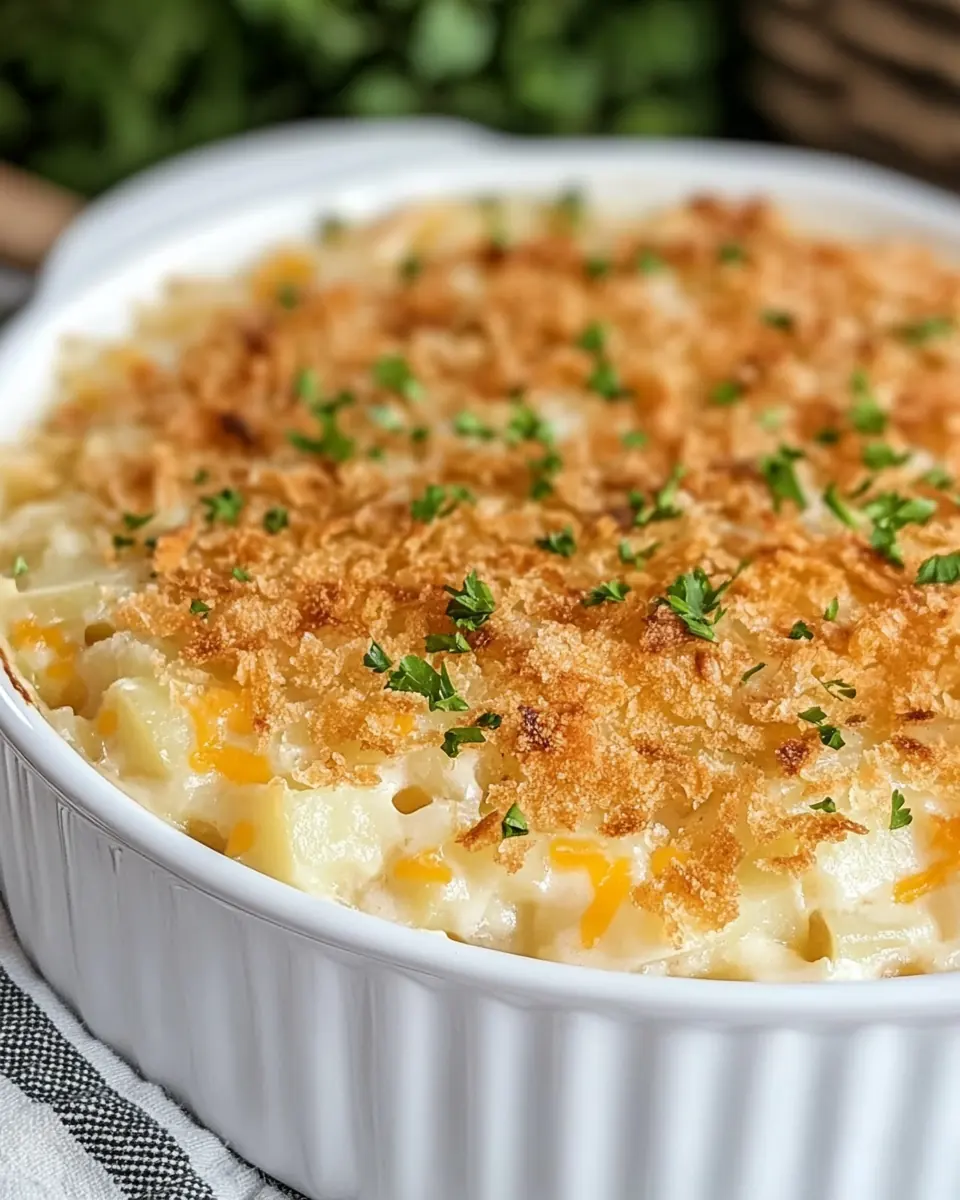
Bake uncovered for 55 to 60 minutes.: As you transfer the mix, the surface should feel dense but spreadable, and smoothing the top encourages even browning. Use an offset spatula or the back of a spoon to create a uniform thickness so the center cooks at the same rate as the edges. Why this step matters, an even layer avoids dry edges or an undercooked center, yielding a consistent texture from corner to corner. Watch out for overpacking the pan which can make the center dense; instead, press lightly and level the surface.
Bake uncovered for 55 to 60 minutes: During the long bake the casserole will transform, releasing a toasty, savory aroma as the cheeses melt and the surface slowly takes on golden notes. You will see bubbling at the edges and a slight pull when you jiggle the pan, signals that the interior has set. The texture should be creamy yet cohesive, not runny; the edges will be attractively browned and slightly crisp. This timeframe at 350ºF allows moisture to reduce just enough for structure while keeping the center luscious. A frequent error is removing it too soon, when the center still looks too loose, so rely on those bubbling and jiggle cues. If the top is browning too quickly, tent with foil lightly to prevent overbrowning while the middle finishes baking.