Go Back
Cheesy Potato Casserole

Cheesy Potato Casserole

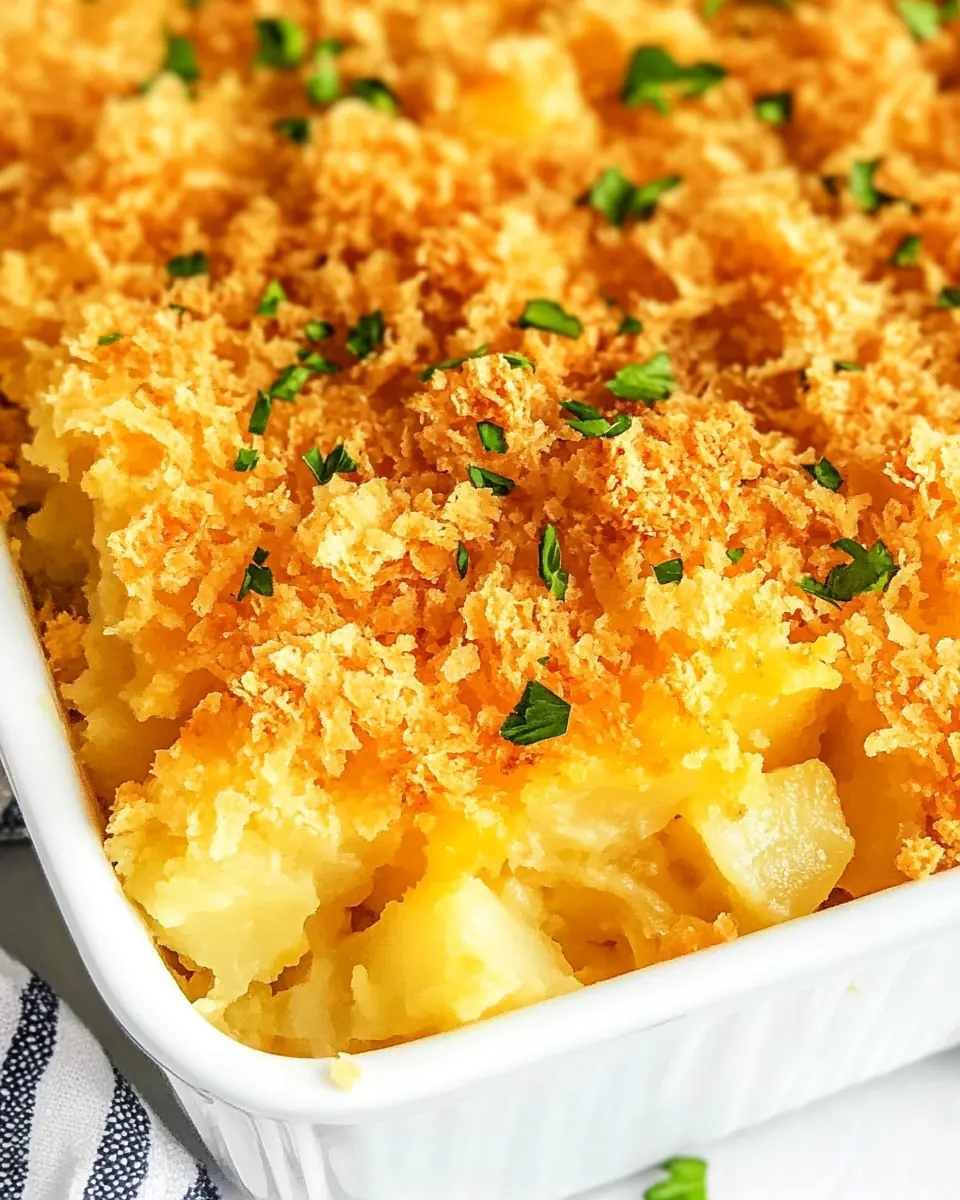
Cheesy Potato Casserole is a creamy, crispy comfort dish with melted cheddar and a buttery cornflake topping. This easy bake is ideal for winter gatherings or an easy weeknight dinner, delivering cozy, cheesy flavor and a satisfyingly crunchy surface. Make it ahead for stress free entertaining, and you will see why it becomes a repeat request.
Prep Time 5 minutes
Cook Time 50 minutes
Total Time 55 minutes
Servings: 12 people
Course: Side Dishes
Cuisine: American
Calories: 300

Ingredients
  

  • 1 (32-oz) bag frozen shredded hash browns Provide a frozen base of shredded potatoes that offers convenience and consistent texture; contribute body and starch to bind the casserole while absorbing flavors during baking. Ensure excess ice is drained or thawed slightly to prevent watery casserole and to allow even browning of the top.
  • 2 1/2 cups shredded cheddar cheese Add a rich, sharp dairy layer that melts smoothly to create creamy pockets throughout the dish and enhance overall flavor with savory depth. Use freshly shredded cheese when possible for better melting and a fresher taste compared with pre-shredded options.
  • 3 tbsp dried minced onion flakes Contribute concentrated onion flavor and gentle savory bite without adding moisture; infuse the casserole with aromatic complexity that complements the cheese. Sprinkle evenly and allow rehydration during mixing to distribute flavor uniformly.
  • 1 (16-oz) container sour cream Bring tangy creaminess and moisture that lightens the texture while balancing the richness of cheese; help bind ingredients together for a cohesive casserole. Opt for full-fat sour cream for a silkier finish and avoid overly watery varieties.
  • 1 (10.5-oz) can condensed cheddar cheese soup Provide an extra boost of concentrated cheddar flavor and creamy sauce body, enhancing cheesiness and improving overall sauce stability during baking. Stir thoroughly into the mix to ensure even distribution of flavor and smooth texture.
  • 1 tsp salt Enhance overall seasoning with a basic savory minerality that lifts flavors and balances richness; help highlight cheese and onion notes when properly measured. Taste before adding final extra salt since other ingredients may already contain sodium.
  • 2 tsp pepper Contribute mild heat and aromatic sharpness that rounds out the seasoning profile and contrasts creamy elements; distribute evenly to avoid peppery hot spots. Add gradually and adjust to personal preference for spice intensity.
  • 2 cups cornflakes, crushed Offer a crunchy topping when crushed, creating a textural contrast to the creamy interior and helping form a golden, crisp crust when combined with butter. Use gently crushed flakes to maintain airy crunch without becoming soggy during baking.
  • 1 stick butter, melted Add fat and help bind the crushed topping to form a golden, crispy layer while imparting a rich buttery flavor that enhances browning. Melt fully and toss with the crumbs to ensure even coating and crisp, flavorful topping.

Equipment

  • 9×13-inch Baking Dish
  • 8-qt Mixing Bowl
  • Rotary Cheese Grater

Method
 

  1. Preheat oven to 350ºF. Lightly spray a 9×13-inch baking dish with cooking spray.: Warmth fills the kitchen as the oven comes up to temperature, and you should feel a gentle rising heat when you open the door, which signals readiness. Preheating ensures even baking so the casserole cooks through without drying out, and the lightly oiled 9×13 inch baking dish prevents sticking and helps the edges crisp. A common mistake is placing the dish into an under warmed oven, which can cause uneven cooking and a soggy center. If your oven runs hot, check with an oven thermometer to avoid over browning.
  2. Combine hashbrowns, onion, sour cream, cheese, soup, salt, and pepper. Spread into the prepared pan.: As you fold these components together, notice the contrast between the frozen cold hash browns and the soft, creamy sour cream . The mixture should look uniformly coated, with streaks of melted cheddar cheese beginning to bind the potatoes. This step is key because even distribution of seasoning and binding agents ensures every bite is flavorful and cohesive. A troubleshooting tip is to gently squeeze out excess moisture from thawed potatoes if the mix seems too watery, otherwise the casserole may not set. Avoid overmixing which can break down potato strands and make the texture mushy.
  3. Combine crushed cornflakes and melted butter. Sprinkle on top of potatoes.: Pressing the mixture into the 9×13 inch baking dish should feel satisfying as the surface becomes smooth and even, which helps the top brown uniformly. Visually, you want a solid layer that fills the pan without gaps, because thin spots can brown faster and dry out. If you see puddles of liquid on top, dab lightly with a paper towel to prevent a soggy crust. A frequent error is uneven spreading, which leads to inconsistent cooking across the casserole.
  4. Bake for 45 to 50 minutes or until golden crisp and bubbly.: When you toss the crushed cornflakes with warm, melted butter , they take on a glossy sheen and smell slightly toasted, which foreshadows the crunchy, golden topping you want. Butter not only adds flavor, it helps the flakes adhere and brown, creating textural contrast with the soft interior. Make sure the butter is fully melted and evenly mixed through the flakes; clumps of dry flakes will brown differently. Avoid using cold butter chunks, which will not coat the flakes properly and can lead to uneven browning.
  5. Sprinkle on top of potatoes.: As you scatter the buttery cornflakes over the casserole, aim for full coverage so each slice gets a crunchy edge. The topping should look evenly distributed and slightly glossy from the butter . This layer protects the interior from drying while producing that signature crackly surface. If the topping seems sparse, add a touch more crushed cornflakes rather than piling on excess butter, which can make the crust greasy.
  6. Bake for 45 to 50 minutes or until golden crisp and bubbly.: During baking you will hear gentle bubbling and see the edges turn a deep golden brown while the center puffs slightly, indicating it is hot through. The sizzling sound and the aroma of toasted cheddar cheese and butter are good signals that the casserole is nearing done. The why here is that sustained oven heat allows moisture to evaporate slowly, concentrating flavors and firming the dish. One thing to watch for is overbrowning of the topping; if the top reaches deep brown before the center is hot, tent with foil to prevent burning while the middle finishes baking. A common lapse is removing the casserole immediately from the oven and slicing right away, which can cause it to be too loose; let it rest for ten minutes to set.
Notes

  • Use different cheese: Swap in a blend of sharp and mild cheddar cheese or try a milder option to suit picky eaters, remembering that the melting behavior affects the creaminess of the filling.
  • Adjust creaminess: For a tangier profile, increase the proportion of sour cream slightly, but be mindful that too much can loosen the casserole structure; balance with a touch more condensed cheese soup if needed.
  • Breakfast twist: Serve smaller portions as part of a brunch spread and pair with fresh fruit, making the casserole a hearty, shareable centerpiece without much extra work.
  • Make ahead method: Assemble and cover the casserole in the prepared dish and refrigerate overnight; bring to room temperature briefly before baking and add a few minutes to the cook time to account for chilling.
  • Freeze for later: Wrap tightly with plastic and foil for long term storage up to three months. Thaw in the refrigerator before baking or add extra time when baking from frozen, tenting with foil if the topping browns too quickly.
  • Crunch variations: Substitute crushed plain crackers or panko for the cornflakes if you prefer a different texture, but keep the melted butter ratio similar so the topping browns evenly.
  • Salt control: If you are watching sodium, use reduced sodium condensed cheese soup and taste before adding extra salt, since both the cheddar cheese and soup add saltiness.