Preheat oven to 425 F. Line a baking sheet with foil for easier cleanup.: The air in a tightly preheated oven feels drier and hotter, which helps the asparagus blister and brown, releasing a toasty aroma. You will notice a faint nutty scent as the sugars in the stalks begin to caramelize, and the foil lining reflects heat and simplifies cleanup, so you are more likely to roast again soon. A common mistake is not preheating fully, which leads to steaming rather than roasting; wait until the oven reaches temperature. If your oven runs hot, check a minute or two earlier than suggested to avoid overbrowning.
Add the asparagus and onions to the baking sheet, evenly drizzle with olive oil, evenly sprinkle with salt and pepper, and use your hands to toss to coat evenly.: When you toss with your hands you feel each stalk getting slick with olive oil , and you can hear the light rustle of the onion strips settling between stalks. The oil encourages golden spots where the vegetables touch the hot pan, which translates to roasted flavor. Pressing too close together traps steam, so spread them into a single layer to let air circulate and crisp the edges. A typical error is crowding the pan, leading to limp vegetables rather than those satisfying browned tips.
Bake for about 12 to 15 minutes, or until asparagus is crisp-tender.: As the oven works, you will see the tips turn a deeper green and the bases become slightly golden, and a light roasted scent will fill your kitchen. The stalks should still offer a gentle snap when pierced, signaling crisp tender doneness. Overcooking makes them mushy and dulls the bright green flavor, so test a thicker stalk at the 12 minute mark. If your stalks are thicker than average, allow a minute or two extra, but avoid exceeding the upper time if you want that pleasant bite.
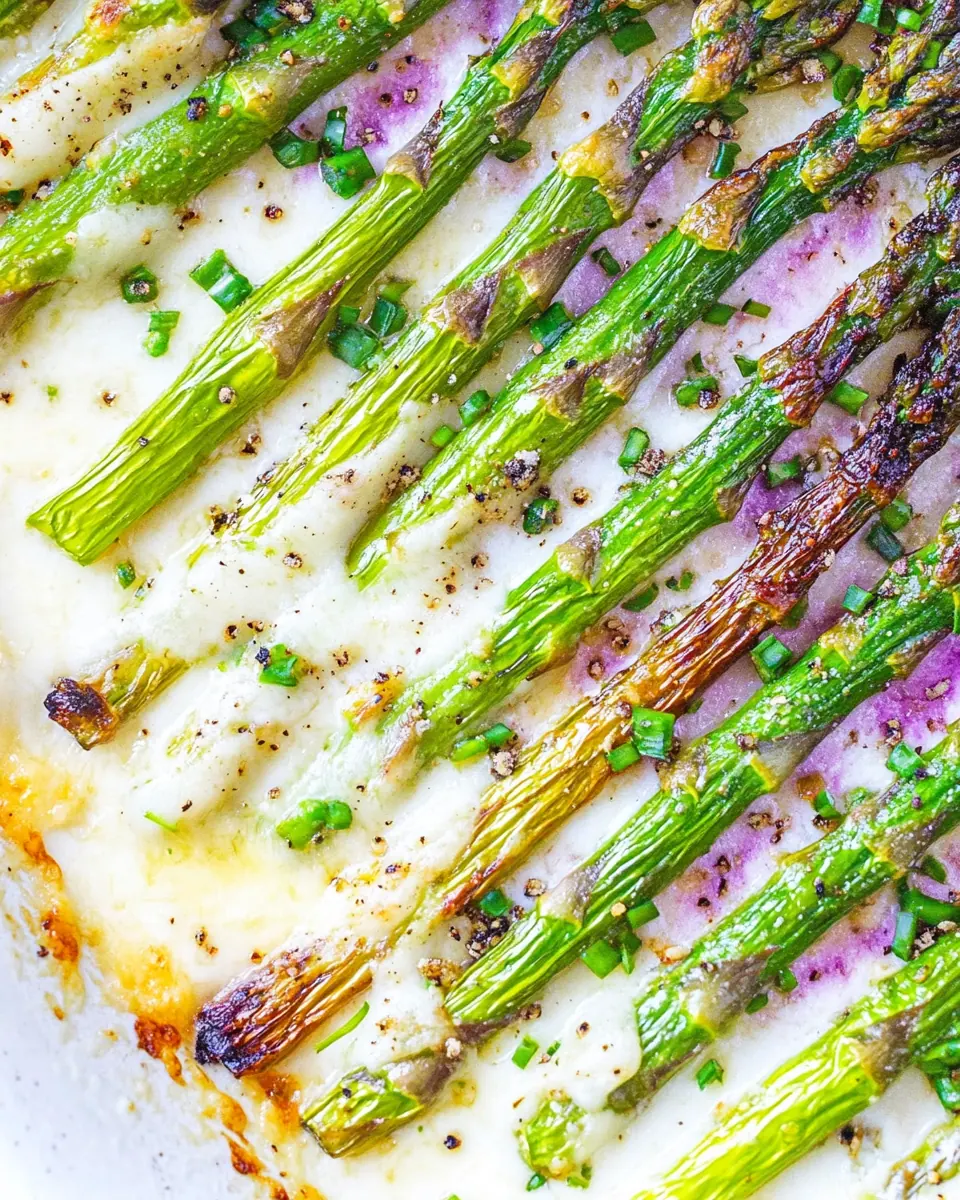
Remove baking sheet from the oven, evenly sprinkle the cheese over middle section of the asparagus, and return the baking sheet to the oven for about 5 minutes, or until cheese has melted.: When you pull the pan out briefly the hot air seems to sigh, and sprinkling mozzarella cheese over the center creates soft islands of melt that will sag and stretch when serving. The cheese should become glossy and pull into strands, offering a luscious contrast to the firmer ends. Avoid leaving the pan in too long at this stage or the cheese will brown more than you intend; melt until just gooey for a silkier finish. A frequent misstep is adding too much cheese so it overwhelms the vegetables, so aim for even coverage.
Alternatively, place the baking sheet under the broiler on high for about 3 to 4 minutes if you prefer your cheese to be more golden browned rather than simply just melted. If you’re using the broiler, keep a very close eye on things since food can burn very quickly under the broiler.: The broiler introduces an intense top heat that quickly creates amber spots and crisp edges on the mozzarella cheese , giving a toasty, slightly nutty nuance. The visual cue is bubbling followed by tiny browned patches, and the sound is a faint sizzling or popping as the cheese finishes. Do not walk away, as broilers can move from perfect to burned in moments. If your broiler is uneven, rotate the pan halfway through for consistent color.
Recipe is best warm and fresh.: Warm servings deliver the ideal mix of textured asparagus and melty mozzarella cheese , and the aroma is at its peak just out of the oven. As it cools, the cheese firms and the stalks lose a bit of their snap, so serve promptly for the best experience. If you must hold it, keep the pan loosely tented and rewarm briefly to restore some softness, but avoid extended holding which will dull the brightness. A common oversight is plating too late, which results in a less lively mouthfeel and diminished aroma.