In a large skillet, heat up olive oil.: Warm the olive oil over medium heat until it shimmers and moves easily across the pan, you might see tiny ripples in the surface. This sets the stage for flavor transfer from the garlic and vegetables, allowing them to cook quickly without sticking. If the oil begins to smoke you are too hot, reduce the temperature and let the pan cool slightly, because burnt oil will make the dish bitter and unpleasant. The goal is a warm, glossy skillet that gives a gentle sear to the next ingredients while preserving bright flavors.
Add minced garlic and sautee for about 20 seconds, stirring often.: As soon as the garlic hits the warm oil you should smell a sharp, fragrant burst that mellows within seconds, and the small pieces will turn translucent. Stir constantly to distribute the heat and avoid hotspots that brown the garlic unevenly. If the garlic starts to brown quickly, lower the heat and add a splash of liquid or the zucchini to cool the pan, because overcooked garlic becomes bitter and will affect the entire dish. Listen for a faint sizzle, and watch for that translucent change rather than any darkening.
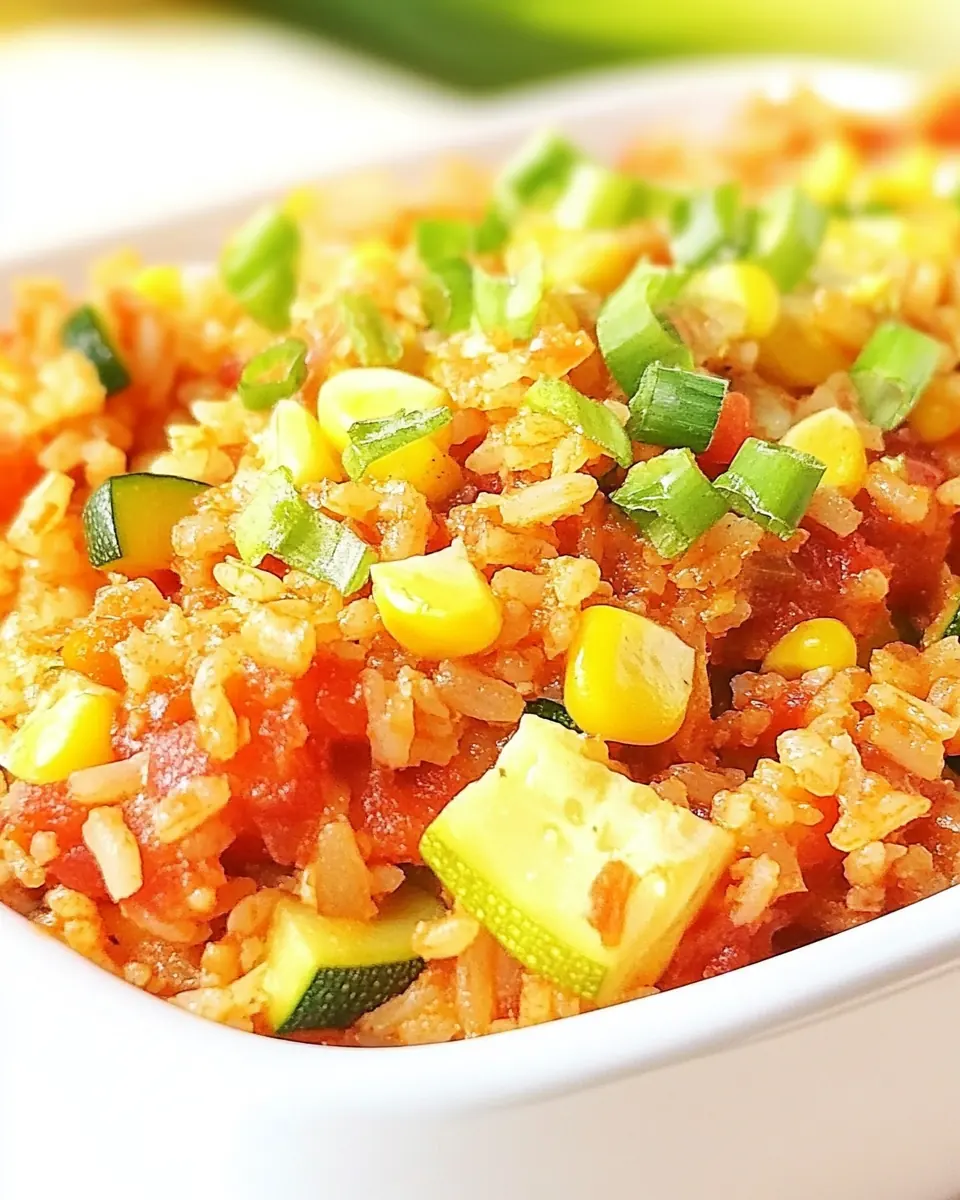
Add zucchini and corn and sautee until zucchini softens. Stir often.: When you add the chopped zucchini and corn , you should hear a lively sizzle as steam escapes and sugars begin to concentrate, releasing a faint caramelized aroma from the corn . Saute until the zucchini becomes slightly translucent and yields when pressed with a spatula, this usually takes a few minutes depending on the size of the pieces. Stir frequently so the vegetables cook evenly and to prevent the corn from sticking and scorching. A common mistake is overcrowding the pan, which causes steaming rather than sauteing, so use a sufficiently large skillet to maintain that pleasant sizzling sound.
Add rice, stir well.: Once the vegetables are tender, add the cooked rice and stir to incorporate, separating any clumps so each grain can absorb sauce. You want the rice to be separate and warm, not mushy, so break up compacted portions with your spoon and ensure the heat is even. The texture at this point should be fluffy grains coated lightly by oil and vegetable juices, which helps the next step bind flavors. If the rice seems too dry, a small splash of water or broth can loosen it, but avoid adding too much or the finished dish will be soupy.
Add salsa, crushed tomatoes, salt, pepper, cumin and paprika. Mix everything well together. Bring mixture to a simmer and cook for 5 minutes, stirring often.: As you combine the salsa and crushed tomatoes with the seasonings, you will notice the aroma deepen into a savory, slightly tangy base. Stir thoroughly so the spices like cumin and paprika disperse evenly and the rice absorbs the sauce. Bring the mixture gently to a simmer where small bubbles form around the edges, then maintain that simmer for about 5 minutes to let flavors marry and excess moisture reduce. Stir frequently to keep the bottom from sticking and to ensure even heat, and if the mixture reduces too much, add a tablespoon or two of water. Avoid a rolling boil, which can break down the texture and make the rice gluey.
Turn off the heat. Sprinkle cheese over the rice mixture. Cover saucepan and let sit for 3 to 5 minutes, until the cheese is melted.: After you remove the pan from heat, the residual warmth should be enough to melt the shredded Pepper Jack cheese and mild cheddar cheese into a silky blanket. The steam trapped under the lid helps the cheese soften uniformly without overcooking the vegetables. You should see the cheese lose its stringy individual shape and blur into the sauce, creating creamy pockets. If the cheese does not melt fully after 5 minutes, replace the lid and wait another minute, but avoid reheating aggressively which can make the cheese oily. A common misstep is stirring too soon which prevents the cheese from melding into cohesive creaminess.
Serve or cool completely, place in freezer containers and freeze for later use.: If serving immediately, spoon the hot Cheesy Salsa Rice with Zucchini and Corn into bowls and garnish as desired, enjoying the contrast of creamy cheese and bright salsa notes. If freezing, cool the dish to room temperature before portioning to prevent ice crystals and soggy texture, and store in airtight containers for best results. Label and date containers, then freeze flat for efficient stacking. Avoid packing hot food into freezer containers because trapped heat raises the freezer temperature and impacts nearby items.
Refrigerate leftovers for up to 3 days.: For short term storage place cooled portions into airtight containers and refrigerate, where the dish will keep for up to 3 days. Reheat gently on the stove or in the microwave until steaming through, adding a splash of water if the rice seems dry to restore moisture. Avoid reheating multiple times as repeated cycles can dry the rice and change the texture. If the flavor seems muted, a squeeze of fresh lime or an extra spoonful of salsa can brighten it when serving.