Preheat the oven to 400°F/200°C, then cut each acorn squash in half and scoop out the seeds with the help of a spoon or an ice cream scoop and discard the seeds.: You will notice the squash giving a faint, fresh scent as you slice through the skin and into the sweet flesh, which should feel dense yet yielding under the knife. After halving, use a spoon or an ice cream scoop to remove the seeds and the stringy interior, scraping until the cavity is tidy and ready to hold filling. Work on a Large Cutting Board for safety, and keep your Chef 27s Knife steady, making deliberate cuts. The reason for scooping cleanly is to create a uniform cavity so the filling nests evenly, ensuring every bite contains squash and stuffing. A common mistake is leaving too much stringy seed material, which can make the texture grainy; scrape thoroughly but avoid digging into and thinning the walls too much.
Place on a sheet pan, drizzle with olive oil, season with salt and pepper and roast for 30-40 minutes or until fork tender.: As the squash roasts, you 27ll see the exposed flesh deepen to a golden hue and smell a warm, toasty sweetness filling the oven. Turn the halves once or rotate the pan for even color, and test doneness by inserting a fork into the flesh at the deepest point, where it should give easily without collapsing. Proper roasting concentrates natural sugars and softens the flesh so it scoops without disintegrating. Avoid under roasting, which leaves the interior too firm for mixing, and over roasting, which can make the walls fragile and prone to tearing when scooped.
Meanwhile, make the filling: In a skillet over medium high heat, add olive oil and melt the butter then add ground chicken. Cook until it’s browned.: In a skillet over medium high heat, add olive oil and melt the butter then add ground chicken : In a hot 12-inch non stick skillet , the oil and butter should sizzle faintly when you add them, releasing a nutty butter aroma. Add the ground chicken in an even layer to encourage browning, which creates Maillard flavor that is crucial for savory depth. Use a Spatula to break up the meat and move it so it browns rather than simply steams. Browning adds complexity and a slightly crisped texture that elevates the filling. A frequent error is overcrowding the pan, which causes the meat to steam and prevents that important caramelized flavor.
Add the mushrooms, onion, celery and apple and cook for 4-5 more minutes or until the onions are soft and translucent. Add garlic, thyme, salt, pepper and cook for 30 seconds.: You 27ll hear a lively sizzle and see the meat change from pale to a deeper, golden brown in spots, releasing juices and lovely roasted notes. Browning creates concentrated savory compounds, so patience here matters for taste. Stir occasionally to brown evenly and scrape up any browned bits from the pan 27s surface as they carry intense flavor. If you rush and stir too often, the meat won 27t form those browned crusts, and the filling will taste flatter.
Mix in the parmesan and remove from heat.: When you add the mushrooms , onion , celery , and apple , the skillet will shift from meaty notes to a medley of sizzling aromas, the mushrooms releasing a deep, woodsy scent and the apple lending a faint fruity perfume as it softens. Allow the vegetables to sweat and pick up color; watch for the onions to become soft and translucent as a visual cue they are ready. Stir in the minced garlic and fresh chopped thyme or rosemary and let them bloom briefly so their oils infuse the mixture. Doing this ensures the aromatic notes are fresh and bright. Be careful not to overcook the garlic, as it can turn bitter; adding it late and watching closely keeps it fragrant.
When the acorn squash are cool enough to handle, carefully scoop out the flesh leaving about 1/4 inch of wall all around the squash (try not to create a hole in of the sides, I use an ice cream scoop to do this, or a spoon).: As you stir the parmesan into the warm filling, it will soften and help bind the mixture, adding a savory umami lift and slightly creamy texture. Removing the pan from heat prevents the cheese from becoming stringy or separating, preserving a cohesive filling that still melts when baked. Incorporating cheese off heat also lets you taste and adjust seasoning safely. A common slip is adding cheese to a pan that is too hot, which can change texture and make the mixture gluey instead of smooth.
Add the scooped squash to the filling, and stir to combine.: The roasted flesh will smell sweet and slightly caramelized as you scoop, and you 27ll want to keep about a quarter inch of wall so the shell remains sturdy. Use an ice cream scoop or a spoon to gently remove the flesh in even passes, aiming for smooth edges so the squash halves hold their shape. Save the scooped flesh to fold into the filling, which helps maintain moisture. Beware of scooping too aggressively, which can puncture the skin and cause leaking during the final bake.
Divide the filling between the 4 acorn squash halves: When you fold the scooped squash into the filling, the mixture will soften and take on a slightly sweeter profile, and the texture will become creamier without needing extra binders. Stir until the components are homogenous, tasting for seasoning, and adjust salt or pepper if the filling needs a lift. Combining now helps distribute squash flavor through every bite. A mistake here is overmixing until the filling becomes mushy; stir just enough to incorporate.
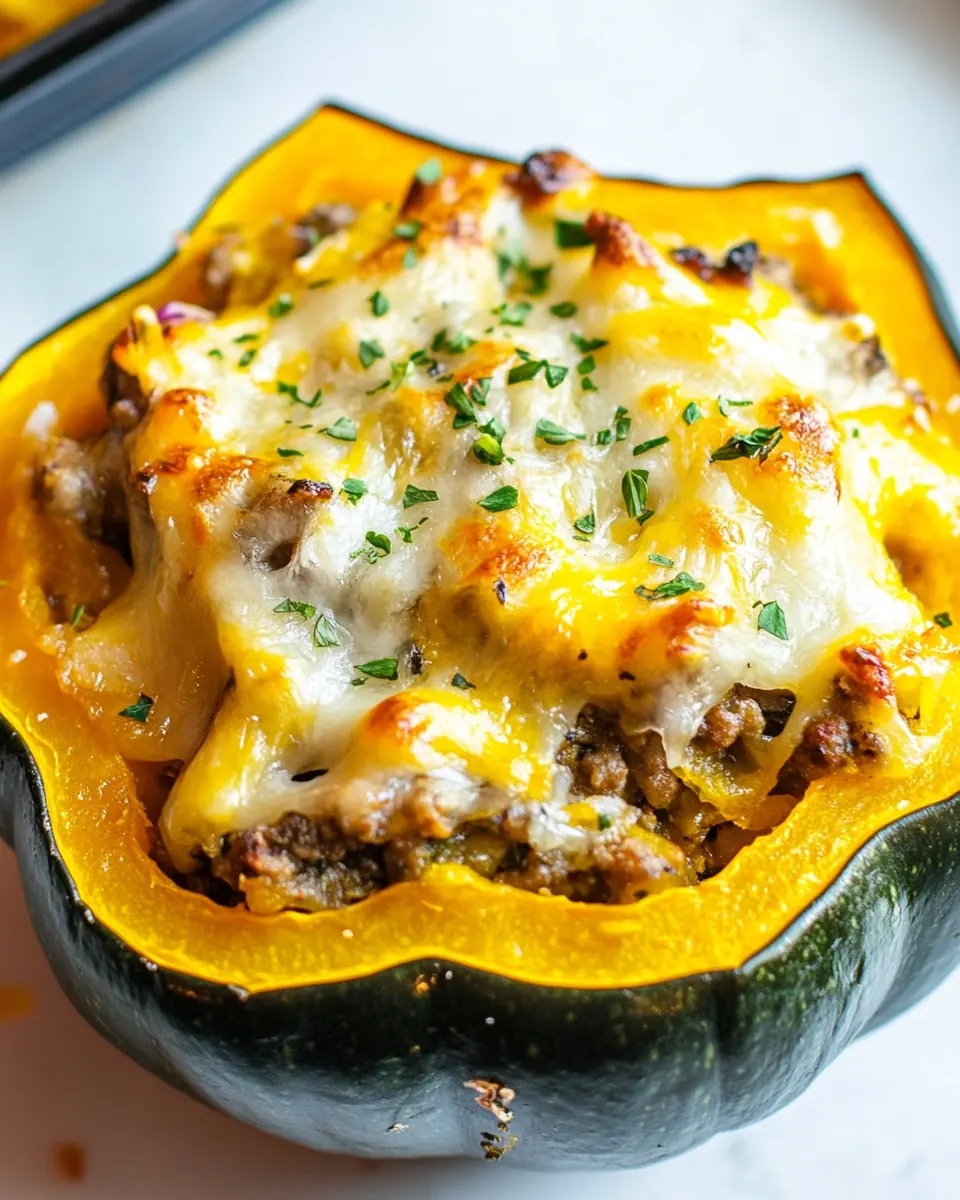
Top the filling with shredded cheese and roast for 5 minutes, then broil for a couple of extra minutes until the top is bubbling and lightly browned.: Spoon the filling into each cavity, pressing gently so the mixture nests neatly and sits slightly mounded, which allows for a generous cheese topping. The filled squash should feel balanced, not overloaded, so they remain presentable on the platter. Even distribution ensures each serving has similar proportions of squash and filling. Overfilling risks spilling when transferring to the oven, so aim for neat portions.
Top the filling with shredded cheese and roast for 5 minutes, then broil for a couple of extra minutes until the top is bubbling and lightly browned: As the squash returns to the oven, the shredded cheese will melt and form a glossy, bubbling layer. The short roast warms the filling through, and the final broil deepens color, creating small toasted pockets and a toasty aroma. Watch the broiler closely because a minute can change golden to burnt; keep the oven door slightly ajar if your broiler runs hot. Rushing this step can leave cheese unmelted, while leaving it too long will char the topping.