Preheat the oven to 350°F. Line two standard cupcake pans with 16 liners and set aside.: As the oven warms it fills the kitchen with a gentle dry heat, and you should notice a consistent warmth when you hold your hand near the closed door. Preheating is essential so the cupcakes start rising immediately upon entering, creating a rounded crown and even bake. A common mistake is skipping full preheat, which leads to flatter cakes and uneven texture. Also, lining pans with 16 liners ensures uniform sizes, and placing the pans on the middle rack prevents the tops from browning too quickly.
In the bowl of a stand mixer, cream the butter and sugar until light and fluffy (about 2-3 minutes). Add the vanilla extract and the almond extract.: At first you will hear a low hum from the mixer and see the butter and sugar transform from gritty to pale and aerated, a visual sign that air has been incorporated for lift. The mixture should look lighter in color and have a ribbon trail when the paddle lifts. This step matters because it traps tiny air pockets that expand in the oven, producing tender crumb. Avoid undercreaming which yields dense cupcakes, and overcreaming which can cause butter to overheat and collapse the structure; aim for 2 to 3 minutes as guidance.
In a medium size mixing bowl, whisk together flour, cake flour, baking powder, baking soda, and salt. In a glass measuring cup, mix together the buttermilk, cherry juice, and chopped cherries.: Whisking the dry flours removes lumps and distributes the leavening so the rise is even, while combining the wet buttermilk and maraschino cherry juice concentrates the cherry flavor and keeps the fruit pieces suspended. You should notice the wet mix is glossy and slightly thicker than milk, with pink tones from the juice. Mixing these separately avoids overworking the batter later. A common pitfall is adding wet to dry too quickly which can overstimulate gluten and toughen the crumb, so prepare both components in advance.
With mixing speed on low, alternate dry and wet ingredients. Mix until the batter is smooth and homogeneous (being careful not to overmix).: As you add ingredients in alternating additions on low speed you'll hear a steady, gentle mixing and see the batter develop into a cohesive, slightly thick ribbon that falls slowly from the paddle. This technique prevents overdeveloping the gluten in the flour , which keeps the cupcakes tender. Watch for a uniform color and tiny air pockets, and stop mixing as soon as the streaks disappear. Overmixing is the usual error here, leading to a denser texture, so be conservative with mixing time.
In a medium size mixing bowl (using a hand mixer), beat the egg whites until stiff peaks form. Fold into the batter.: When whipping the egg whites , you will hear a more urgent, higher pitch from the mixer and see glossy, snow white peaks that hold their shape. These aerated whites lighten the batter and add lift without extra fat. Folding should be gentle and deliberate, using a rubber spatula in sweeping motions so the air stays trapped. If you scramble the whites into the batter you will lose volume, a typical mistake, so fold just until streaks disappear and the mixture looks airy and even.
Scoop the batter into the cupcake liners, filling each 3/4 of the way full. Place in the oven and bake for 20-25 minutes or until the cupcakes spring back when touched. Remove from oven and allow to cool in pans for 5 minutes. Remove from the pan and transfer to a wire rack to cool completely (about 25 minutes).: The batter will slide and settle into neat domes when scooped, and as the cupcakes bake you should hear no sound, but watch for a gentle rise and light golden edges. A skewer or gentle press should spring back when done, signaling the interior is set. Letting them rest briefly in the pan helps them release cleanly, and transferring to a wire rack lets air circulate so the bottoms do not become soggy. A frequent mistake is removing cupcakes too early or letting them cool entirely in the pan, which can trap steam and make the crumb heavy.
While the cupcakes are cooling, make the frosting. In the bowl of a stand mixer fitted with the whisk attachment, combine butter, vanilla extract, almond extract, and salt. Beat until fluffy (2-3 minutes).: As you beat the frosting base you will notice it lighten in color and gain volume, becoming puffier and creamier. The aroma of almond extract will float through the kitchen, signaling the flavor is building. This aeration is crucial because it gives the frosting a silky mouthfeel that pipes beautifully. Avoid using overheated butter , as it will prevent proper aeration and lead to a greasy texture.
With mixing speed on low, add heavy cream, then gradually add 1/2 cup powdered sugar at a time until the mixture becomes soft but firm enough to hold its shape. Beat the frosting for an additional 3 minutes until light and fluffy. If the consistency is too thick, add a little more cream and beat for 30 seconds more.: The frosting will shift from thick and heavy to airy and smooth as you alternate heavy whipping cream and powdered sugar . You should notice a velvety sheen and soft peaks when the mixer is lifted. This balance is important so the frosting holds shape but is not gritty or overwhelmingly sweet. A common issue is adding all the powdered sugar at once, which makes it dry and heavy, so add gradually and adjust with heavy whipping cream .
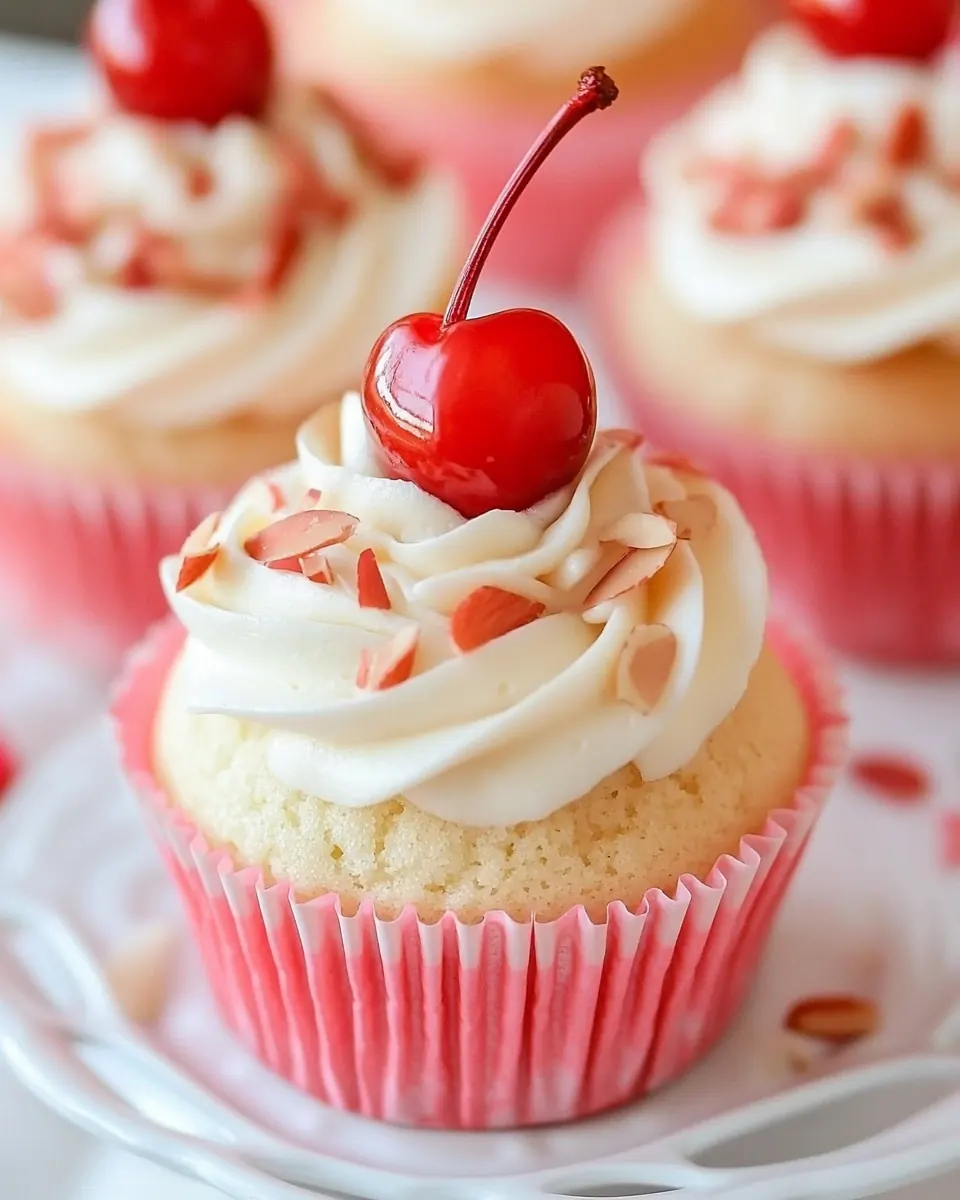
Pipe or spread the frosting onto cooled cupcakes. Decorate with crushed almonds or cherries if desired.: When frosting, the texture should feel smooth and spreadable, and piping yields defined ridges that catch light, creating an appealing finish. The fragrance of almond extract will be prominent, and the sight of glossy frosting topped with bits of chopped cherries is always pleasing. Take care to frost only fully cooled cupcakes, as warmth will melt the frosting and ruin the appearance. A typical error is rushing this step while cupcakes are warm, so be patient for a polished result.